

Why Choosing the Right Furniture Brand Really Matters
Comparing furniture brands? You’re standing in a furniture showroom. Or scrolling through websites at 11 PM. You see a sofa that costs $8,000. Then you see another one for $1,200. They both look nice. But which one is actually better?
That’s the problem with furniture brand comparison: price tags don’t tell you the whole story.
Restoration Hardware charges thousands for their Cloud Couch. Arhaus focuses on handmade pieces. West Elm has modern designs at fair prices. Article lets you get stylish furniture without spending a fortune. It’s easy to feel lost.
This guide does something different. We’re going to compare furniture brands the way you actually decide—by looking at what matters. Real construction. Actual durability. How well customer service works. Whether you’ll love it in 5 years.
If you are torn specifically between these two brands, the in‑depth RH vs Arhaus comparison guide walks through style, quality, pricing, delivery, and who each one really suits.
By the time you finish reading, you’ll know exactly how to pick a furniture brand. Not based on hype. Based on facts.
How to Use This Guide
This guide works three different ways. Pick whatever helps you most.
First way: Shop by furniture type
Looking for a sofa? A dining table? A bed? We’ll show you which brands do each thing well.
Second way: Shop by your budget
Have $500? Have $5,000? We’ll show you the best options at every price point.
Third way: Shop by style
Like traditional furniture? Modern? Artisan pieces? Find brands that match how you like things to look.
Each brand gets a real breakdown. You’ll see prices. Warranties. How long stuff lasts. Links to detailed reviews too.
Use the sections below to jump to what you need.
The 7 Things That Actually Matter in Furniture Brand Comparison
Skip the marketing talk. Let’s focus on what real people care about.
These 7 things separate good furniture from bad furniture. They separate smart purchases from wasted money.
1. How Is It Built? (Construction Quality)
Here’s the truth about furniture: cheap construction falls apart. Good construction lasts.
When you buy a $6,000 sofa, you’re betting that it’ll feel great in year 3. And year 5. And year 10. A $400 sofa makes the opposite bet.
All this construction matters comes down to industry standards set by furniture makers and tested by consumer experts.
What you need to check:
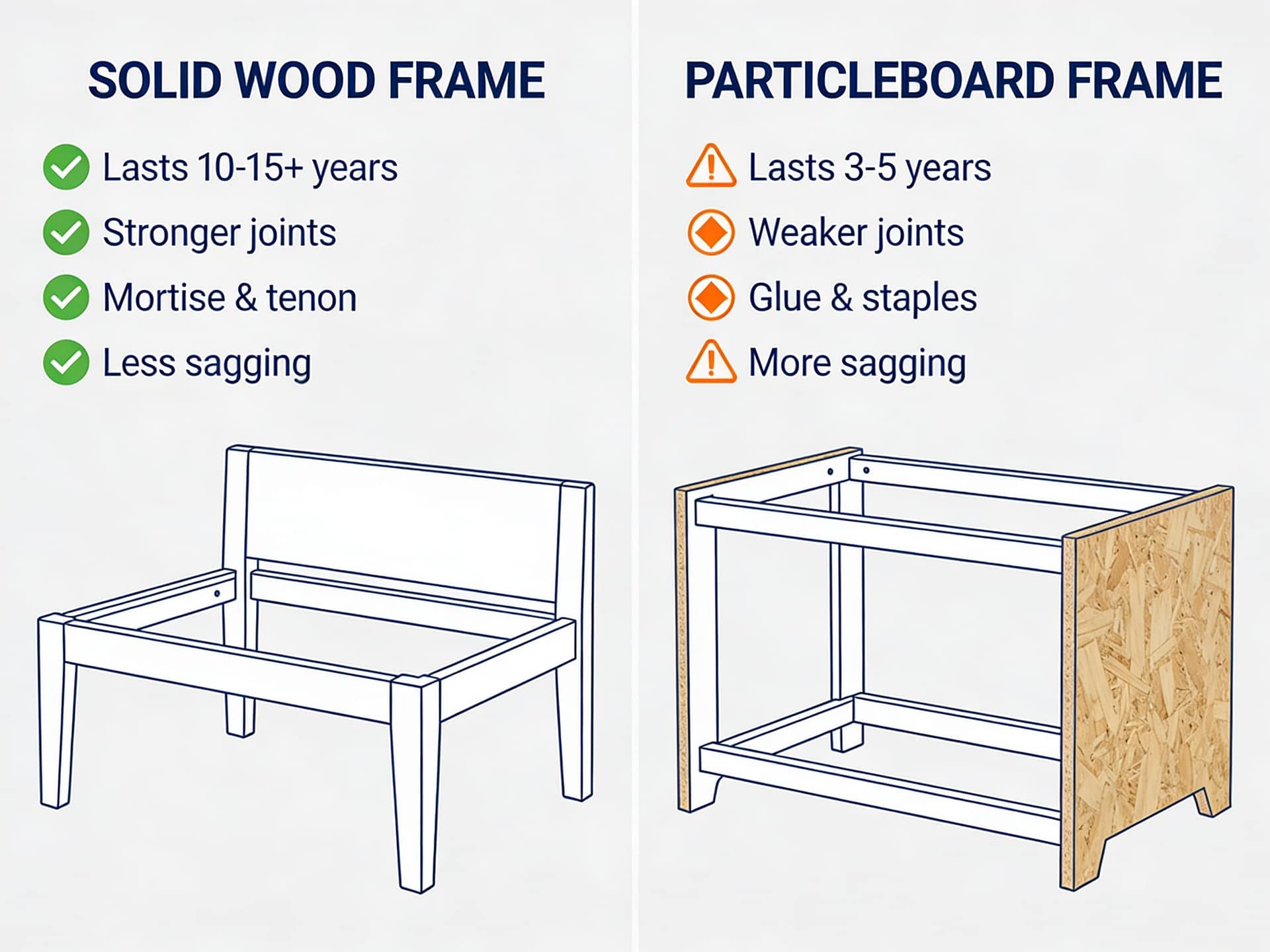
The frame. This is the skeleton of your furniture. Solid wood frames? That’s excellent. They last 15+ years. Particleboard frames? They start falling apart in 3-4 years. The difference is real.
The springs (if it has them). Eight-way hand-tied springs are the best. They feel good and last forever. Basic wire springs are fine but won’t last as long. Cheap sofas skip springs entirely.
The foam. Dense foam feels better and lasts longer. Really dense foam costs more, but you’ll feel the difference sitting on it. Cheap foam gets flat and saggy fast.
The joints. How are pieces connected? Mortise-and-tenon joints are strong and last. Dowels are okay. Lots of staples and glue? That’s the cheap way.
How it’s sewn. Hand-stitched seams mean quality. Machine stitching is fine. Glued seams are a sign of cheap furniture.
Why this matters:
Expensive furniture uses good materials everywhere. Mid-priced furniture mixes good and okay parts. Cheap furniture cuts corners everywhere.
Your expensive sofa might last 12 years. Your cheap sofa might last 3 years. Over time, the expensive one is actually cheaper.
2. What’s It Made From? (Materials & Fabrics)
Fabrics matter. A lot.
Some fabrics feel amazing but get dirty easily. Some fabrics are tough and stain-resistant but feel cheap. You need to know the difference.
Check the fabric durability rating. This is called the Martindale count. count, a standardized abrasion test used across the textile industry. Higher numbers mean longer-lasting fabrics.
Here’s what the numbers mean:
- Over 15,000: This fabric handles heavy use. Kids and pets won’t destroy it.
- 10,000 to 15,000: Good for normal families. Holds up for years.
- 5,000 to 10,000: Okay for light use. Starts showing wear in 2-3 years.
- Under 5,000: Budget fabric. You’ll see wear quickly.
Check the leather (if it has any). Real leather is full-grain leather. Corrected-grain leather is treated to hide problems—it’s lower quality. Bonded leather is just a thin layer over cheap material. Don’t buy bonded leather.
Natural or synthetic? Natural fabrics (cotton, linen, wool) feel better but need more care. Synthetic fabrics (polyester, microfiber) are tougher and resist stains. Neither is wrong. Just different.
Stain protection. Some fabrics come treated to resist stains. Some don’t. If you have kids or pets, stain protection matters.
By price level:
Luxury furniture uses nice linens and high-end leather. You’ll see Martindale ratings of 20,000+.
Mid-priced furniture mixes things. Maybe a nice linen blend with decent durability.
Budget furniture is usually polyester or microfiber. It works, but it shows wear.
3. How Long Will It Actually Last? (Durability & Lifespan)
Here’s a question that matters: Should you buy the $6,000 sofa or the $1,000 sofa?
Work it out like this.
A $6,000 sofa that lasts 12 years costs about $500 per year. A $1,000 sofa that lasts 3 years costs about $333 per year. But that $1,000 sofa broke in 3 years. You’re replacing it. The expensive sofa is still beautiful.
Check the warranty. How long is it? Luxury brands often promise 5-10 years. Budget brands give 1 year (if any). A long warranty means the company believes in its product.
According to furniture durability research and consumer testing, here’s what you can realistically expect:
Expected lifespan:
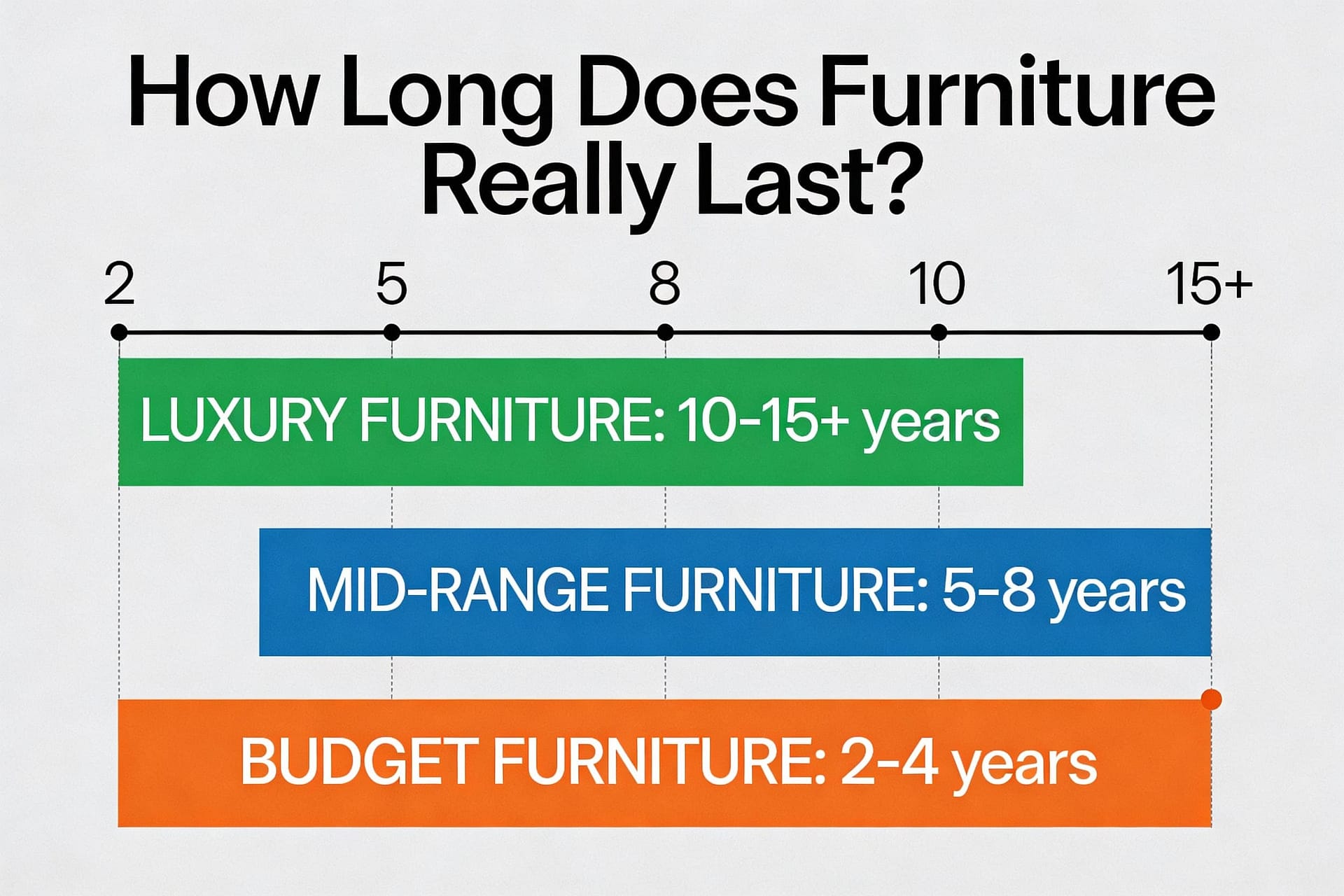
Luxury furniture is built for 10-15 years or longer. It should look good for a decade.
Mid-priced furniture usually lasts 5-8 years. After that, you might see sagging or wear.
Budget furniture lasts 2-4 years for normal use. Then it starts breaking down.
Can you fix it if something breaks? Some brands will replace a damaged part. Other brands say “buy a new piece.” Check their repair policy.
What do people actually say? Read reviews on Reddit. Look at Trustpilot. Do people report problems after 2 years? Or do people say their furniture is still great after 5 years? That tells you something real.
4. Is It Actually Worth the Money? (Price & Value)
The cheapest furniture isn’t the best value. The most expensive furniture isn’t either.

Use this simple math: Total Price ÷ How Many Years It Lasts = Cost Per Year
Example 1:
- RH sofa: $6,000
- Lasts about 12 years
- Cost per year: $500
Example 2:
- Article sofa: $1,200
- Lasts about 3 years
- Cost per year: $400
The expensive sofa costs more per year. But it’s still in your living room after 8 years. The cheap sofa is long gone.
Also think about:
Do they have sales? Pottery Barn and West Elm discount all the time (30-50% off). Restoration Hardware and Arhaus almost never discount. Plan accordingly.
What’s it worth used? Luxury furniture holds value better. You might sell that RH sofa for $3,000. That Article sofa? Maybe $200.
Upgrades cost extra? Some brands charge extra for different fabrics or colors. Others don’t. Check before you buy.
5. What Happens When There’s a Problem? (Customer Service)
Great furniture doesn’t matter if the company won’t help when something goes wrong.
Return policy. Can you send it back in 30 days? 60 days? Some brands won’t take returns after 15 days. That’s rough.
Warranty coverage. What does it actually cover? Does it cover shipping if there’s a defect? Or just the furniture itself?
Delivery experience. Do they show up on time? Are they careful with your furniture? Or does it arrive damaged?
How fast do they help? When you call with a problem, do they respond in 2 hours? 2 days? 2 weeks?
Do they actually solve problems? If your sofa arrives damaged, will they replace it? Refund you? Or will they argue?
Real talk: Read reviews on Reddit and Trustpilot. Look for what people say happened when things went wrong. That tells you the real story.
6. Do You Actually Love How It Looks? (Design & Style)
Quality means nothing if you hate looking at it.
Design style. Does the brand match your taste? Restoration Hardware is modern and bold. Pottery Barn is traditional. Arhaus is artisan and global. These are different vibes.
Can you customize it? Some brands let you pick fabric, leg style, and size. Others say “here’s what we have, take it or leave it.”
Will it look dated in 5 years? Some styles age beautifully. Other styles look old fast. Think about this before buying.
Color and fabric choices. More options means you’ll probably find something you love. Limited options might leave you settling.
Does it fit your home? A big RH Cloud Couch might dominate a small living room. Article’s smaller pieces work better in apartments. Think about your actual space.
7. How Soon Can You Have It? (Shipping & Delivery)
You’re excited about your new furniture. The last thing you want is waiting four months.
Lead time. This is how long you wait before it even ships.
Budget brands: Usually 4-6 weeks
Luxury brands: Often 8-16 weeks (they make stuff to order)
Delivery options. Do they carry it in and set it up? Or leave it on your porch?
What if it arrives broken? Who pays for return shipping? Can you refuse delivery?
To see this framework in action, the RH vs Arhaus buyer’s guide applies it to four real‑life buyer scenarios with different budgets and ceiling heights.

Luxury Furniture Brands: When You’re Going Big
These brands spend heavily on quality. They use amazing materials. The designs are trendsetting. You’ll pay $2,000 to $15,000+ per piece. But these pieces should last 10+ years.
Best for: People with money to invest. People who want statement pieces. People who’ll keep furniture for a decade.
Restoration Hardware (RH)
What people know it for:
Restoration Hardware is famous. Everyone knows their Cloud Couch. Visit their official site to explore their full collection and current offerings. It’s this oversized, incredibly plush sofa. Social media is obsessed with it. The furniture is heavy. It has a vintage-industrial look. It costs a lot.
Quality:
- Building it: ⭐⭐⭐⭐⭐ (Seriously excellent)
- Design: ⭐⭐⭐⭐⭐ (Trendsetting, Instagram famous)
- Value: ⭐⭐⭐ (Expensive)
- Customer service: ⭐⭐⭐⭐ (Usually good)
- Lasts: ⭐⭐⭐⭐⭐ (10-15 years+)
What it costs:
- Sofas: Usually $6,000 to $9,000
- Dining tables: $4,000 to $8,000
- Beds: $3,000 to $6,000
Warranty:
- Covers: 5-10 years depending on piece
- Returns: 30 days for most things
- Wait time: 12-16 weeks (be patient)
The good stuff:
The construction is excellent. Pieces look great for 10+ years. If you buy it, it’ll probably still look amazing in year 8. The design is iconic. Everyone recognizes it. It holds value if you resell. The brand is strong.
The tough stuff:
It’s really expensive. The wait time is long (12-16 weeks). The pieces are heavy (don’t expect to rearrange easily). Some designs feel trendy (they might look dated in 10 years, not timeless). You need special care for some materials.
Who should buy it:
People with decent budgets. People who want statement furniture. People making a living room focal point. People who’ll keep it forever.
Wondering how RH compares to Arhaus? Our RH vs Arhaus guide breaks down price, quality, and design so you can pick the right luxury brand.
Arhaus
What people know it for:
Arhaus makes handcrafted furniture. Every piece is made with artisan quality. Browse their handcrafted collection on their official website to see what makes them different.. They get inspiration from all over the world. The designs feel relaxed but luxurious. It’s less formal than RH. More natural.
Quality:
- Building it: ⭐⭐⭐⭐⭐ (Handmade excellence)
- Design: ⭐⭐⭐⭐ (Globally inspired, artistic)
- Value: ⭐⭐⭐⭐ (Expensive but fair)
- Customer service: ⭐⭐⭐⭐⭐ (Actually excellent)
- Lasts: ⭐⭐⭐⭐⭐ (Ages beautifully)
What it costs:
- Sofas: Usually $3,000 to $5,000
- Dining tables: $2,500 to $5,000
- Beds: $2,000 to $4,000
(Less expensive than RH on average)
Warranty:
- Covers: Lifetime on frames (amazing)
- Returns: 60 days
- Wait time: 8-12 weeks
The good stuff:
Handcrafted quality. Lifetime warranty on frames (shows confidence). Better customer service than most luxury brands. Cheaper than RH usually. Pieces look better over time. Uses natural materials. They actually care about sustainability.
The tough stuff:
Still expensive. Since they’re handmade, every piece varies slightly. You can’t customize everything. Still takes 8-12 weeks to arrive.
Who should buy it:
People who love handmade quality. People who want natural materials. People who like global design. People who value craftsmanship over trends.
Still deciding between Arhaus and RH? Our Arhaus vs RH comparison shows you the real differences in price, comfort, and how each brand ages.
West Elm
What people know it for:
West Elm is modern. Mid-century designs. Clean lines. Contemporary look. The prices are reasonable for luxury. Not as expensive as RH or Arhaus. This is where luxury starts.
Quality:
- Building it: ⭐⭐⭐⭐ (Good quality)
- Design: ⭐⭐⭐⭐⭐ (Trendy, modern)
- Value: ⭐⭐⭐⭐ (Fair price)
- Customer service: ⭐⭐⭐⭐ (Good)
- Lasts: ⭐⭐⭐⭐ (5-8 years usually)
What it costs:
- Sofas: Usually $1,500 to $2,500
- Dining tables: $1,200 to $2,000
- Beds: $1,000 to $1,800
Warranty:
- Covers: 1-3 years depending on piece
- Returns: 30 days
- Wait time: 4-8 weeks
The good stuff:
Modern, cool designs. Good quality for the price. They have sales frequently (20-50% off). Faster delivery than luxury brands. Pretty good customization options. Wide range of styles.
The tough stuff:
Won’t last as long as RH or Arhaus. Can feel trendy (might look dated in 5 years). Quality isn’t consistent across all pieces. Not for traditional design lovers.
Who should buy it:
Modern design lovers. People with $1,500-$3,000 budgets. People who like updating their furniture every few years. People who like contemporary style.
Mid-Range Brands: Quality Without Breaking the Bank
These brands offer solid furniture at fair prices. Not luxury. Not budget. Right in the middle. You’ll spend $400-$3,000 per piece. Quality is decent. It’ll last 5-8 years with normal use.
Best for: Families. People on reasonable budgets. People who want something that lasts.
Pottery Barn
What people know it for:
Pottery Barn is classic. Traditional furniture. Timeless designs. Families have been buying from them for decades. The look is sophisticated but relaxed. It never really feels out of date.
Quality:
- Building it: ⭐⭐⭐⭐ (Good)
- Design: ⭐⭐⭐⭐ (Timeless, classic)
- Value: ⭐⭐⭐⭐ (Fair)
- Customer service: ⭐⭐⭐⭐ (Good)
- Lasts: ⭐⭐⭐⭐ (5-7 years usually)
What it costs:
- Sofas: Usually $1,200 to $2,000
- Dining tables: $800 to $1,500
- Beds: $700 to $1,200
Warranty:
- Covers: 1-3 years
- Returns: 60 days
- Wait time: 4-6 weeks
The good stuff:
Timeless design (won’t look dated). Good quality. They have sales all the time (30-50% off). Family-friendly. Lots of options. Easy returns.
The tough stuff:
Can feel generic. Not trendy or exciting. Won’t last as long as luxury brands. Might feel old-fashioned to younger people.
Who should buy it:
Families. Traditional design lovers. People wanting timeless furniture. People with $1,200-$2,000 budgets.
Not sure which is right for you? Check out our Pottery Barn vs West Elm guide. We compare prices, comfort level, and how long each lasts so you can decide.
CB2
What people know it for:
CB2 is Crate and Barrel’s younger, hipper brand. Modern. Minimalist. Clean lines. Contemporary design. Very affordable.
Quality:
- Building it: ⭐⭐⭐ (Okay)
- Design: ⭐⭐⭐⭐ (Modern, minimalist)
- Value: ⭐⭐⭐⭐⭐ (Very cheap)
- Customer service: ⭐⭐⭐⭐ (Good)
- Lasts: ⭐⭐⭐ (3-5 years usually)
What it costs:
- Sofas: Usually $800 to $1,400
- Dining tables: $500 to $1,000
- Beds: $600 to $1,200
Warranty:
- Covers: 1 year
- Returns: 30 days
- Wait time: 2-4 weeks (fast)
The good stuff:
Very affordable. Modern design. Fast delivery. Good for small spaces. Light pieces (easy to move). You can change things often.
The tough stuff:
Won’t last long (3-5 years). Lower quality overall. Shows wear quickly. Limited customization. Modern design might feel cold.
Who should buy it:
Budget shoppers. Modern design lovers. Renters. Young professionals. People who like changing things.
Budget-Friendly Brands: Style Without the Big Price
These brands are cheap. Like, really cheap. You’ll spend $200-$2,000 per piece. The furniture is acceptable. It works. But it won’t last as long. Best for renters, people on tight budgets, people who change furniture often.
Article
What people know it for:
Article sells Scandinavian-modern design online. They cut out the middleman (no showrooms). Clean lines. Minimalist. Affordable. They’ve become popular with people who want style but not huge expense.
Quality:
- Building it: ⭐⭐⭐ (Acceptable)
- Design: ⭐⭐⭐⭐ (Clean, modern)
- Value: ⭐⭐⭐⭐⭐ (Very good for budget)
- Customer service: ⭐⭐⭐⭐ (Responsive usually)
- Lasts: ⭐⭐⭐ (3-5 years)
What it costs:
- Sofas: Usually $600 to $1,200
- Dining tables: $400 to $800
- Beds: $400 to $900
Warranty:
- Covers: 1-3 years
- Returns: 30 days
- Wait time: 4-6 weeks
The good stuff:
Very affordable. Modern, Scandinavian design. They sell direct (good prices). Decent quality for the money. Good reviews mostly. Ships reasonably fast.
The tough stuff:
Won’t last long (3-5 years). Quality varies sometimes. Customer service can be slow. Returning stuff is difficult.
Who should buy it:
Budget shoppers. Modern design lovers. Renters. First-time buyers. People who don’t have much money.
Curious about the article’s most popular sofa? Our Article Sven sofa review covers comfort, sizing, and whether it works for small spaces.
Compare All the Brands at a Glance
| Brand | Cost | Quality | Design | Best For | Warranty | Wait |
|---|---|---|---|---|---|---|
| RH | $2K-$15K+ | ⭐⭐⭐⭐⭐ | Modern Luxury | Big statement | 5-10 yrs | 12-16 wks |
| Arhaus | $1.5K-$10K | ⭐⭐⭐⭐⭐ | Artisan | Craft lovers | Lifetime | 8-12 wks |
| West Elm | $800-$4K | ⭐⭐⭐⭐ | Modern | Trend lovers | 1-3 yrs | 4-8 wks |
| Pottery Barn | $400-$4K | ⭐⭐⭐⭐ | Traditional | Families | 1-3 yrs | 4-6 wks |
| CB2 | $300-$2.5K | ⭐⭐⭐ | Minimalist | Budget | 1 yr | 2-4 wks |
| Article | $200-$2K | ⭐⭐⭐ | Scandinavian | Renters | 1-3 yrs | 4-6 wks |
Questions People Actually Ask
Which brand is actually the best?
There’s no “best.” It depends on you. Want luxury? Get Restoration Hardware. Want modern? Get West Elm. Want artisan? Get Arhaus. Want cheap? Get Article.
The “best” brand is the one that fits your budget, matches your style, and will last as long as you need.
Is expensive furniture actually better?
Usually, yes. But not always. Luxury brands do offer better construction and materials. But you’re also paying for design innovation, brand recognition, and fancy showrooms.
Sometimes you’re paying for the name more than the quality. That’s fine if you want the name. Just know what you’re paying for.
How long should my furniture last?
Depends on what you buy:
- Luxury furniture: 10-15 years or longer
- Mid-range furniture: 5-8 years usually
- Budget furniture: 2-4 years
Do the math. If you love furniture that lasts, buy better furniture. If you like changing things, budget furniture works.
Should I wait for a sale?
Some brands discount constantly. West Elm and Pottery Barn always have sales (30-50% off). Restoration Hardware almost never discounts. Arhaus rarely discounts.
If you’re eyeing Pottery Barn, wait for their sale. You could save hundreds. Furniture experts recommend understanding the best times and ways to buy to maximize your savings.
What’s the real difference between RH and Arhaus?
Both are expensive. Both are well-made.
- RH: Bigger, bolder pieces. Vintage-industrial look. Trendsetter. Higher price ($6K-$10K sofas).
- Arhaus: Handcrafted, artisan quality. Global inspiration. Lower price ($3K-$5K sofas). Ages beautifully.
- RH is bolder. Arhaus is more timeless and craft-focused. Both last forever.
Restoration Hardware (RH) and Arhaus sit in the same luxury‑but‑attainable tier, and our RH vs Arhaus furniture guide compares them side by side so you don’t overspend on the wrong look.
Can I get good furniture if I’m broke?
Yes. Here’s how:
- Buy smart. Splurge on pieces you’ll keep forever (sofas, dining tables). Save on trendy pieces.
- Shop Article or CB2 for decent design at low prices.
- Wait for Pottery Barn and West Elm sales.
- Buy used. Quality furniture on Facebook Marketplace costs $1,000-$2,000 less.
- Fix things yourself. Buy budget furniture and upgrade the hardware, reupholster, or refinish it.
How to Pick the Right Brand for You
This comes down to three things.
Thing 1: Your budget
- How much money do you have? That determines which brands you look at.
- Under $2,000 each? Look at Article, CB2, maybe West Elm.
- $2,000 to $5,000 each? Look at West Elm, Pottery Barn, cheaper Arhaus pieces.
- $5,000+? Look at Restoration Hardware and Arhaus.
- Don’t stretch beyond your means to buy a brand name. That’s a mistake.
Thing 2: Your style
- What do you actually like? Not what’s trending. What do YOU want in your home?
- Like traditional? Get Pottery Barn.
- Like modern? Get West Elm or CB2.
- Like artisan? Get Arhaus.
- Like bold luxury? Get RH.
- Your furniture should feel like YOU. Not like Instagram.
Thing 3: Your priorities
- What matters most to you?
- Need it to last 10+ years? Get Arhaus or RH.
- Want modern design? Get West Elm.
- Need to save money? Get Article or CB2.
- Love timeless style? Get Pottery Barn.
Use the 7-factor framework above to decide what you actually care about. Then pick the brand that wins at those factors.
The Final Word
The most expensive furniture isn’t always the best. The cheapest furniture isn’t always the worst.
The right furniture is furniture that:
- Fits your actual budget
- Matches how you like things to look
- Will last as long as you need it
- Gives you real quality for what you pay
- Comes from a brand you actually trust
Use the framework in this guide. Don’t just look at price. Look at cost per year of use. Look at construction. Look at what people actually say in reviews.
Buy something you’ll love for years. That’s what furniture should do.
What’s next?
Read detailed reviews of specific brands.
Check out tips for mixing luxury and budget.
Look for designer dupes of expensive pieces.
This furniture brand comparison guide gives you the framework to evaluate ANY brand. Don’t just look at price. Look at construction, durability, and what people actually say in reviews.
The right furniture is out there. This guide helps you find it.