

Everyone wants a bedroom that feels like a boutique hotel. The good news: it is not really about the price tag. It comes down to a handful of choices that designers repeat in almost every high-end room. In this guide, you’ll learn how to make your bedroom look expensive using color, lighting, and texture—even if most of your pieces are budget-friendly. Get the color palette, the lighting, and the textures right, and even budget pieces start to look intentional.
To make your bedroom look expensive, focus on a neutral color palette, layered lighting, quality bedding, long curtains, and a few textured accents.
Below are the changes that make the biggest visual difference. They are ordered from cheapest to most involved.
Start With One Cohesive Color Story
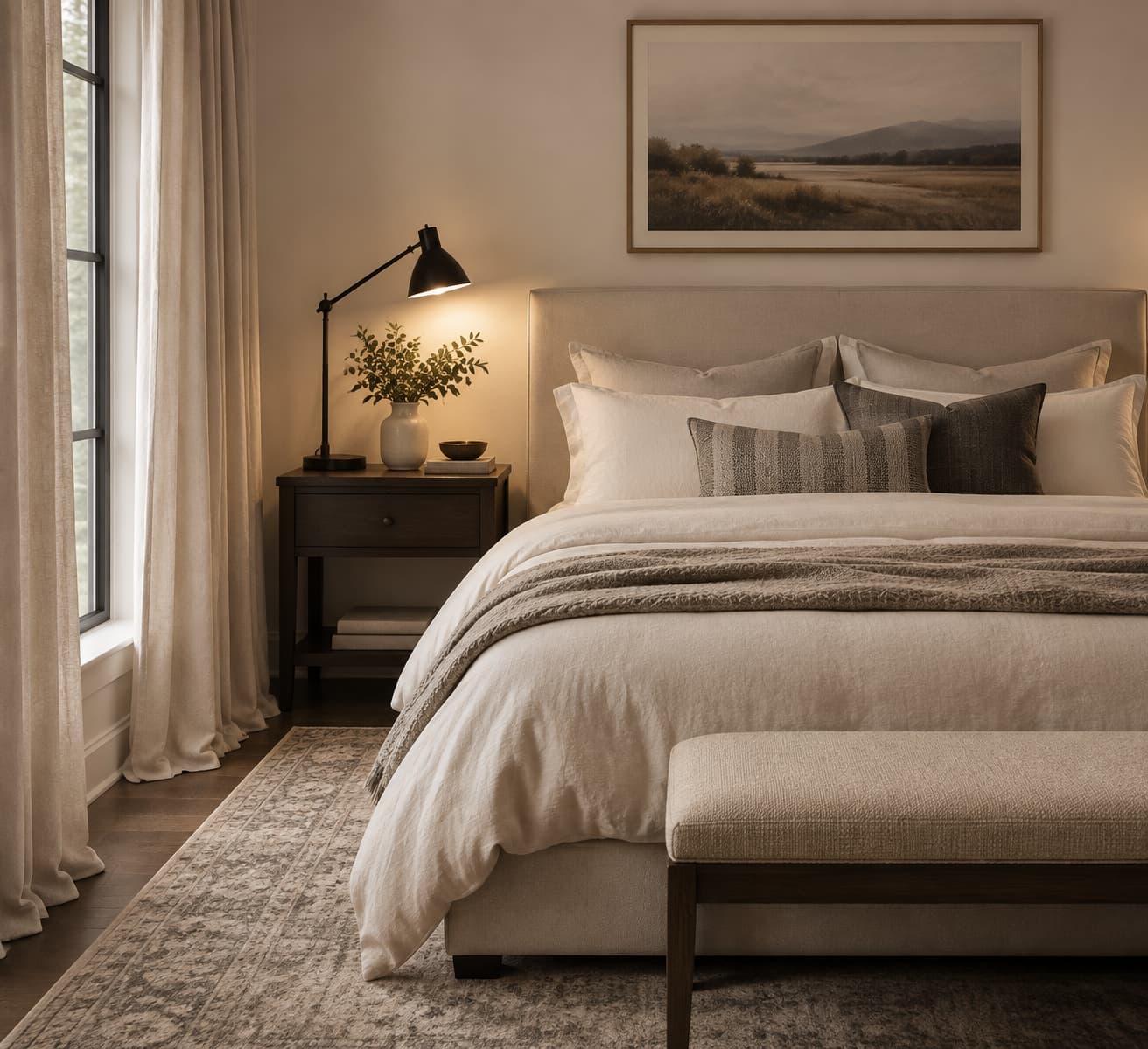
A busy, mismatched palette is the fastest way to make a bedroom look cheap. Expensive rooms almost always stick to a tight, tonal color story instead.
Pick a neutral base, such as warm white, oatmeal, or soft gray. Then layer in two or three related shades across your bedding, rug, and curtains. A little contrast helps too — a dark wood nightstand or a black metal lamp keeps the look grounded instead of flat.
This change often costs nothing. If you already own most of the pieces, you are simply choosing what stays out.
For more neutral palette inspiration, explore calming bedroom color schemes and neutral bedroom ideas that show how designers keep colors cohesive while still adding visual interest.
Layer Your Lighting Instead of Using One Overhead Fixture
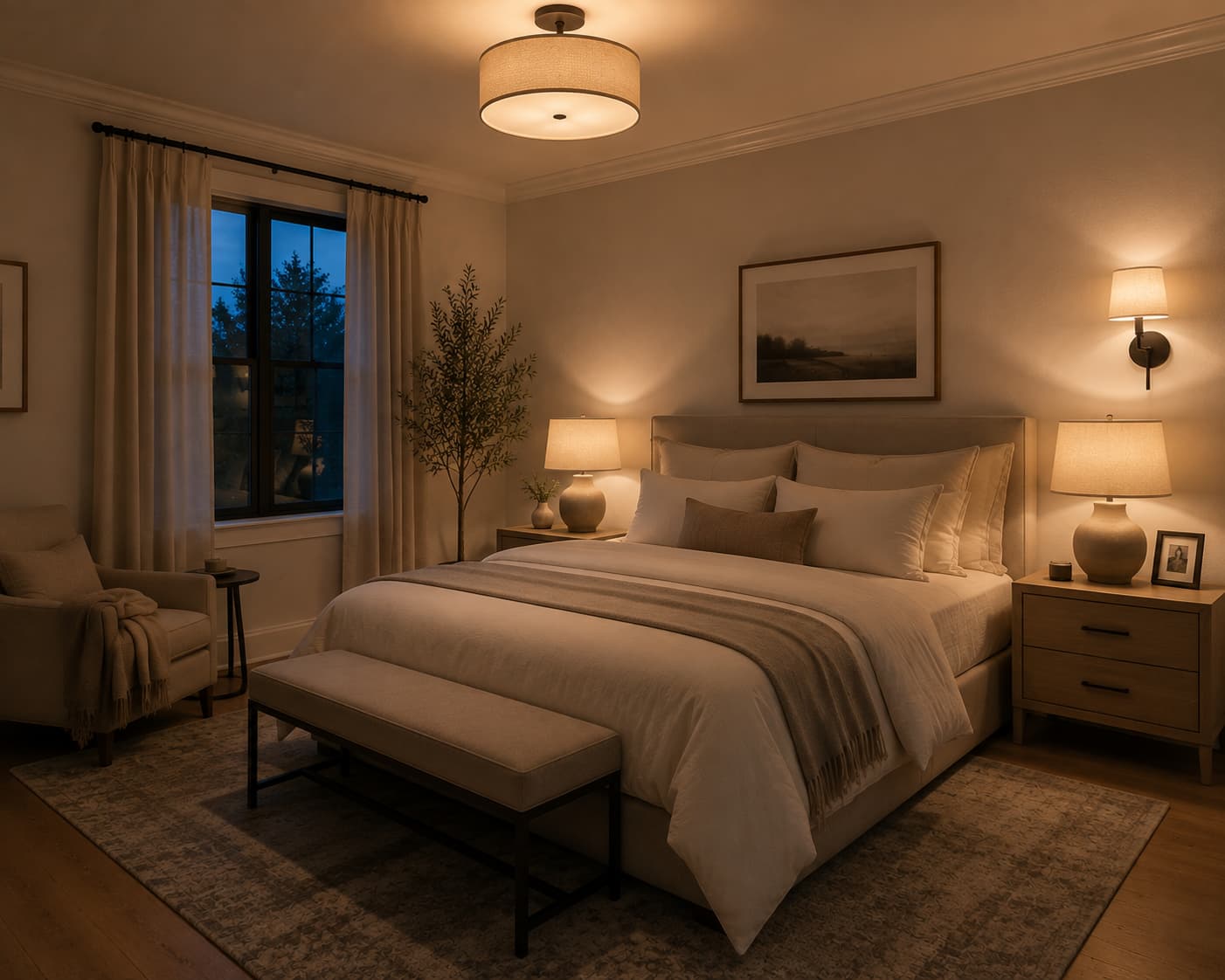
A single ceiling light is the biggest giveaway of a builder-grade bedroom. High-end rooms use layered lighting instead — several smaller light sources working together, rather than one bright fixture flattening the space.
Aim for at least three light sources. A pair of matching table lamps, a wall-mounted sconce or two, and a dimmer on your main fixture will do it. Warm-white bulbs, around 2700K, read as cozy and expensive. Cool white bulbs tend to feel clinical.
A simple bulb upgrade can completely change the mood of a bedroom. Choose 2700K warm white LED bulbs to create the soft golden glow commonly used in luxury hotel rooms without changing your entire lighting setup. Pair them with matching bedside lamps to create symmetry and a more intentionally designed look. Choose lamps with ceramic bases, fabric shades, and simple silhouettes that complement your existing color palette.
If you want more lighting examples from real rooms, guides like budget-friendly hacks for a luxury bedroom show how designers use bedside lamps, sconces, and dimmers to create a high-end feel.
Invest in Better Bedding, Not More Bedding
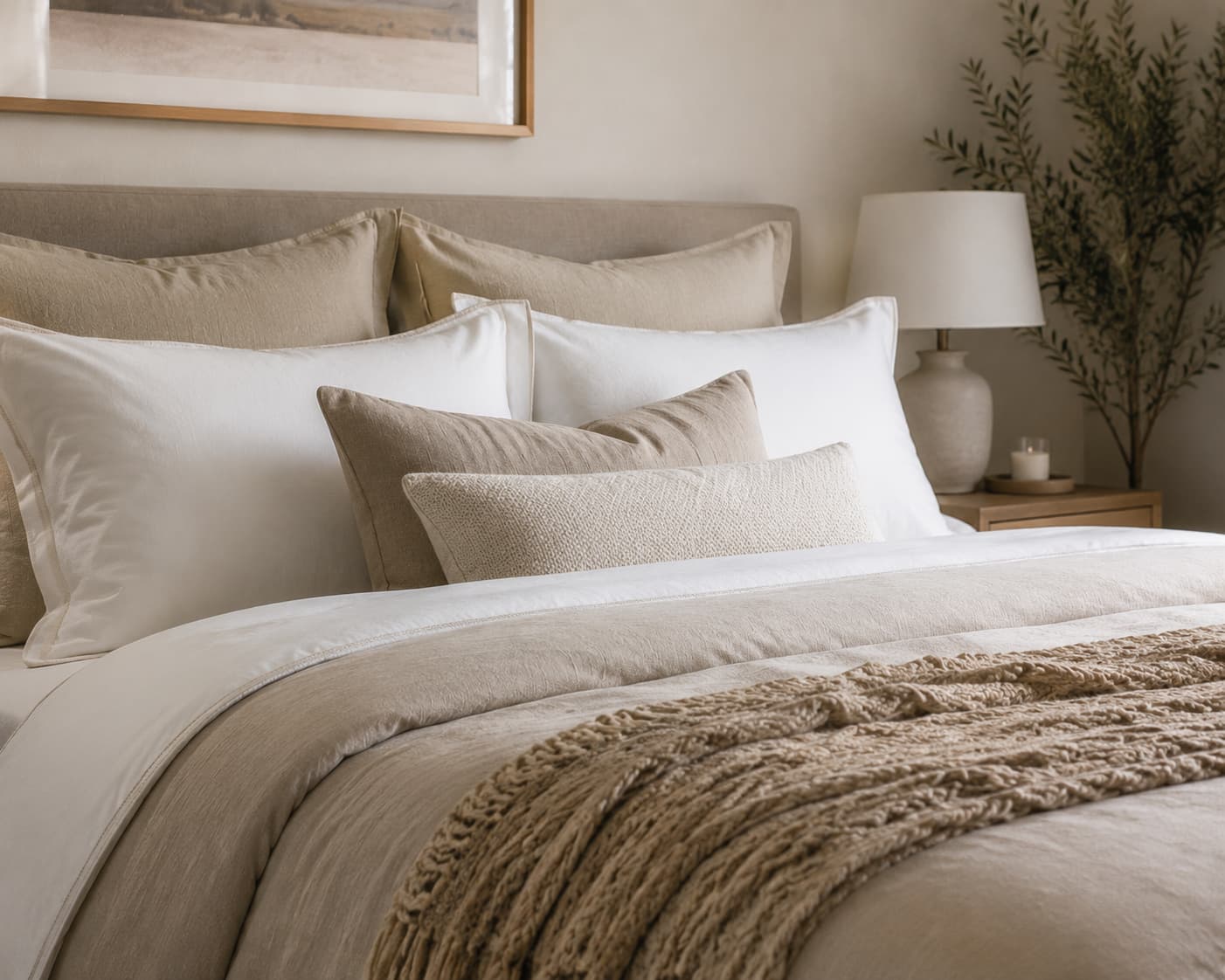
Bedding is the largest fabric surface in the room, so its quality shows fast. Look for natural fibers like linen, cotton percale, or a cotton-linen blend. Shiny polyester blends tend to look cheap the moment they catch the light.
For a crisp hotel-style look, choose breathable cotton sheets with a matte finish rather than shiny synthetic fabrics. The Brooklinen Classic Percale Sheet Set is one example of a cotton percale option that fits this style because of its crisp texture and simple appearance.
A well-made bed also has visible layers. Think a flat sheet, a duvet or coverlet, and at least one set of shams behind your sleeping pillows. That layering is what separates a hotel-style bed from a dorm-room bed, even with the same sheet count.
To complete the layered designer look, add a linen duvet cover in a warm neutral shade. A linen duvet cover such as the Quince European Linen Duvet Cover Set can help create the relaxed, layered look often seen in luxury bedrooms.
Stick to your palette from the section above. A tonal, neutral bedding set will always look more expensive than a busy pattern, no matter the price.
Add Floor-Length Curtains, Even Over Blinds
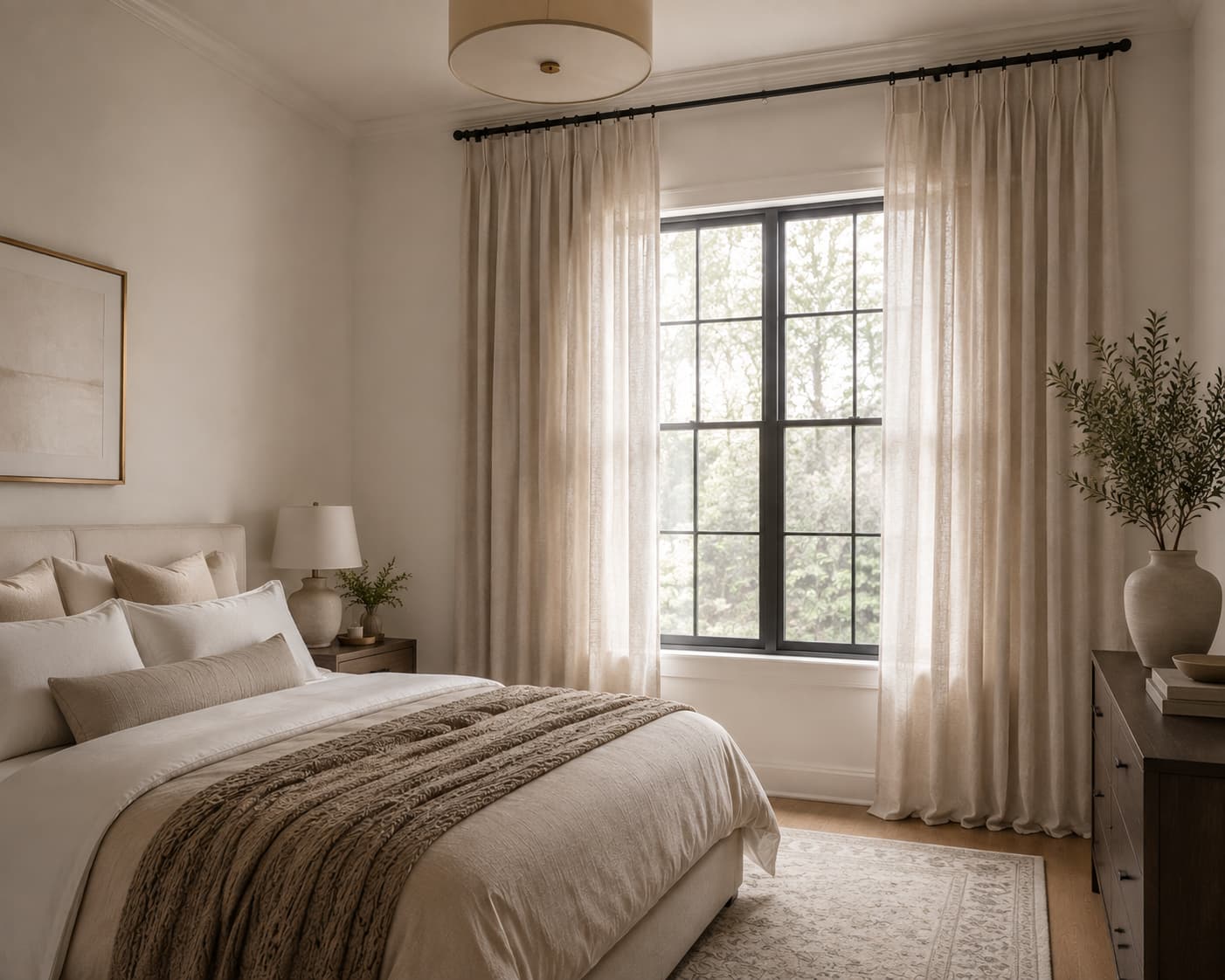
Bare windows or short, stubby curtains make a room feel unfinished. Floor-length curtains fix that fast. Hang them close to the ceiling rather than right above the window frame — this visually stretches the walls and makes ceilings look taller.
Try this simple trick: mount the curtain rod six to ten inches above the window frame. Let the panels graze the floor, or puddle slightly. This adjustment is free if you already own curtains, since it only changes where you hang the hardware.
Linen or a linen-look fabric tends to look the most expensive. It drapes naturally instead of hanging stiff and shiny like cheaper polyester panels.
For an affordable luxury look, choose floor-length linen-look curtains with extra width so they create soft folds instead of appearing flat. A neutral curtain panel can instantly make windows look taller and more custom.
Pick One Furniture “Anchor” and Save on the Rest
You don’t need every piece in the room to be a splurge. Designers typically spend on one anchor piece, usually the bed frame. They save on the smaller items around it.
If you are upgrading only one major furniture piece, an upholstered bed frame is usually the smartest investment because it becomes the visual anchor of the room. The George Oliver Tufted Upholstered Platform Bed is one example of how a neutral upholstered frame can create a refined, hotel-inspired look without changing the entire bedroom.
Choose simpler, budget-friendly nightstands, lamps, and bedding around it instead — those pieces are easy to swap out later. For a full breakdown of what’s worth the splurge, our guide on how to mix high-end and budget furniture walks through the same rule room by room.
Don’t Ignore Mattress Quality
While the bed frame creates the visual impact, the mattress is where comfort matters most. Spending slightly more on a supportive mattress can improve sleep quality and the overall bedroom experience. The Saatva Classic Mattress is one example of a premium mattress option for readers who want to prioritize comfort while upgrading their sleep setup.
When comparing specific bed frames or dressers, focus on frame material and joinery over brand name. Our furniture brand comparison guide breaks down exactly what to check before you buy.
How to Make Your Bedroom Look Expensive on a Budget
A luxury bedroom on a budget isn’t about finding the cheapest version of everything. It’s about spending a bit more where it shows, and saving where it doesn’t.
Where to Spend and Where to Save
What to Splurge On
- Spend on the bed and bedding. Your bed is the main focal point. A simple but well-made frame and good-quality duvet cover make the entire room feel more expensive.
- Spend on lighting that looks intentional. Matching bedside lamps and warm bulbs do more for the mood of the room than an expensive dresser ever will.
Where You Can Safely Save
- Save on nightstands and dressers. Thrifted or budget pieces with interesting shapes, fluted fronts, or new hardware can look high-end at a low price.
- Save on art and decor. Large but affordable prints, your own photos, or DIY canvases give you the “designer” look without a gallery-level budget.
If you focus your budget this way, you’ll get a bedroom that looks luxurious in photos and in person, even if most of the pieces are affordable.
Swap Basic Nightstands for Ones With Real Detail
Flat, boxy nightstands from a basic furniture set date a bedroom fast. Pieces with fluted or reeded fronts, curved silhouettes, or mixed materials like cane and wood read as far more expensive — even at a similar price point.
A nightstand with architectural detail, like vertical fluting or a rounded silhouette, adds interest without adding clutter. Love a designer look but not the designer price? Our roundup of furniture dupes worth buying covers close look-alikes for popular fluted and cane nightstands.
Hang One Oversized Piece of Art Instead of Several Small Ones
A gallery wall can look wonderful, but it takes real skill to pull off well. When in doubt, go with one large piece instead. A single piece of art above the bed or dresser almost always reads as more curated than a cluster of small frames.
Size the art to roughly two-thirds the width of your headboard or dresser — that ratio gives the most balanced look. A large abstract canvas in a tone pulled from your bedding ties the whole room together without adding visual noise.
Add Texture With a Rug, a Bench, or a Throw
Flat, matte surfaces everywhere make a room feel one-dimensional. A textured rug underfoot adds depth fast. So does a woven throw at the foot of the bed or a velvet bench.
A neutral area rug is one of the easiest ways to make a bedroom feel layered and professionally styled. A neutral textured rug, such as a beige wool-look area rug, can help anchor the room and connect the bedding, curtains, and furniture into one cohesive design. Choose soft patterns and natural-looking textures instead of bold designs. These are the small details that expensive rooms always have.
A textured throw blanket placed casually at the foot of the bed adds warmth and creates the layered styling often seen in luxury bedrooms.
Velvet needs a bit more care than cotton or linen. Our guide on how to clean a velvet sofa covers gentle steps that also work on a velvet bench or ottoman, so spills don’t leave a permanent mark on your investment piece.
For a detailed breakdown of where to spend on bedding, rugs, and window treatments, you can check this guide on how to make a bedroom look expensive on a budget and see how different textures change the feel of a room.
Edit What’s Out, Then Style What’s Left
Clutter undercuts every other change on this list. Start with your nightstands. Clear them down to two or three items: a lamp, a small tray, maybe a candle or a stack of books.
Dressers and surfaces should feel styled, not stored. A single tray for loose items like jewelry or hand cream keeps the surface looking curated — it works even when the drawer underneath is a mess.
Small Architectural Details That Punch Above Their Price
A few low-cost building details go a long way. Paint the trim and ceiling in a soft tone that relates to your wall color, rather than stark white. It makes the whole room feel more cohesive.
Simple picture-frame wall molding behind the headboard adds real architectural interest. Use inexpensive strips of wood trim and a coat of paint. This project takes more tools and patience than the others on this list, so watch a few tutorials first, or hire help if you’re not comfortable with a miter saw.
Common Mistakes That Make a Bedroom Look Cheap
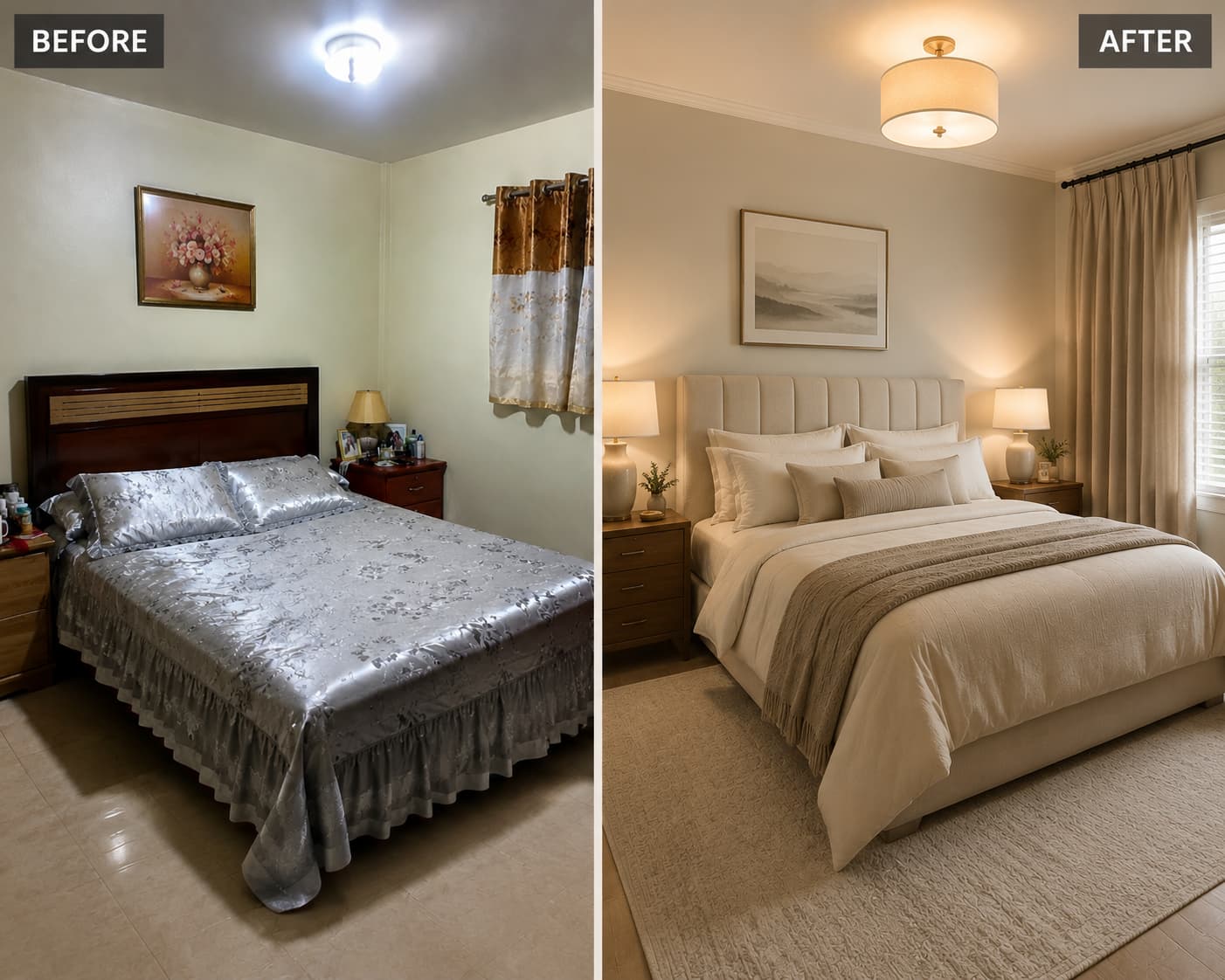
A few habits undo all of the changes above. Watch for these:
Bedding and Curtain Mistakes
- Shiny, synthetic bedding instead of natural fibers.
- Curtains that stop short of the floor, or a rod hung too close to the window.
Lighting Mistakes
- A single harsh overhead light with no lamps or sconces.
Decor and Furniture Mistakes
- Mismatched wood tones scattered across furniture pieces.
- Too many small decorative objects with no clear focal point.
Frequently Asked Questions
How much does it cost to make a bedroom look expensive?
Many changes above cost nothing beyond your time — decluttering, rehanging curtains higher, and rearranging lighting all fall into that category. A fuller refresh with new bedding, a lamp pair, and one art piece typically runs a few hundred dollars, depending on where you shop.
What is the fastest change to make?
Rehang your curtains higher and wider than the window frame, and switch off your overhead light in favor of lamps. Both changes take under an hour, and both show up immediately in photos and in person.
Can renters do any of this without painting or drilling?
Yes. Curtains, layered lighting, bedding, a leaning art piece, and a rug are all renter-friendly. Save the wall molding and any paint changes for a home you own, or check with your landlord first.
Do all the pieces need to match?
No — matching too much can actually look less expensive. Aim for a shared color palette and a repeated material or finish, like brass or black metal, instead of an identical furniture set.
What makes a bedroom look expensive?
A bedroom usually looks expensive because of cohesion, not the cost of individual items. A consistent color palette, layered lighting, quality bedding, long curtains, and thoughtful textures create a more polished appearance.
Create Your Luxury Bedroom Checklist
Start with the upgrades that create the biggest visual impact:
✓ Neutral bedding
✓ Warm layered lighting
✓ Floor-length curtains
✓ One statement furniture piece
✓ Textured accents
These changes can transform a basic bedroom into a more polished, hotel-inspired space without requiring a complete renovation.
Ready to upgrade your bedroom? Start with the essentials: quality bedding, warm lighting, long curtains, and one statement furniture piece.
Conclusion
Making your bedroom look expensive is mostly about cohesion and intention, not an endless budget. Start with a calming color story, better lighting, and layered bedding, then add curtains, texture, and one strong focal point. Edit out visual noise and your room will feel more like a boutique hotel every time you walk in. If you apply even two or three of these changes, you’ll see how quickly they transform the way your bedroom looks and feels.