

Let’s talk about how to mix high-end and budget furniture, because I think a lot of people get this completely backwards.
Here’s the myth: a beautiful home means every single thing in it cost a fortune. You know what bugs me about that idea? It’s just not true. I’ve seen rooms with a $6,000 sofa look cheap because nothing else in the space had a plan. And I’ve seen a $40 side table from a marketplace listing look like a million bucks — because it was placed next to the right pieces, in the right colors, with a little intention behind it.
The whole skill of mixing high-end and budget furniture comes down to a handful of specific, repeatable tricks. Let me walk you through them.
Designers aren’t buying everything expensive. They’re just using those specific tricks well.

Where to Splurge and Where to Save on Furniture
Before we get to the fancy tricks, let’s start with the simplest one: not everything deserves the same budget.
- The sofa — you use it daily, it anchors the room
- The dining table — every guest touches it and judges it
- The bed frame — foundational, annoying to replace often
- Any piece you plan to keep 8+ years
- Trendy decor and seasonal accessories
- Accent chairs and side tables
- Throw pillows — swap them without swapping furniture
- Lamps — surprisingly good designer-style options exist cheap
This is genuinely one of the most repeated pieces of real designer advice out there: spend your budget on the foundation of the room, then save on the finishing touches. Invest in a quality sofa. Layer in affordable prints, vintage finds, and seasonal accessories around it.
Quick gut check: if you’ll touch it, sit on it, or eat off it every single day for years — that’s where your money goes. If you’ll swap it out next season anyway, save your cash.
6 Designer Rules for Mixing High-End and Budget Furniture

Okay, this is the part that actually matters. These aren’t vague “trust your eye” tips — they’re specific things you can actually do this weekend.
1. The One Statement Rule
Let one or two pieces dominate the room. Just one or two! A bold sofa, an oversized armchair, a sculptural coffee table. Everything else should quietly support that piece, not compete with it.
Example: a bright turquoise armchair as the single loud moment in an otherwise neutral, mixed-style living room.
2. The Color Repetition Rule
Pick two or three tones. Repeat them everywhere — cushions, curtains, finishes, accessories. This one habit alone visually glues your expensive and budget pieces into a single story instead of a random pile of stuff.
Example: a rust-orange throw, a matching ceramic vase, and the same tone woven into your rug — completely different price points, same color thread tying it all together.
3. The Material Bridge Rule
Wood and woven textiles are the great equalizers of furniture. Their warmth shows up the same whether the piece cost $50 or $5,000, and that shared material creates continuity across your whole budget range.
Example: a warm oak side table from a budget retailer sitting right next to a solid oak dining table that cost ten times as much — they read as a matched pair, not mismatched cousins.
4. The Embrace-The-Contrast Rule
Here’s the twist nobody tells you: don’t hide the price gap. Lean into it! Glossy next to matte. Smooth against textured. Vintage beside modern. That tension is actually what makes a room feel designed instead of assembled.
Example: a sleek new sofa paired with a weathered vintage trunk as a coffee table. The history and contrast in finish genuinely add depth — try browsing somewhere like Chairish for pieces with real character.
5. The Weight-Balance Rule
If you’ve got a big, dark, heavy piece, balance it out with something light nearby. Otherwise the room feels top-heavy, like it’s about to tip over. Heavy near the focal point, light around the edges.
Example: a dark sectional paired with a light rug and open shelving, instead of stacking dark furniture on dark furniture.
6. The Repetition-Not-Duplication Rule
Matching everything is the fastest way to make a room look like a furniture showroom, not a home. Instead, group pieces that share a tone or finish, and vary the height so your eye actually moves around the space.
Example: three lamps in different shapes but the same brass finish look curated. Three identical lamps look like you bought a matching set and called it a day.
High-Low Interior Design Room by Room
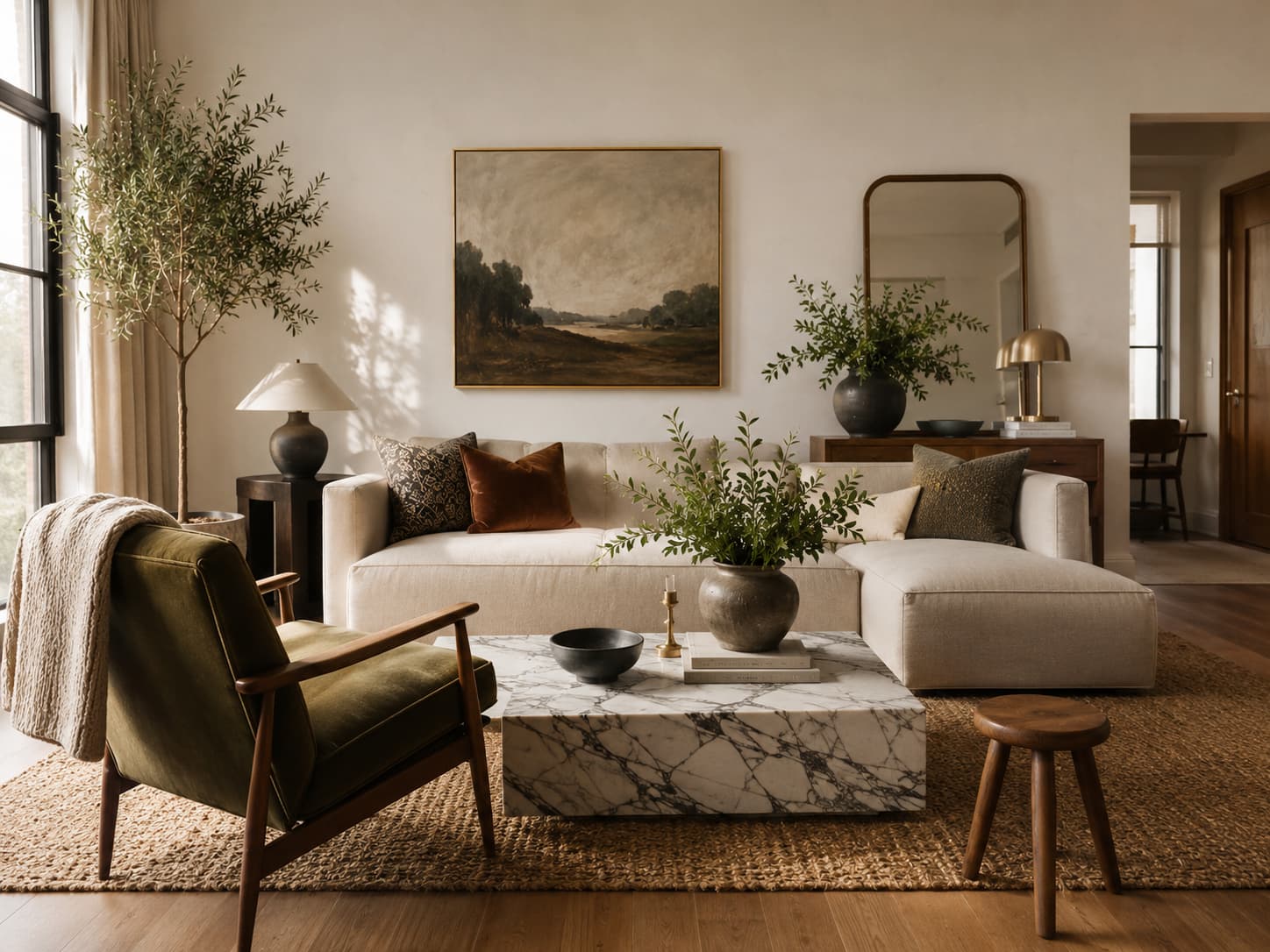
Let me make this concrete instead of theoretical.
Living Room
Splurge on the sofa. Save on the coffee table (a vintage trunk works beautifully — see rule 4). Repeat your color palette between the throw pillows and a piece of art. Balance a dark sofa with a light, textured rug.
Dining Room
Splurge on the table itself — this is the piece everyone sits at and notices. Save on the chairs; mismatched vintage chairs in a repeated wood tone look intentional, not cheap, thanks to rule 3.
Bedroom
Splurge on the bed frame and mattress. Save on the nightstands, lamps, and bedding — swap these seasonally without touching the foundation of the room at all.
Read our guide: How to Make Your Bedroom Look Expensive
Smart Ways to Score High-End Furniture on a Budget
Saving money doesn’t mean settling for less style. Here’s how to actually do it well.
- Check outlet stores. Brands like West Elm and Pottery Barn run outlet locations where you can snag designer-quality pieces for a fraction of retail.
- Ask about trade discounts. Designers often get 20 to 30% off furniture — some services pass that discount straight to you if you ask.
- Shop vintage and marketplace finds. An antique chest or a vintage mirror often has more character than anything brand new, and it usually costs less too.
- Time it around sales. Trendy decor and small accessories are exactly what to grab during seasonal sales — no rush required.
Common Mistakes That Make High-Low Furniture Design Look Cheap
A few habits that quietly sabotage the whole effort:
- Matching every single piece. Ironically, this is what makes a room look the cheapest — like a boxed furniture set, not a home.
- Ignoring scale and proportion. A budget piece that’s the wrong size for the room reads as an afterthought, no matter how nice it looks on its own.
- Skipping lighting layers. Even the best furniture mix falls flat under one harsh overhead light. Layer floor lamps, table lamps, and overhead fixtures together.
- Adding too many statement pieces at once. Remember rule 1 — one or two, not five.
Mix High-End and Budget Furniture: The Bottom Line
A designer-level room isn’t about the total on your receipt. It’s about intention — where you spend, where you save, and how you tie it all together with color, material, and a little contrast.
Pick your foundation pieces, apply these six rules, and trust me — nobody walking into your living room is going to be doing the math on what everything cost.
Check our : High Low Styling Hub
Quick Answers: High-Low Furniture Design
How Do Interior Designers Mix Expensive And Cheap Furniture?
They splurge on foundation pieces like the sofa or dining table, save on finishing touches like accessories and accent chairs, then tie it all together with repeated colors, bridging materials like wood, and one or two clear statement pieces.
What Furniture Should You Splurge On?
Prioritize what you use daily and keep for years — the sofa, dining table, and bed frame. These take the most wear and are the most annoying to replace, so quality pays off over time.
What Furniture Is Okay To Buy Cheap?
Trendy decor, accent chairs, side tables, and seasonal accessories like throw pillows. These are easy and inexpensive to swap as your style changes, so there’s little reason to spend more upfront.
How Do You Make Budget Furniture Look Expensive?
Repeat two or three colors throughout the room, bridge pieces together with natural materials like wood or woven textiles, and avoid matching everything exactly. A little intentional contrast reads as curated, not cheap.
Is It Okay To Mix Furniture Styles In One Room?
Yes — most professionally designed rooms mix styles on purpose. The trick is a unifying thread, usually color or material, so the mix feels like a deliberate collection instead of mismatched leftovers.
How Many Statement Pieces Should A Room Have?
Just one or two. A bold sofa, an oversized armchair, or a sculptural coffee table works best as the visual anchor, with everything else supporting it quietly instead of competing for attention.
