

Sectionals, loveseats, chesterfields, recliners, sleepers, and mid‑century sofas are some of the most popular sofa styles you’ll see today.
I’ve designed, tested, and lived with many different sofa and couch types over the years, and my goal is to help you quickly recognize the styles, functions, materials, and sizing details that actually matter. This guide walks through common sofa types, practical buying tips, care advice, and hard‑won lessons from real homes so you can feel confident choosing the right seating for your space.
If you already have a specific sofa in mind, you can also jump straight into my detailed reviews, like the RH Cloud sofa review or Sven sofa review and buying tips, and then come back here to compare other styles.
Common Sofa Types
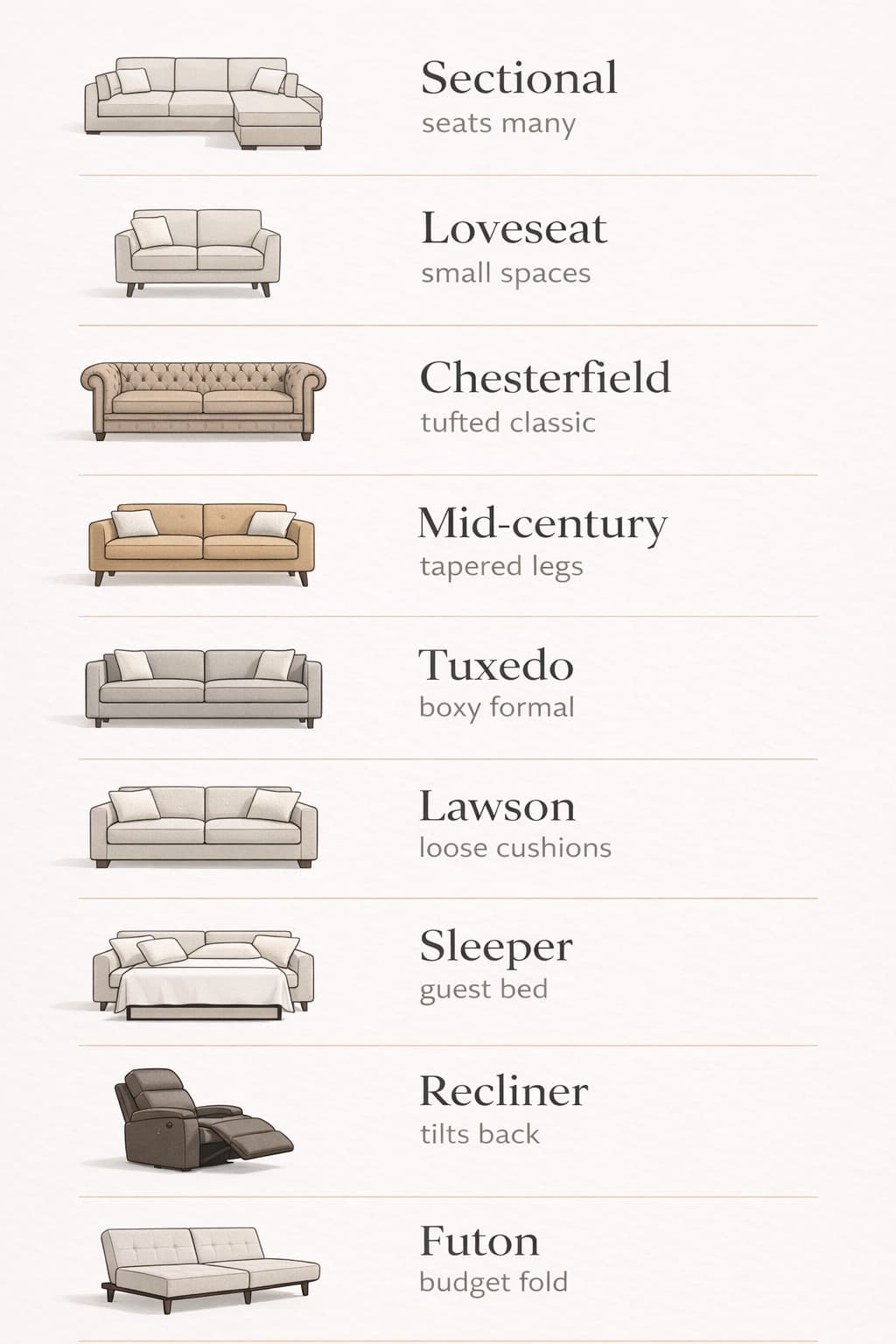
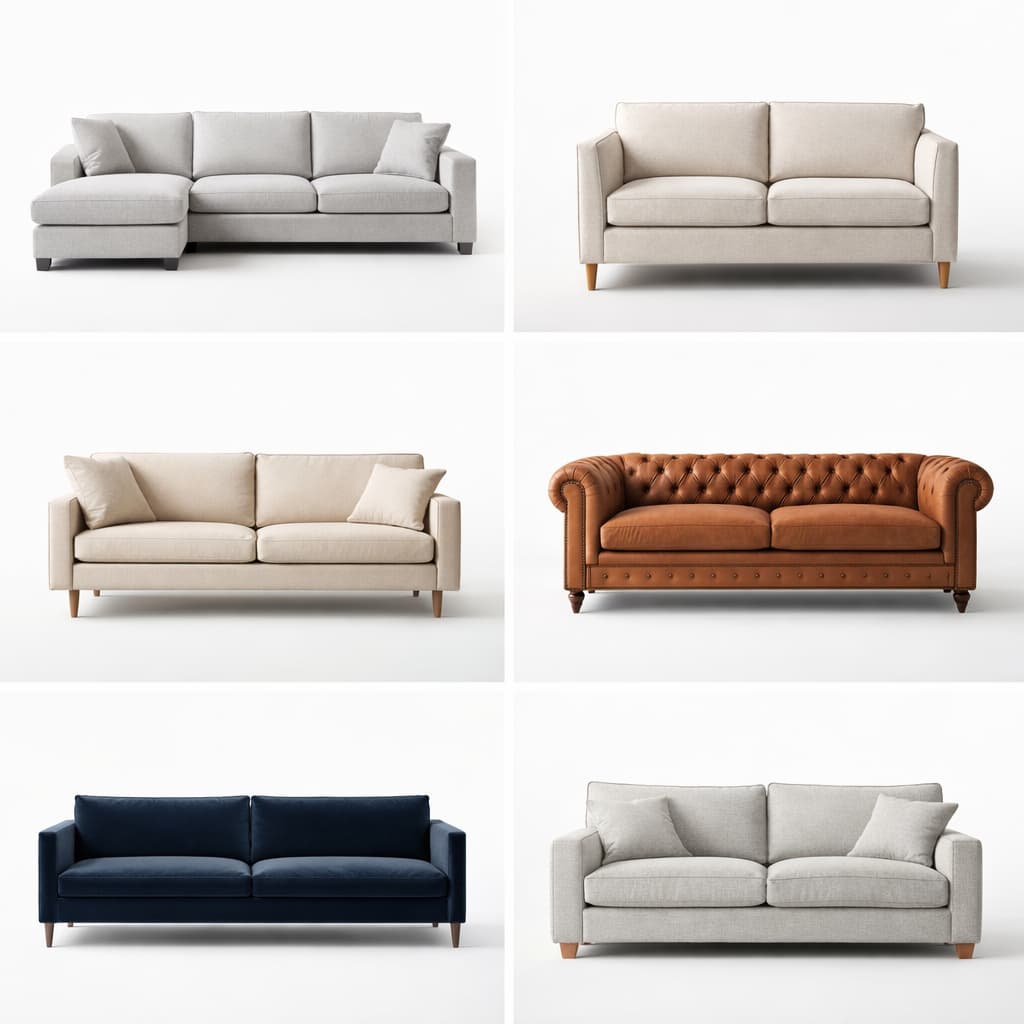
Below are the most common Types Of Sofas And Couches you’ll see in stores and catalogs. Each entry explains the look, best uses, and a quick buying tip.
Sectional
Sectionals join multiple seating pieces into an L, U, or modular layout. They are great for large rooms and flexible seating. Choose a sectional when you need seating for many people or want to divide a living area. For deep, cloud‑like comfort, compare this layout with my in‑depth RH Cloud sofa review before you decide.
Loveseat
A two-seat sofa ideal for small spaces or paired with a larger sofa. Loveseats fit well in apartments and as companion pieces. Look for firm cushions for longevity.
Chesterfield
Recognizable by deep button tufting and rolled arms at the same height as the back. It adds a formal, classic feel to living rooms or studies. Often upholstered in leather, it wears impressively over time. Because many chesterfields are leather, it’s worth skimming my leather sofa care guide so you know how to protect that investment.
Mid-century modern sofa
Clean lines, exposed legs, and simple wooden frames define this style. It works in both modern and eclectic interiors. Choose a mid-century sofa for a timeless, airy look.
Tuxedo sofa
Arms and back are the same height, creating a boxy silhouette. It’s a popular formal choice for living rooms and lounges. Tuxedo sofas pair well with bold colors and metallic accents.
Lawson sofa
Features separate, loose back cushions and a comfortable, casual profile. It’s a great family choice for relaxed rooms. Look for washable cushion covers if you have kids or pets.
Sleeper sofa / Sofa bed
A sofa with a built-in mattress for overnight guests. Modern sleepers balance comfort and compact form. Try the mattress in-store when possible.
Recliner sofa
Seats that tilt back and extend a footrest. Great for media rooms and high-comfort seating. Check the mechanism quality and warranties.
Futon
A budget-friendly convertible piece that folds flat into a bed. Works well in dorms or multi-use rooms. Choose a sturdier frame to avoid sagging.
Modular sofas
Loose pieces that reconfigure into different shapes. They adapt to changing needs and spaces. Pick durable connectors and easy-to-clean upholstery.
Types of Sofas and Couches vary by style and purpose, so think about your room size and daily use before buying.
Sofa and couch styles vary a lot by shape and purpose, so think carefully about your room size and how you’ll use the piece day‑to‑day before you buy.
For deep, cloud‑like comfort, compare this layout with my in‑depth RH Cloud sofa review before you decide.
Sofa Styles and Design Features
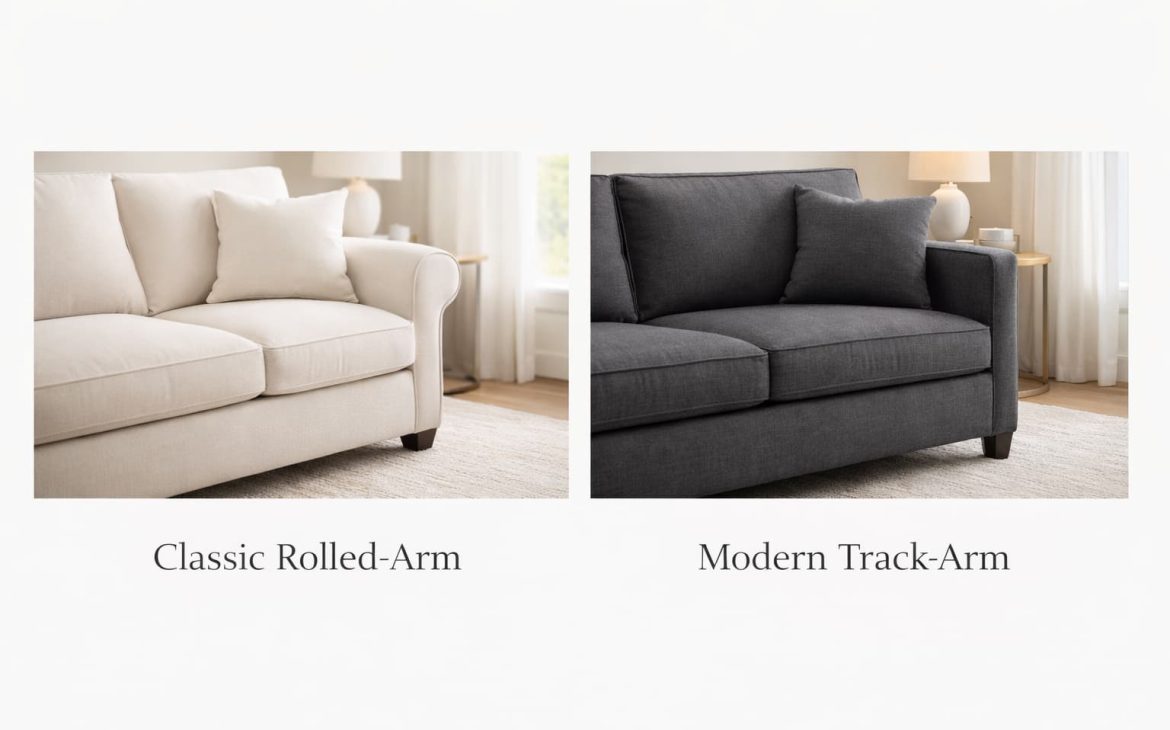
Understanding styles helps you match a sofa to your décor. Sofas and couches tend to fall into a few main design families: formal, casual, and modern.
Arm styles:
Roll arms, track arms, sloped arms, and no arms each change a sofa’s feel. Roll arms feel classic. Track arms feel modern.
Back styles
Tight backs are sleek and low maintenance. Loose backs feel softer but need occasional fluffing and a bit more regular care.
Leg and frame finishes
Exposed legs add height and lightness. Skirted sofas hide the legs for a traditional look. Choose finishes that match other furniture.
Cushion construction
Foam core, down-wrapped, and innerspring cushions vary in support and feel. Foam is firm and long-lasting. Down-wrapped cushions feel plush but need frequent plumping.
Upholstery patterns and textures
Velvet, boucle, linen, and performance fabrics each give a distinct vibe. Performance fabrics resist stains and are family-friendly. Velvet reads luxurious and requires gentle care. If you’re choosing between these two, my boucle vs velvet sofa guide compares how each looks, feels, and wears over time.
A quick rule: pick a style that matches how you live. Types of Sofas and Couches for active families should prioritize durability over delicate upholstery.
Many major retailers publish helpful overviews of common sofa shapes and layouts; check one of these sofa size and style guides if you want to compare dimensions before you shop.
Functional Sofa Types and Uses
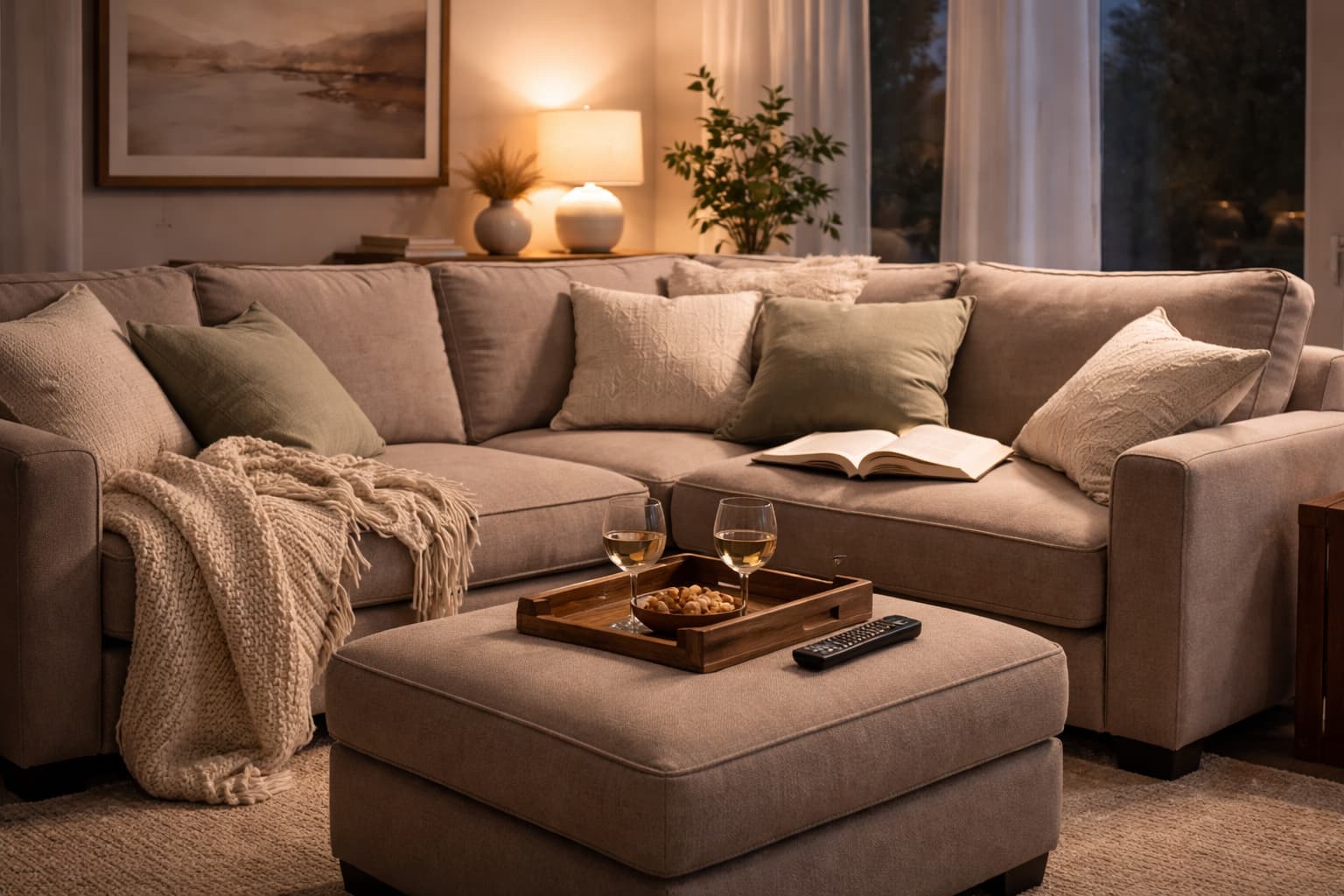
Function shapes form. When selecting among Types Of Sofas And Couches, ask how you will use them daily.
Everyday lounging
Choose deep seats and plush cushions. A Lawson or sectional often works best.
Guest sleeping
Opt for a sleeper or convertible sofa with a supportive mattress. Measure the room layout before choosing.
Small spaces
Pick loveseats, apartment-size sofas, or compact modular pieces. Scale matters more than style in tight rooms.
Media and home theater
Recliners or deep-seat sectionals provide comfort for long viewing sessions. Check spacing for recline.
Multi-purpose rooms
Futons and modular sofas give flexibility. Choose easy-to-clean fabrics and sturdy frames.
Sofas designed for a specific use—lounging, guests, media, or small spaces—almost always deliver better long‑term satisfaction than a one‑size‑fits‑all pick.
Designers often recommend choosing multi‑purpose sofas based on how you actually live, not an idealized version of your space, so it can help to review a few real‑home layout examples before deciding.
Sofa Materials, Construction, and Upholstery
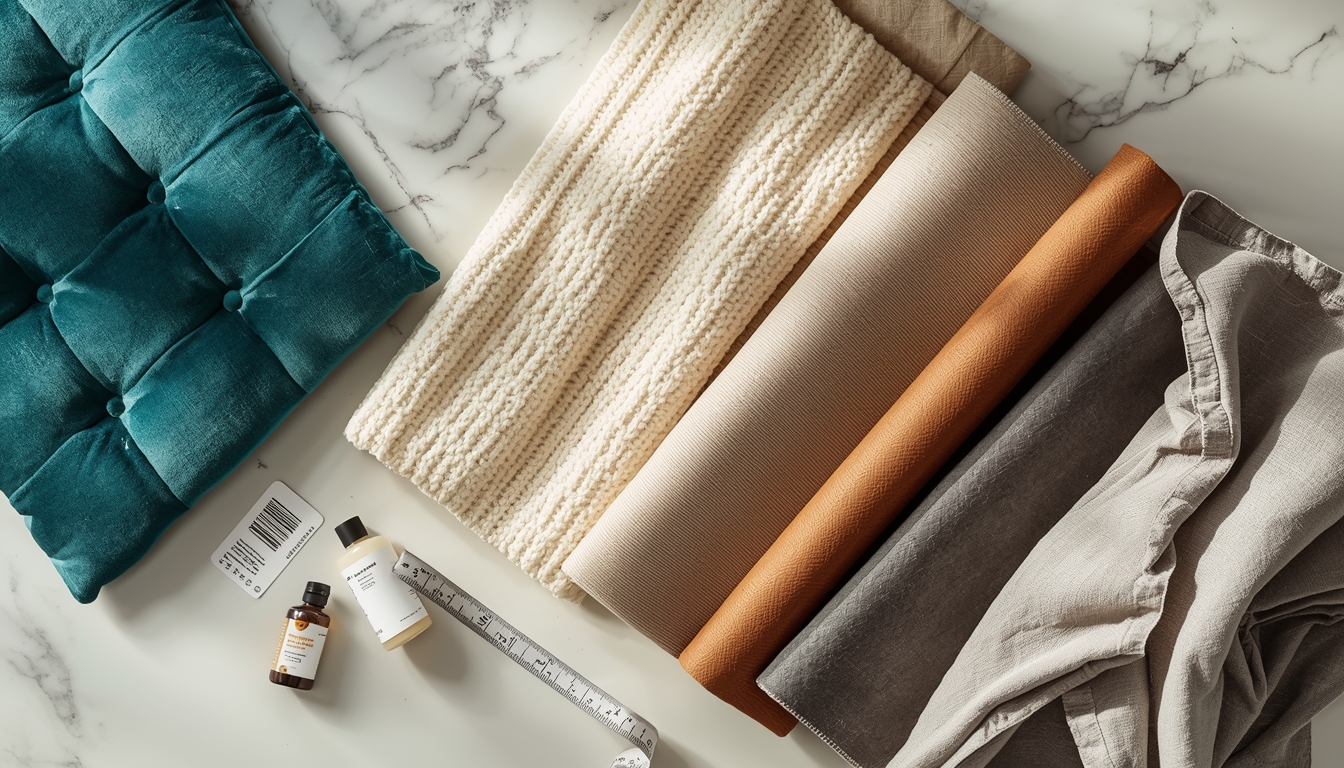
Materials determine comfort and durability. Learning a few construction basics helps you evaluate any sofa or couch much more confidently.
- Frame materials
Kiln-dried hardwood frames resist warping. Plywood and engineered wood add budget options. Avoid softwoods that may sag over time. - Suspension systems
Eight-way hand-tied springs are premium and long-lasting. Sinuous springs are common and offer solid support. Check seat bounce and feel in person. Not all brands are transparent about what’s inside; in my best couch material and construction guide, I explain how to decode labels and spot true eight‑way hand‑tied builds versus cheaper alternatives. - Cushion fill
High-resilience foam holds shape and offers support. Feather or down wraps add softness but need frequent upkeep. Look for graded-density foam for cost-effective comfort. - Upholstery fabrics
Natural fibers like cotton and linen breathe well but stain easily. If you love the look of faux leather, read my how to clean a faux leather couch guide before you commit—it shows exactly how it handles spills and daily wear. Leather is durable and develops character with age. For day‑to‑day care and scratch repair tips, my best way to clean a leather couch and fix cat scratches on a leather sofa walkthroughs are worth a look. Performance fabrics resist stains and are pet-friendly. - Hardware and mechanisms
For recliners and sleepers, inspect metal parts and warranties. Smooth, quiet mechanisms last longer. Ask about replacement parts availability.
When you’re evaluating a sofa, focus first on frame quality and suspension, because those two details affect lifespan the most.
If you’d like to see diagrams of different frame types and suspension systems, look for a neutral upholstery construction guide that compares kiln‑dried hardwood frames, sinuous springs, and eight‑way hand‑tied springs side by side.
Choosing the Right Sofa for Your Space
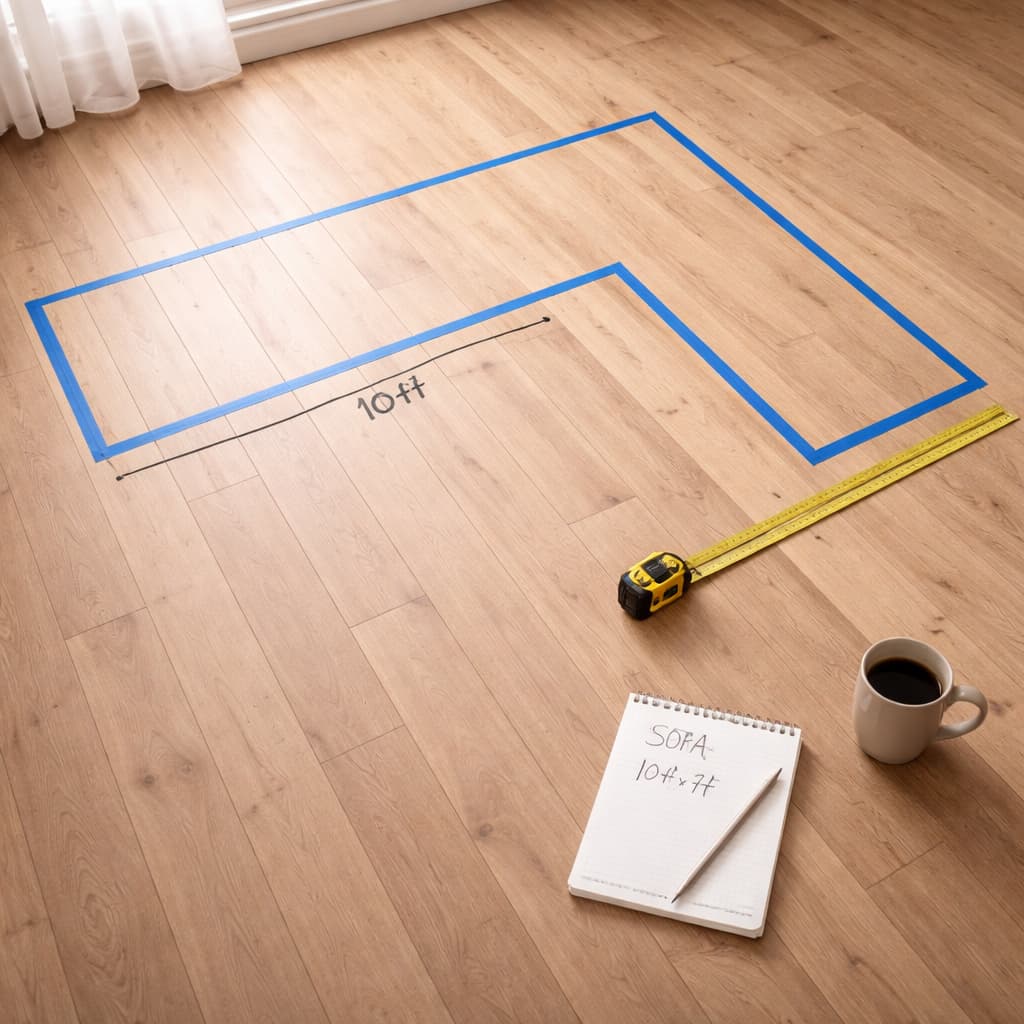
A good sofa fits your room, lifestyle, and budget. Follow simple steps when choosing Types Of Sofas And Couches.
- Measure first
Record the room dimensions, doorways, and stair widths. Include space for walking around the sofa. - Consider scale and proportion
Low-profile sofas suit modern rooms. Taller backs work in large, formal spaces. Visualize with painter’s tape on the floor. If you’re still deciding between brands, my Pottery Barn vs West Elm comparison and RH vs Arhaus breakdown show how popular retailers differ on scale, comfort, and build. - Test for comfort
Sit for at least five minutes in-store. Check seat depth and cushion firmness. Recline if the sofa has that feature. - Balance style and use
Formal designs look great, but may not hold up in active households. Choose performance fabric for kids and pets. - Budget wisely
Spend more on the frame and suspension. You can change cushions and upholstery later. Think long-term value rather than the lowest price. For a wider view, the complete furniture brand comparison guide pulls together pricing, quality, and warranty notes across the major retailers I’ve tested.
Sofas that you’ve measured carefully and tested in person are far less likely to end up as returns or buyer’s remorse.
Sofa Care, Maintenance, and Longevity
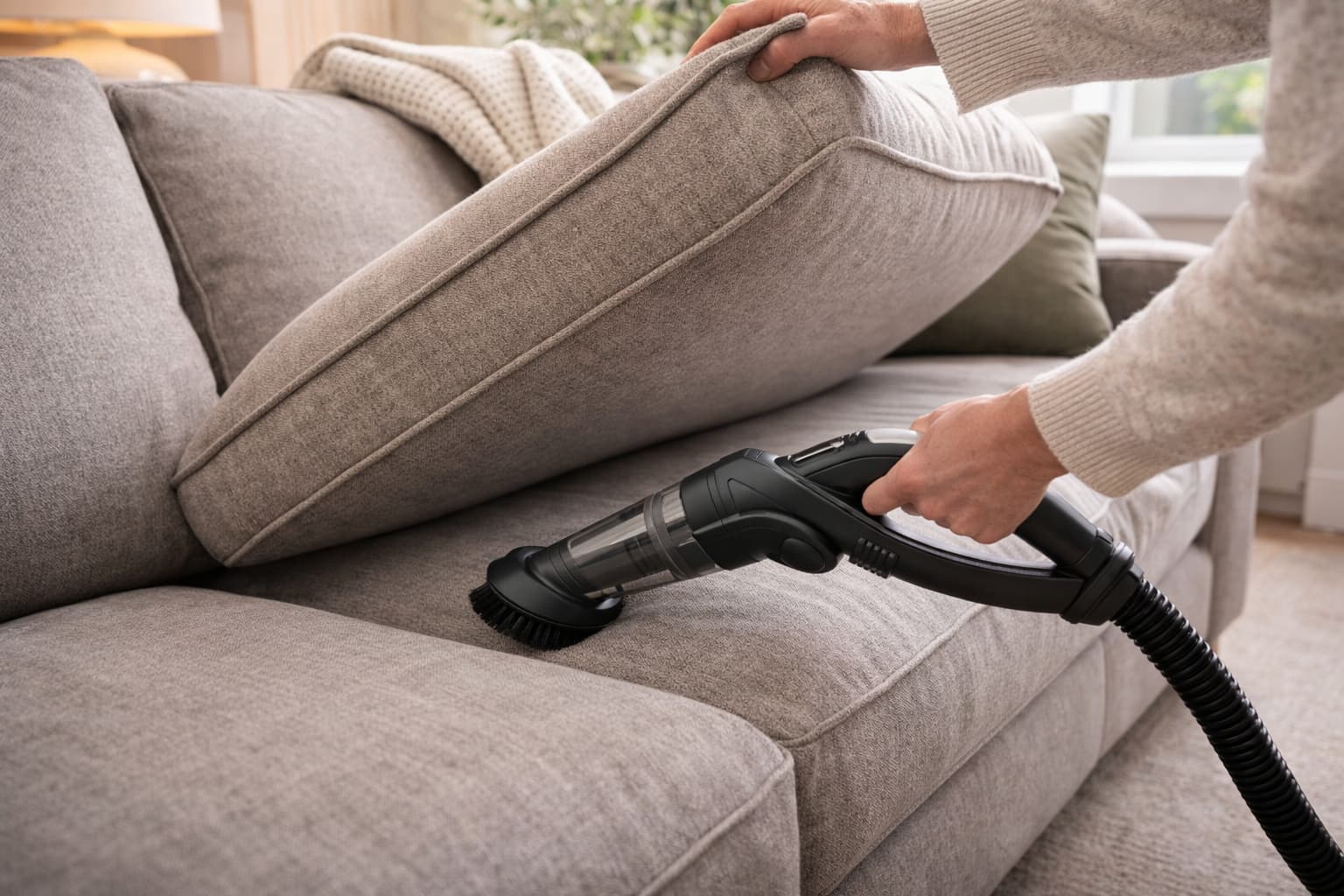
Proper care extends the life of Types Of Sofas And Couches. Small habits make a big difference.
- Regular cleaning
Vacuum crevices weekly. Blot spills immediately with a clean cloth. Follow manufacturer cleaning codes. - Rotate cushions
Flip and rotate cushions to prevent uneven wear. Do this monthly for busy sofas. - Protect from the sun and pets
Use throws to shield fabric or leather from direct sunlight and pet claws. Trim pet nails and provide a designated pet bed. - Professional maintenance
Have delicate fabrics or large stains professionally cleaned. Re-tighten bolts and check frames yearly. - Repair early
Fix loose legs, sagging springs, or torn seams promptly. Small repairs prevent higher costs later. If you’re dealing with real damage, I walk through step‑by‑step fixes on how to fix cat scratches on a leather couch and how to repair a burn hole in a couch.
I’ve extended sofas’ lives by rotating cushions and using washable covers. These simple steps saved time and money.
Personal Experience and Mistakes to Avoid
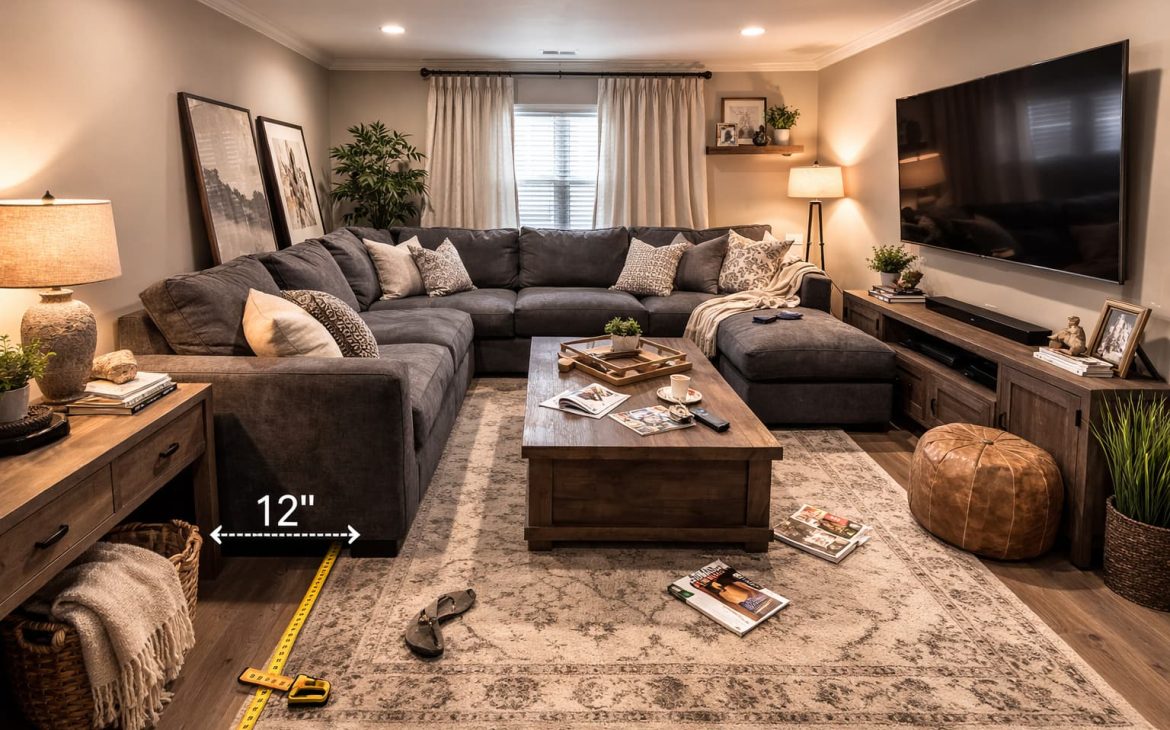
I’ve bought and tested many different sofa and couch styles for my own homes and for clients. Here are honest lessons from that work.
- Mistake: Buying without measuring
I once bought a beautiful sectional that wouldn’t fit my hallway. Returning it was costly. Measure twice before buying. - Mistake: Choosing style over comfort
A sleek sofa looked amazing, but was too shallow for my frame. Guests complained. Prioritize comfort for daily seats. - Useful tip: Ask about warranties and parts
One recliner I owned had a broken mechanism. The warranty saved me hundreds. Always check terms. - Useful tip: Test the sofa in your routine
Sit, nap, and try reclining if relevant. I test sofas by spending at least 10 minutes sitting in various positions. - Mistake: Underestimating cleaning needs
A light fabric I loved stained quickly. Switching to a performance fabric would have been wiser. Think practical for busy homes.
Types of Sofas and Couches can be a great investment if you learn from mistakes and choose thoughtfully.
Frequently Asked Questions About Sofas and Couches
What is the most durable type of sofa?
The most durable sofas feature kiln-dried hardwood frames and eight-way hand-tied springs. Leather or performance fabrics also increase durability.
How do I choose the right sofa size?
Measure your room, doorways, and planned layout. Allow walking space and visualize the sofa footprint with tape.
Are sleeper sofas comfortable for daily use?
Most sleeper sofas are designed for occasional use. If you need daily sleeping comfort, choose a model with a high-quality mattress.
What fabrics are best for homes with pets?
Performance fabrics, leather, and tightly woven synthetics resist claws and stains. Look for stain-resistant treatments and durable weaves.
How often should I clean and maintain a sofa?
Vacuum weekly and spot-clean spills immediately. Rotate cushions monthly and arrange professional cleaning once a year or as needed.
Conclusion
Choosing among the many sofa and couch options becomes simple when you match style, function, and materials to your real life. Test comfort, measure carefully, and prioritize frame and suspension quality. Take small steps: measure, sit, and ask about warranties before you buy. Try one tip today: measure your room and mark the sofa footprint on the floor to see how it feels. Once you’ve measured your space, you can dive deeper into detailed sofa reviews, material guides, and cleaning tutorials across the site to find the exact piece that fits your life. If this guide helped, leave a comment, subscribe for more design tips, or share a photo of your new sofa.

2 thoughts on “Types Of Sofas And Couches: Ultimate Buyer’s Guide”