

Patch, glue, or reweave the area—match fabric, fill foam, and blend the repair carefully.
I’ve researched dozens of real couch burn repairs—from tiny scorch marks to holes through foam and fabric—and tested the best methods to share with you. This guide explains how to fix a burn hole in a couch with clear steps, simple tools, and pro tips so you can restore appearance and comfort without guessing. Read on for easy methods for fabric and leather, when to DIY, and when to call an upholsterer.
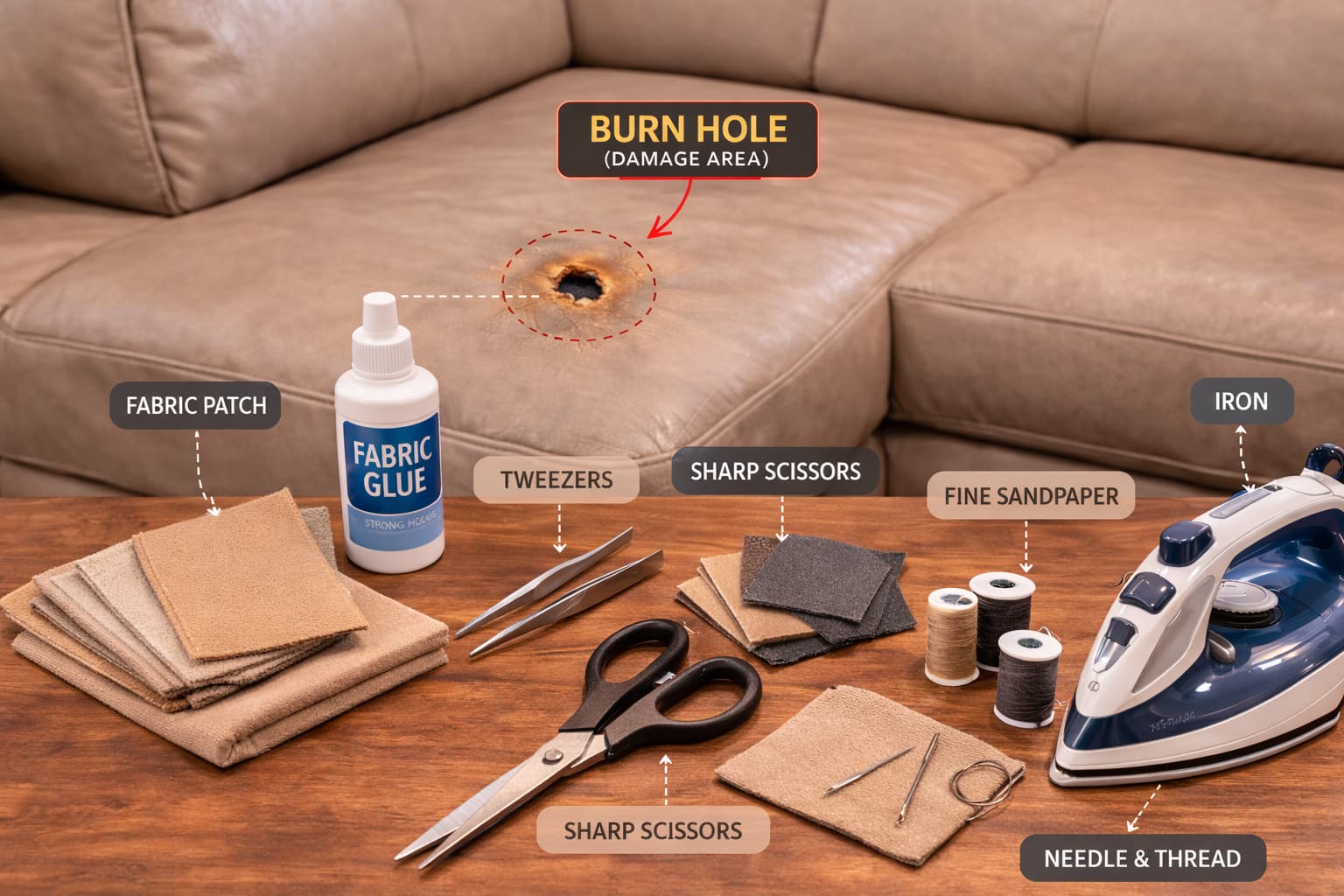
Tools and materials you’ll need
Start by gathering tools and materials. Having the right items keeps the repair fast and neat.
- Fabric patch or scrap that matches color and weave
- Heavy-duty fabric glue or upholstery adhesive
- Scissors and tweezers
- Needle and thread or upholstery needle and strong thread
- Matching upholstery foam or polyfill for deep holes
- Iron-on patch or fusible interfacing for quick fixes
- Leather repair kit for leather couches
- Best adhesive: Camie 313 Fast Tack Upholstery Adhesive (Amazon) – spray penetrates foam, bonds patches permanently for burn holes.
- Sandpaper, fabric marker, and colorant (for leather or visible edges)
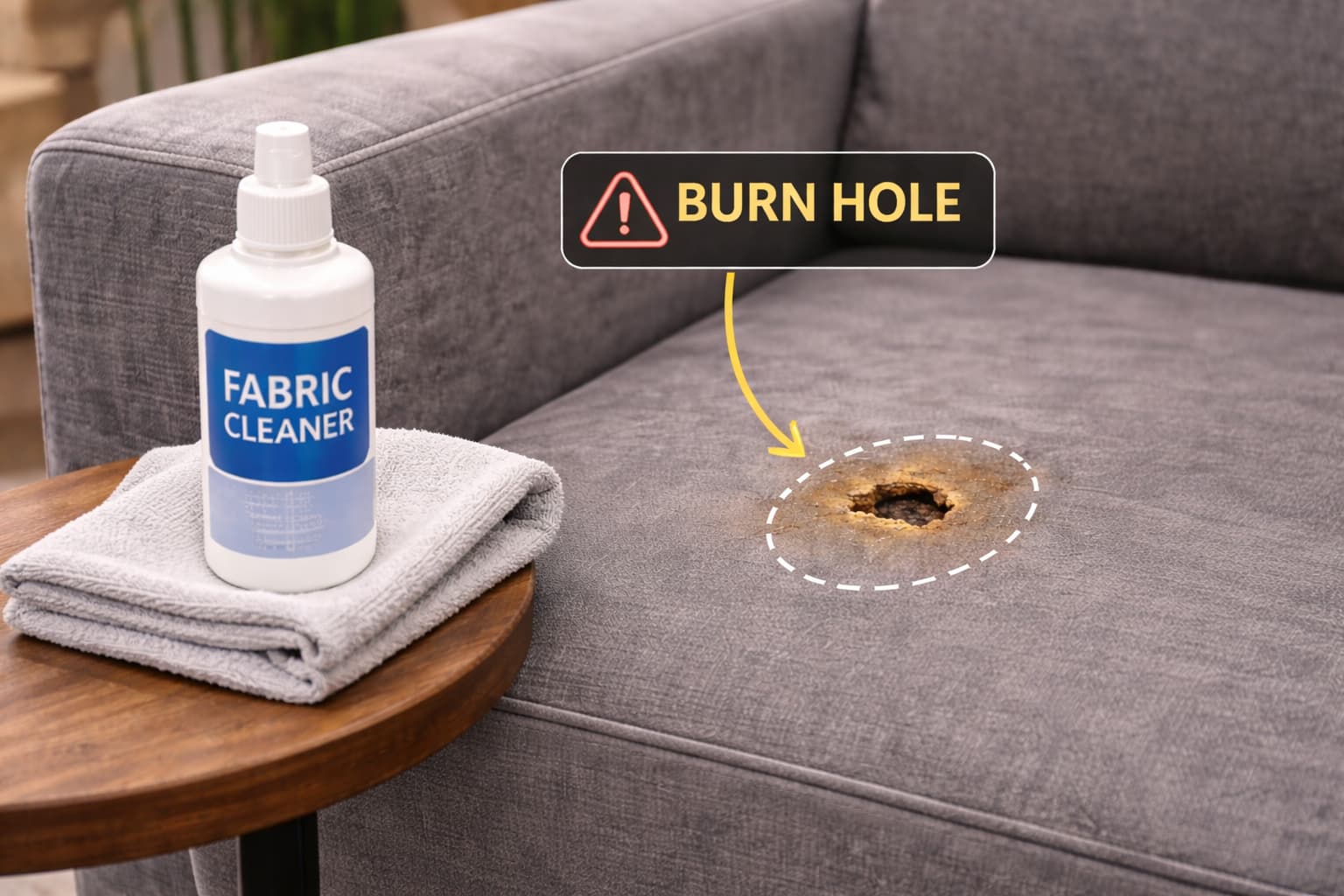
- Clean cloth and rubbing alcohol for prep
How to fix a burn hole in a couch depends on materials on hand. Small holes use glue and a patch. Bigger holes need foam, backing, and stitching.
RH Cloud owners: match your fabric via our Furniture Materials Guide before starting.

Assessing the damage
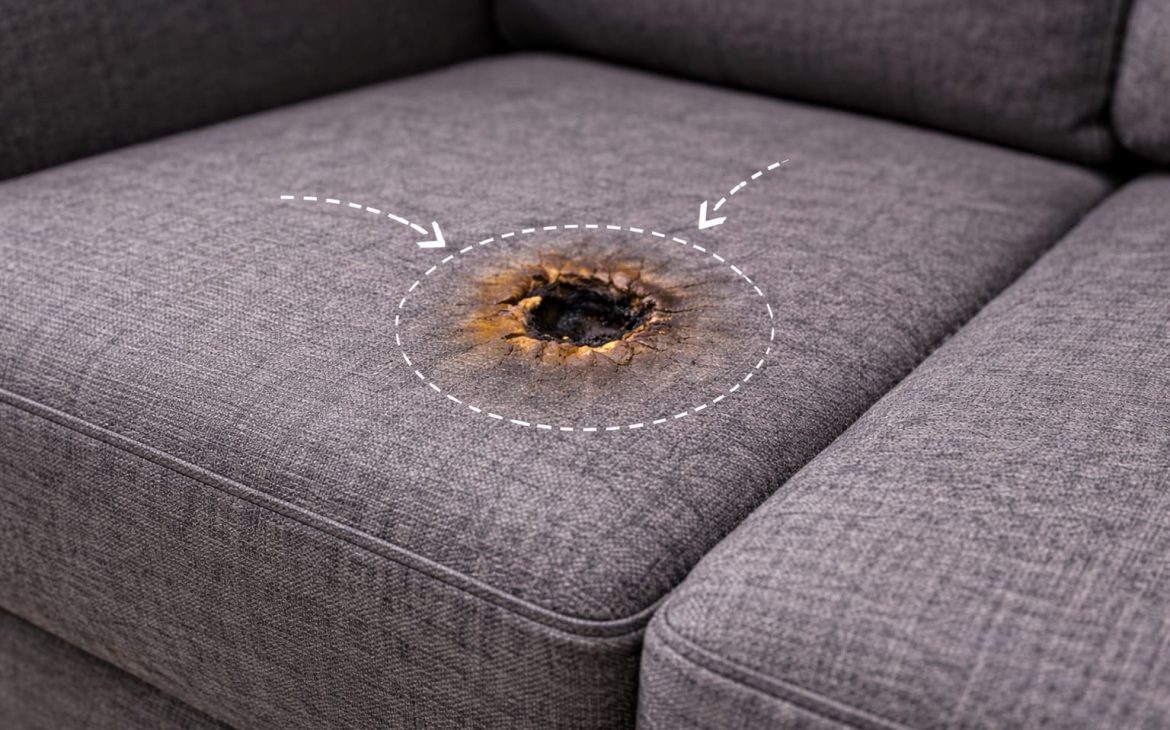
First, evaluate the burn. The fix you choose depends on size, depth, and material.
- Scorch only: surface singe without a hole
- Small hole: under 1/4 inch, fabric threads removed
- Medium hole: 1/4 to 1 inch, foam may be exposed
- Large hole: over 1 inch, cushion foam and webbing damaged.
- Material matters: leather, microfiber, and woven fabrics each need different care
Hole Size Guide
| Damage Type | Size | Fix Method | Pro Needed? |
|---|---|---|---|
| Scorch | None | Sand/steam | No |
| Small Hole | <1/4″ | Patch/glue | No |
| Medium | 1/4-1″ | Foam + stitch | Maybe |
| Large | >1″ | Reupholster | Yes |
Knowing how to fix a burn hole in a couch starts with this quick assessment. If foam or springs are damaged, plan for padding replacement as part of the repair. Clean surface first using Leather Couch Cleaning Guide steps.

Repair methods for different hole types
Below are methods organized by hole size and couch material. Pick the one that fits your situation.
Small scorch or singe (no hole)
- Gently brush the char from fabric with a soft brush.
- Lightly sand the area if safe for material, then steam and reshape fibers with an iron (use a cloth between iron and fabric).
- For leather, clean and apply a leather conditioner and color restorer.
Small hole (under 1/4 inch)
- Trim loose threads with scissors.
- Place a small backing patch behind the hole (fusible interfacing or fabric scrap).
- Apply fabric glue around hole edges and press fabric to backing. Let cure fully.
- Fabric Repair Kit: Coconix Fabric & Upholstery Repair Kit (Amazon) – color-match powders specifically for burns/tears.
Medium hole (1/4 to 1 inch)
- Remove damaged fibers and clean edges.
- Insert matching foam or polyfill to support the fabric.
- Attach a backing patch and either stitch the hole closed or glue a top patch that blends with the couch.
Prevent future damage on luxury sofas—see RH Cloud Sofa Review maintenance tips.
Large hole or foam damage
- Cut out the ragged area to create clean edges.
- Replace foam chunk with a tight-fitting foam insert.
- Use an underpatch to secure upholstery fabric and stitch or staple the fabric to the frame. Consider professional reupholstery for best results.
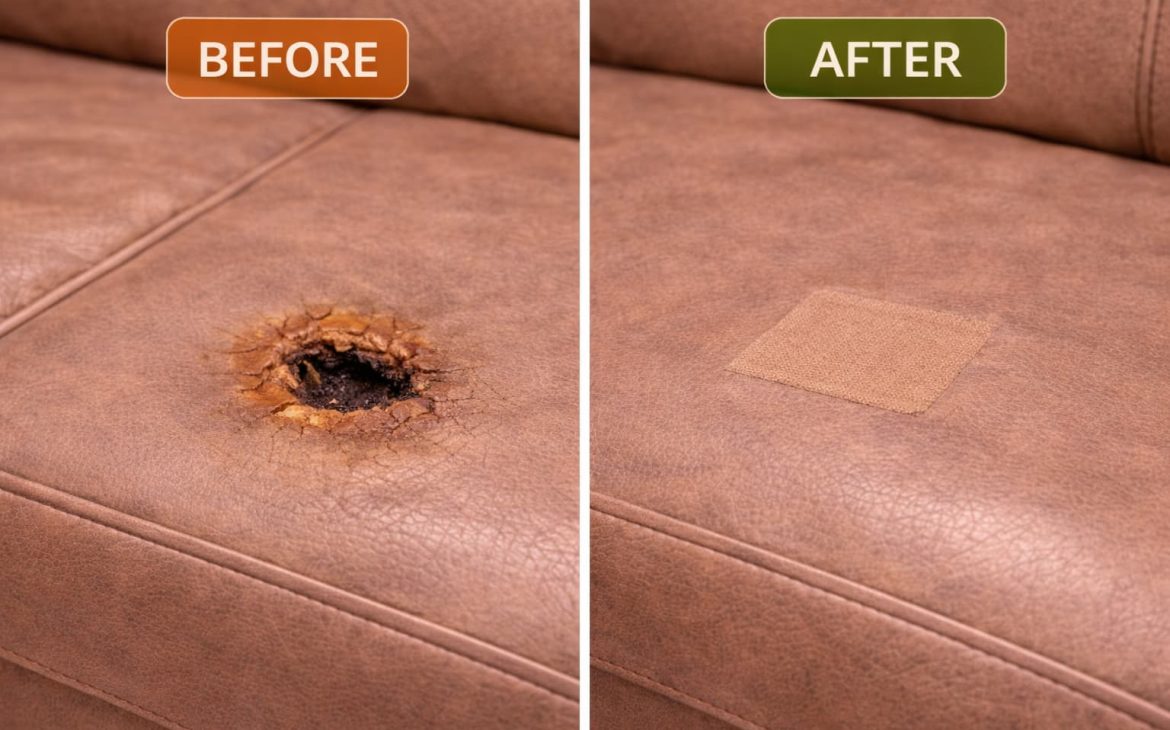
Leather or faux leather repairs
- Clean area thoroughly.
- Use a leather repair kit to fill holes, sand smooth, and apply color compound for a blended finish.
- For very large tears, use an internal patch and top coat; a pro may better match color and texture.
How to fix a burn hole in a couch varies by fabric and damage. Small DIY fixes work well for tiny holes. Bigger or structural damage often needs professional help.
People also ask (PAA-style)
What is the easiest way to fix a small burn hole?
- Use a backing patch and fabric glue, then press fabric to the patch. That gives a fast, neat fix.
Can you patch a leather couch hole at home?
- Yes, with a leather repair kit for small holes. For large tears, consult a pro for color and texture matching.
Will a repair be visible?
- Most repairs are visible on close inspection. Good color and texture matching plus careful blending minimize noticeability.
How long does a DIY repair last?
- A well-done repair can last years. Durability depends on fabric type, stress on the area, and repair quality.

Step-by-step: small fabric hole repair
Follow these simple steps for a neat small-hole repair.
Step 1: Clean the area
- Wipe with rubbing alcohol and let dry to remove oils and smoke residue.
Step 2: Prepare a backing
- Cut fusible interfacing or a fabric scrap slightly larger than the hole.
Step 3: Insert backing
- Slide backing under the hole with tweezers so it lies flat behind the fabric.
Step 4: Apply adhesive
- Put a thin bead of upholstery glue around the hole rim and press edges down to the backing.
Step 5: Blend fibers
- Use a toothpick to nudge stray fibers into place. Allow adhesive to cure as directed.
Step 6: Finish
- If needed, lightly steam or iron (with cloth barrier) to relax fabric and blend texture.
This method explains how to fix a burn hole in a couch for most small fabric holes. Practice on scrap before working on visible areas.

Step-by-step: leather hole repair
Leather needs different handling. Follow this compact process.
Step 1: Clean and dry
- Remove soot and oils with a gentle leather cleaner.
Step 2: Trim loose edges
- Carefully trim charred bits to create a clean edge.
Step 3: Insert patch and adhesive
- Place an internal leather patch and secure with adhesive.
Step 4: Fill and sand
- Use leather filler in thin layers. Sand lightly between layers for a smooth finish.
Step 5: Color and seal
- Apply color compound to match the leather. Seal with finish for protection.
Leather Kit: Permatex Vinyl & Leather Repair Kit (Amazon) – fills holes, sands smooth, 7-color compounds included.
Knowing how to fix a burn hole in a couch leather surface helps you keep value and appearance intact. Color matching is key.
Prevention and maintenance tips
Take steps to reduce future burns and keep your couch presentable.
- Keep candles, lighters, and cigarettes away from upholstery
- Use ashtrays and avoid smoking on furniture
- Lay a throw or fire-resistant cover where you sit with heat sources
- Vacuum and clean regularly to remove flammable lint
- Repair small scorch marks early before they become holes
Preventing damage is the easiest way to avoid learning how to fix a burn hole in a couch later on.
My experience and lessons learned
I once repaired a medium burn from a dropped ember on a visiting guest’s jacket. The first attempt used only glue and left a puckered patch. Replacing foam and adding a backing gave a durable, flatter result. The lesson: take time to prep the backing and match material. Quick fixes can hide damage but a methodical repair makes the couch last.
How to fix a burn hole in a couch taught me that patience and matching materials matter most. When in doubt, test on scrap fabric first.
Frequently Asked Questions of How to Fix a Burn Hole in a Couch
How soon should I repair a burn hole?
Repair as soon as you can for best results. Early repairs prevent the hole from widening and stop dirt from making the fix more visible.
Can I use super glue on upholstery?
Super glue can work for tiny jobs but it often dries hard and can make fabric stiff. Use upholstery adhesive designed for fabrics for better flexibility.
Is it cheaper to DIY or hire a pro?
Small fixes are usually cheap to DIY. Large repairs, color matching, or structural fixes are often worth a pro to save time and get a seamless look.
Will fabric glue hold with regular use?
High-quality upholstery adhesives hold well for everyday use when applied properly. Avoid heavy stress on the repaired area to prolong life.
Can I hide the repair with a throw pillow?
Yes, hiding a repaired area with pillows or a throw is an easy short-term solution. Still, repairing keeps the couch in better condition long-term.
If you learn better by watching, you might also find it helpful to follow along with a burn‑hole couch repair video tutorial so you can see the patching and blending in real time.
Conclusion
You now have clear, practical ways to repair burns, from tiny singes to larger holes in fabric and leather. Start by assessing damage, pick the right method, and take your time to match fabric and fill foam when needed. If a repair feels beyond your skill, a professional upholsterer can save time and preserve value. More DIY fixes at Luxury Furniture Reviews hub. Try a small repair today, learn from the process, and protect your couch with simple prevention steps. If this guide helped, subscribe for more home-fix tips or leave a comment with your repair story.
