

Gentle cleaning with mild soap, warm water, and a leather conditioner after testing a hidden spot.
I’ve researched hundreds of leather care methods and tested these techniques to bring you proven tips from professional cleaners and designers. This guide explains the best way to clean a leather couch with clear steps, plain language, and real tips that work. You will learn what to use, what to avoid, how to treat stains, and how to keep your leather couch looking great for years. Follow these steps and you will feel confident caring for your leather furniture.
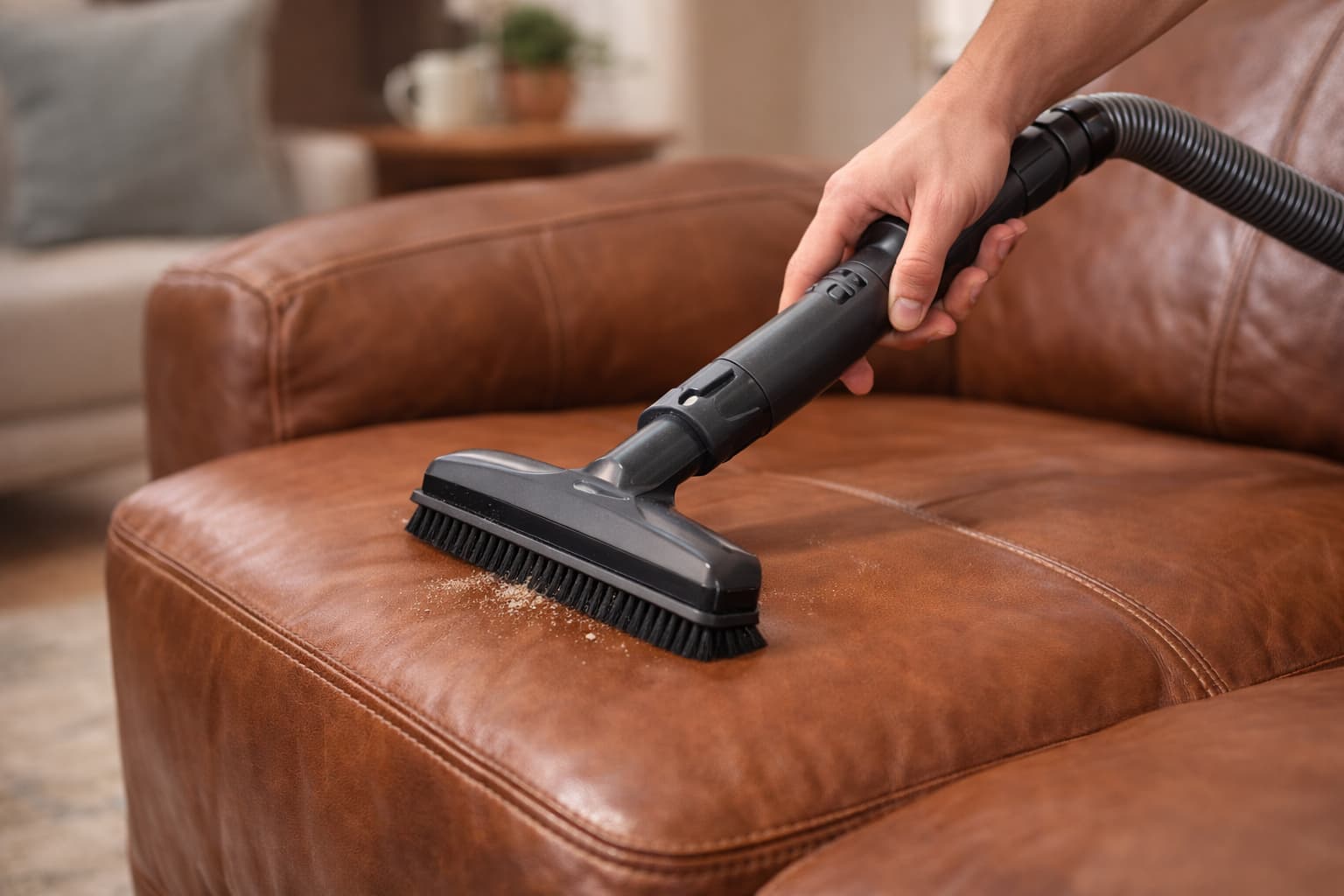
Why Proper Cleaning Matters For Your Leather Couch
Leather is durable but also sensitive. Dirt, oil, and sunlight can dry leather and cause cracks. Cleaning the right way preserves the color, texture, and lifespan of your couch. The best way to clean a leather couch protects finish and prevents long-term damage.
From my experience, a quick, wrong clean can leave rings or fade. I once used a harsh cleaner on a friend’s vintage sofa and had to call a pro to restore the finish. That taught me to test first and use gentle products.
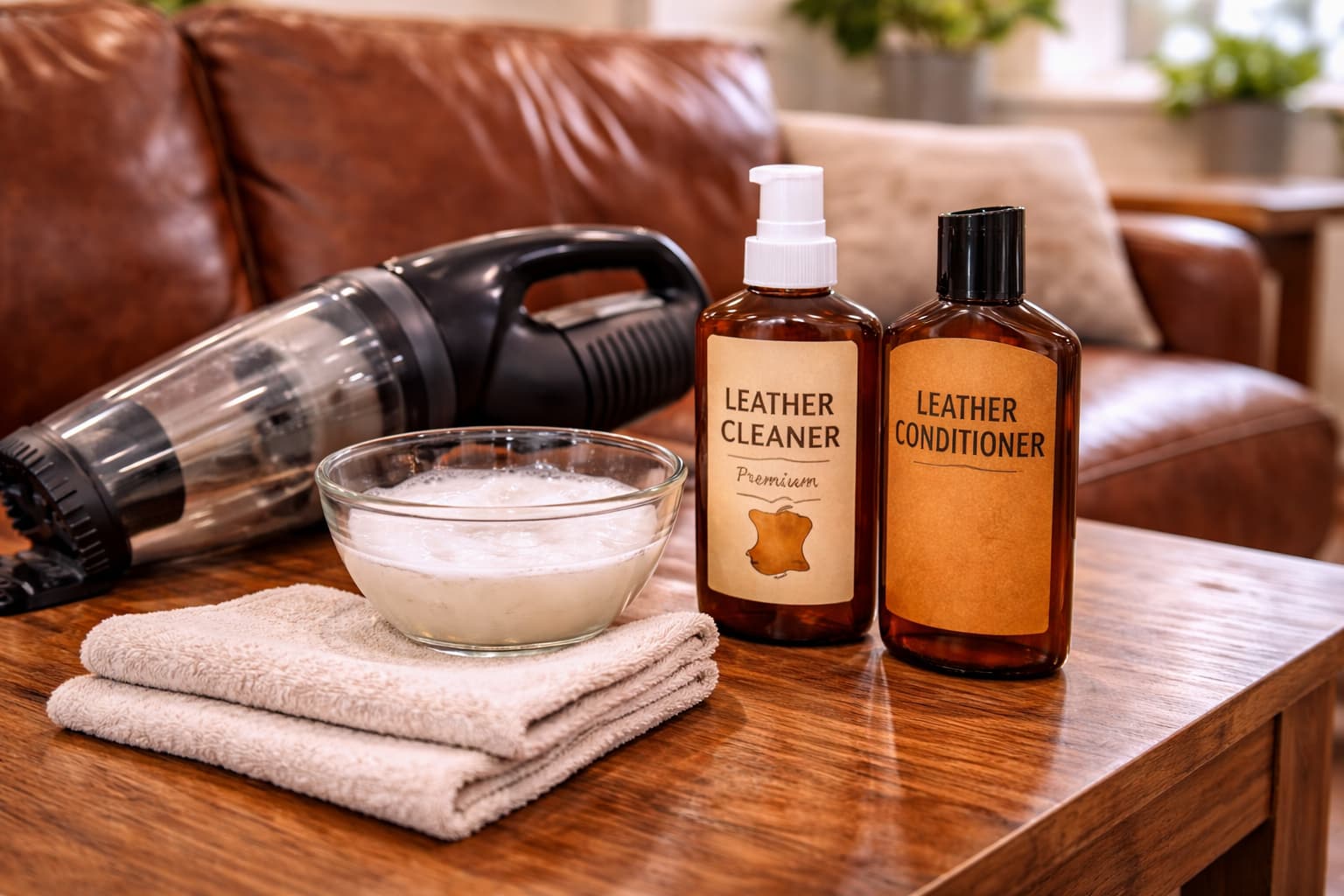
Tools And Supplies You’ll Need
- Soft microfiber cloths for dusting and wiping.
- Distilled water to avoid mineral spots.
- Mild liquid soap (castile or a dedicated leather soap).
- Isopropyl alcohol 70% for ink or dye spots, used sparingly.
- Leather conditioner or cream recommended for your leather type.
- Soft-bristle brush for textured hides.
- Vacuum with brush attachment.
- Small spray bottle for diluted solutions.
- Gloves to protect hands if you have sensitive skin.
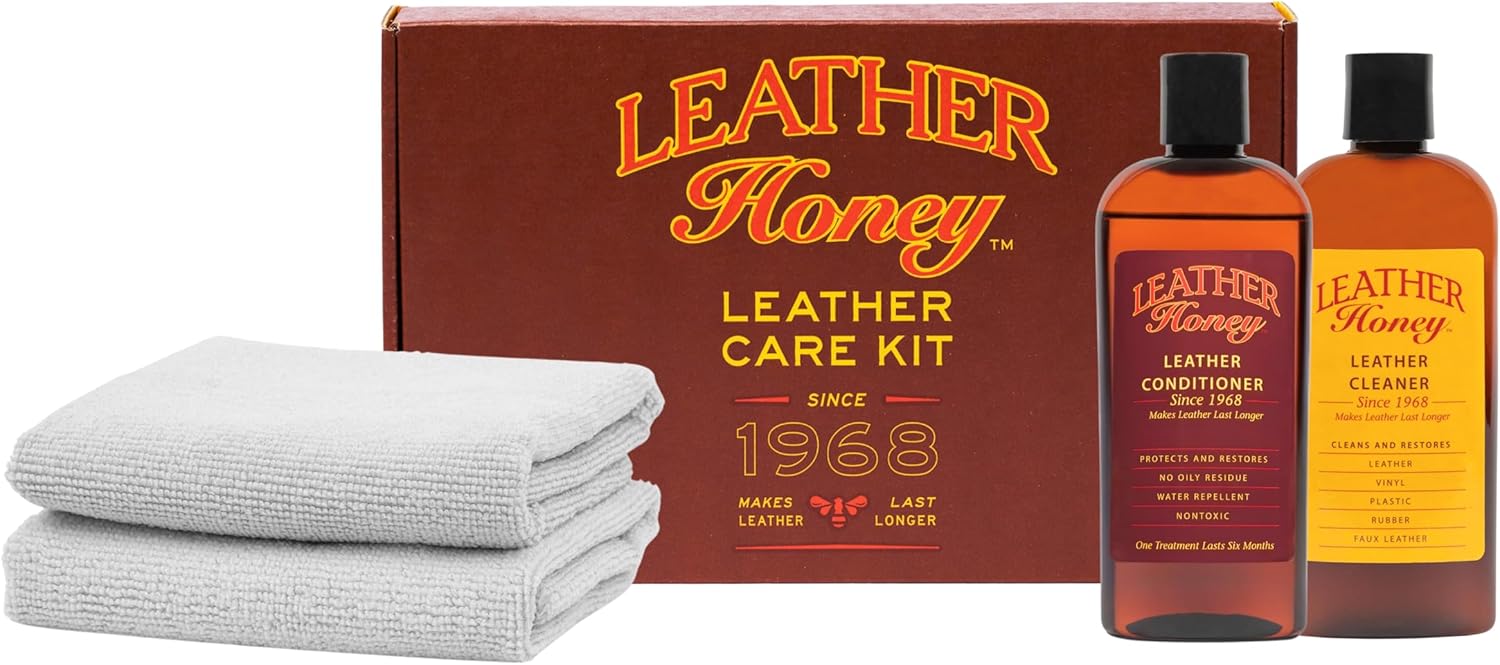
Leather Honey Complete Leather Care Kit
Leather HoneyA complete leather care system including cleaner, conditioner, and applicator cloths. This non‑toxic kit is perfect for restoring and protecting leather furniture, car seats, jackets, shoes, bags, and more. Made in the USA since 1968.
View on AmazonRecommended cleaner: Leather Honey (pH-neutral, safe for 95% of leathers per manufacturer testing).
Label each item before you start. Having these ready makes the cleaning process fast and safe. The best way to clean a leather couch starts with the right tools.
Leather Cloud Sofa owners should follow these exact steps—see full care details in our RH Cloud Sofa Review
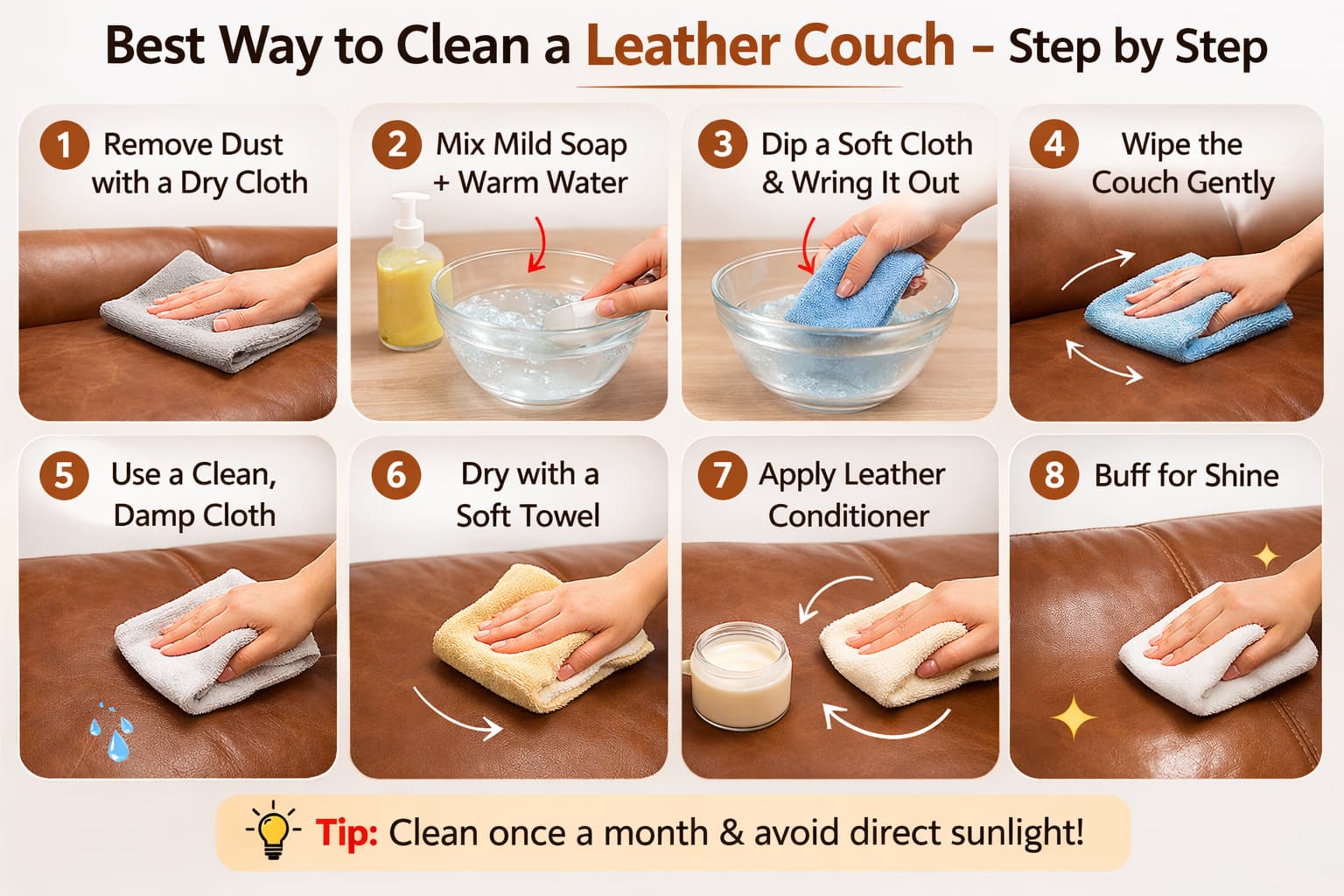
Step-by-step: Best Way to Clean a Leather Couch
- Check the tag and leather code. Not sure of your leather type? Use our Furniture Materials Guide to identify aniline vs protected finishes.
- Look under cushions for codes: W, S, WS, or X. Each code tells you what cleaners are safe.
- If no code, treat as sensitive leather and test a small area.
- Vacuum and dust first.
- Use a brush attachment and remove crumbs and dirt.
- Clean seams and crevices gently.
- Spot test your cleaner.
- Mix 1 part mild soap with 8 parts distilled water in a spray bottle.
- Test on an inside, hidden area for 24 hours.
- Clean with a damp cloth.
- Lightly mist the cloth; never saturate leather.
- Wipe in small circular motions. Rinse the cloth often.
- Treat stubborn spots carefully.
- For ink, blot with a cotton swab dipped in isopropyl alcohol. Use minimal pressure.
- For oil, sprinkle baking soda or cornstarch to draw out grease before wiping.
- Dry gently.
- Pat with a dry microfiber cloth after cleaning.
- Let the couch air dry away from direct heat or sun.
- Condition the leather.
- Apply a thin layer of leather conditioner recommended by the manufacturer.
- Buff with a soft cloth and let it absorb fully.
Repeat a light clean every 1–3 months and condition every 3–6 months. This routine is the best way to clean a leather couch and keep it soft and strong.
Leather Type Quick Guide
| Leather Type | Cleaning Code | Best Cleaner | Maintenance |
|---|---|---|---|
| Aniline | W/S | Leather soap | Condition monthly |
| Protected | WS | Mild soap | Condition quarterly |
| Semi-Aniline | X | Test first | Professional yearly |
Use this quick reference to match your leather code—click Furniture Materials Guide for detailed product recommendations.
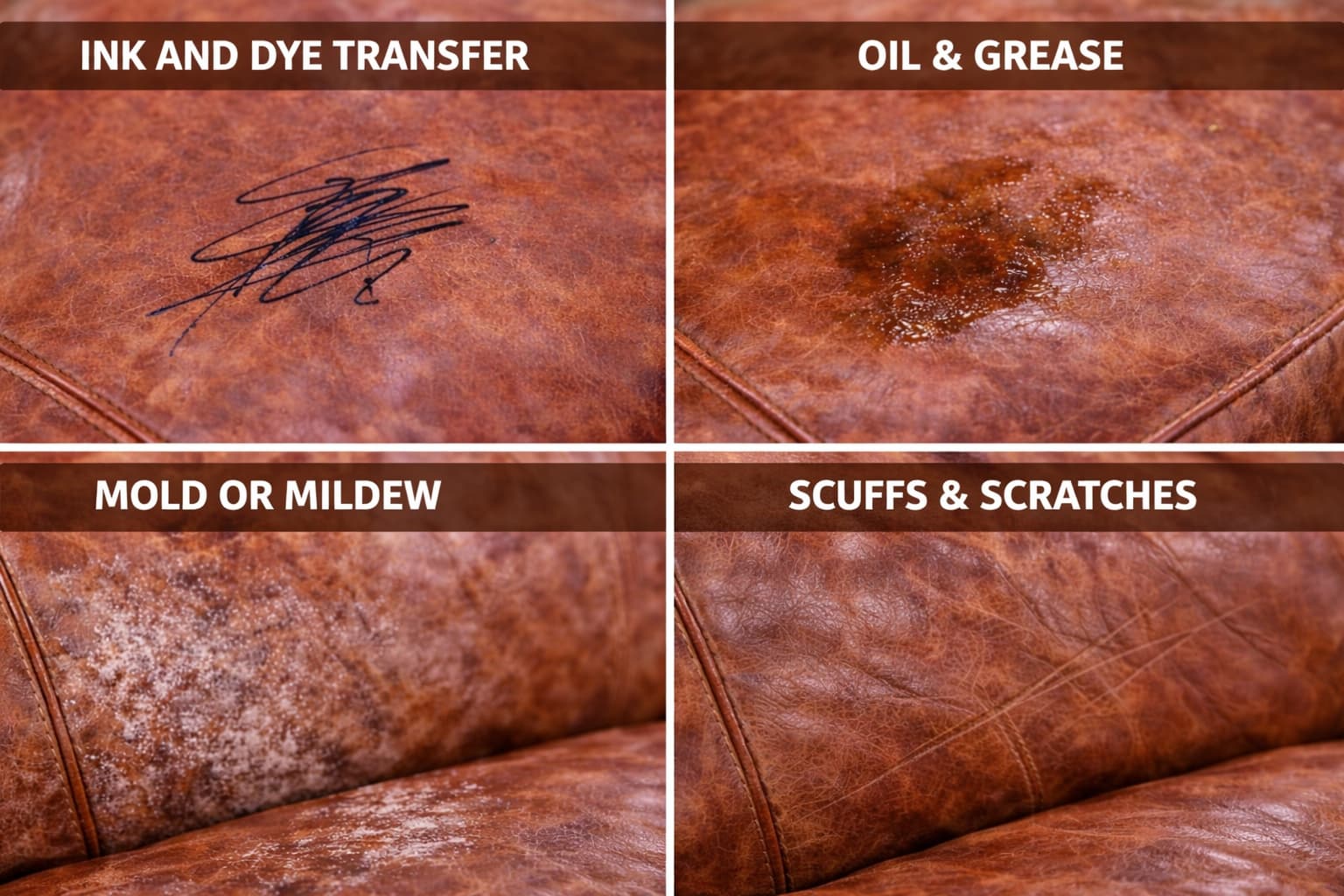
Dealing With Specific Stains And Problems
Ink and dye transfer
Ink can set fast. Blot immediately with a dry cloth. If ink remains, use a cotton swab with a tiny amount of isopropyl alcohol and dab gently. Always retest and condition afterward.
Oil and grease
Sprinkle baking soda or cornstarch on the spot and let sit for several hours. Vacuum powder and then clean the area with mild soap and water. Repeat if needed.
Pet urine and odors
Blot up urine right away. Use a mild soap solution and rinse with a damp cloth. For lingering odor, specialized enzymatic cleaners designed for leather may help. Avoid soaking.
Mold or mildew
Move the couch to dry air and brush away visible spores outdoors. Wipe with a 50/50 mix of distilled water and isopropyl alcohol, then dry fully. If mold persists, consult a professional.
Scuffs and scratches
For light scratches, gently rub the area with a soft cloth and a small amount of conditioner. For deeper scratches, professional repair may be needed.
Dealing with stains promptly is part of the best way to clean a leather couch. Quick action prevents permanent damage.
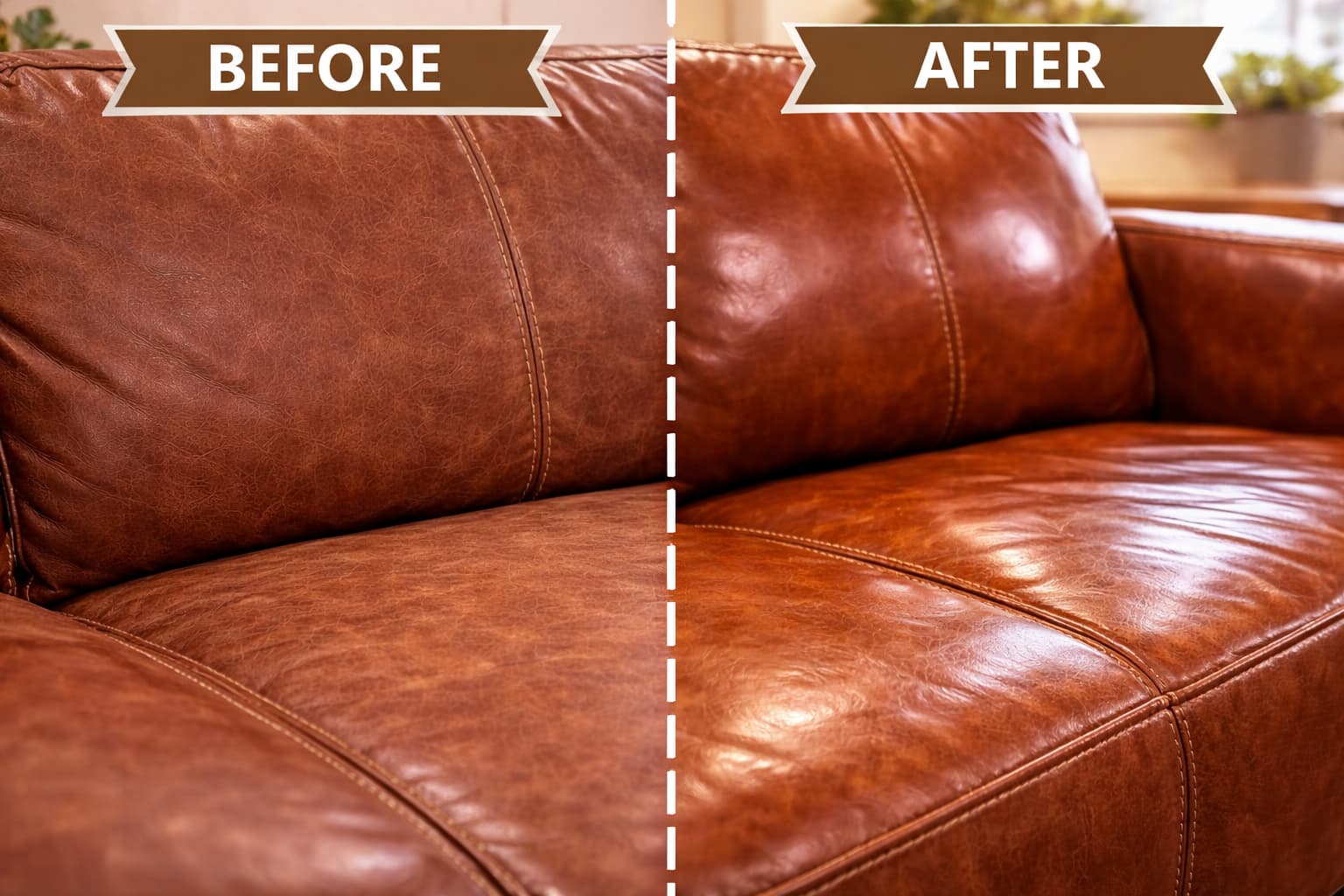
Leather Conditioner and Protection
Why condition
- Conditioner restores oils lost during cleaning.
- It stops leather from drying and cracking.
- It improves softness and sheen.
How to condition
- Use a product made for your leather type.
- Apply sparingly with a soft cloth in circular motions.
- Let it absorb and then buff off excess.
How often
- Condition every 3–6 months for active use.
- For new leather, follow manufacturer guidance.
Leather Honey Complete Leather Care Kit
Leather HoneyA complete leather care system including cleaner, conditioner, and applicator cloths. This non‑toxic kit is perfect for restoring and protecting leather furniture, car seats, jackets, shoes, bags, and more. Made in the USA since 1968.
View on AmazonI learned to condition gently. Over-conditioning can darken or feel sticky. The best way to clean a leather couch always ends with proper conditioning.
Compare leather durability across luxury brands in our RH vs Arhaus comparison.
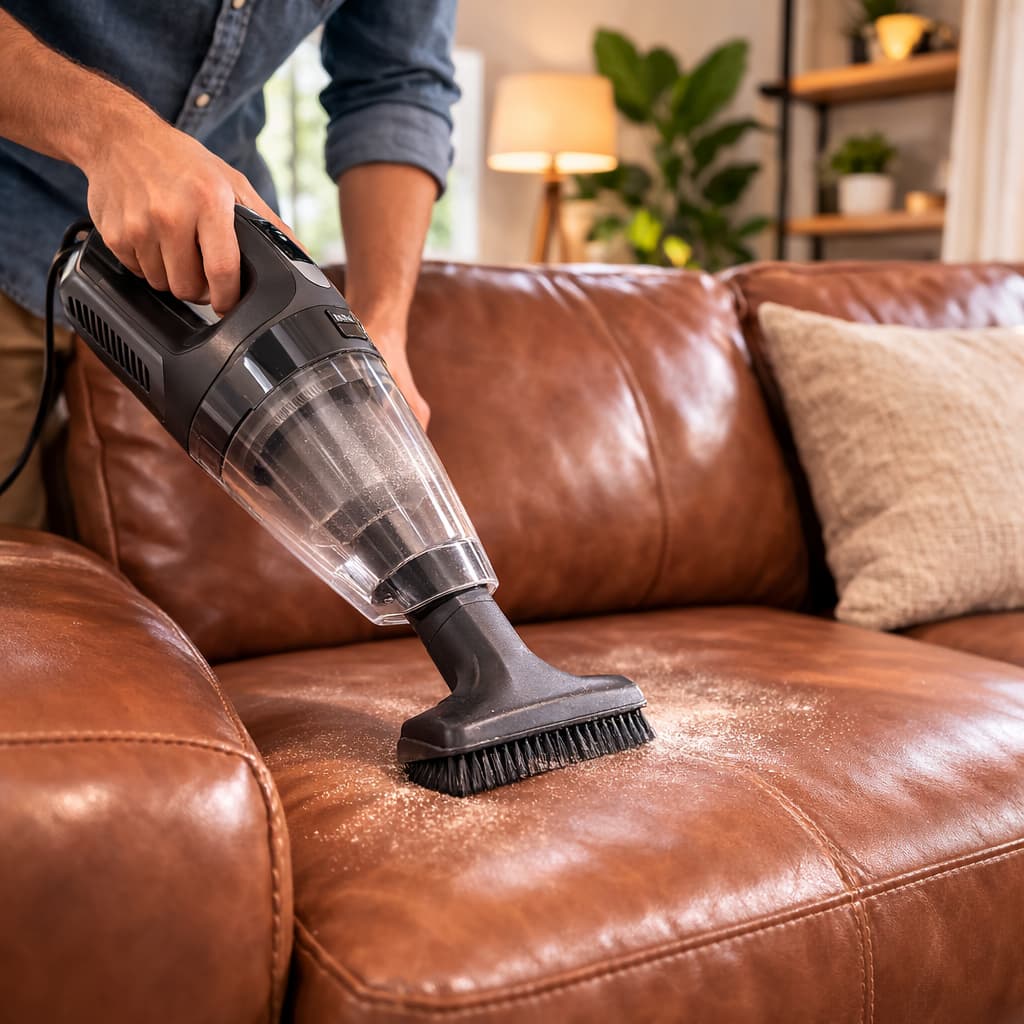
Maintenance Routine and Daily Care
- Dust weekly with a soft cloth.
- Vacuum crevices monthly.
- Rotate cushions to spread wear.
- Keep the couch away from direct sunlight and heat.
- Wipe spills immediately with a dry cloth.
- Use throws or arm covers in high-use areas.
These small habits make the best way to clean a leather couch simple and effective. Regular care saves money on repairs.
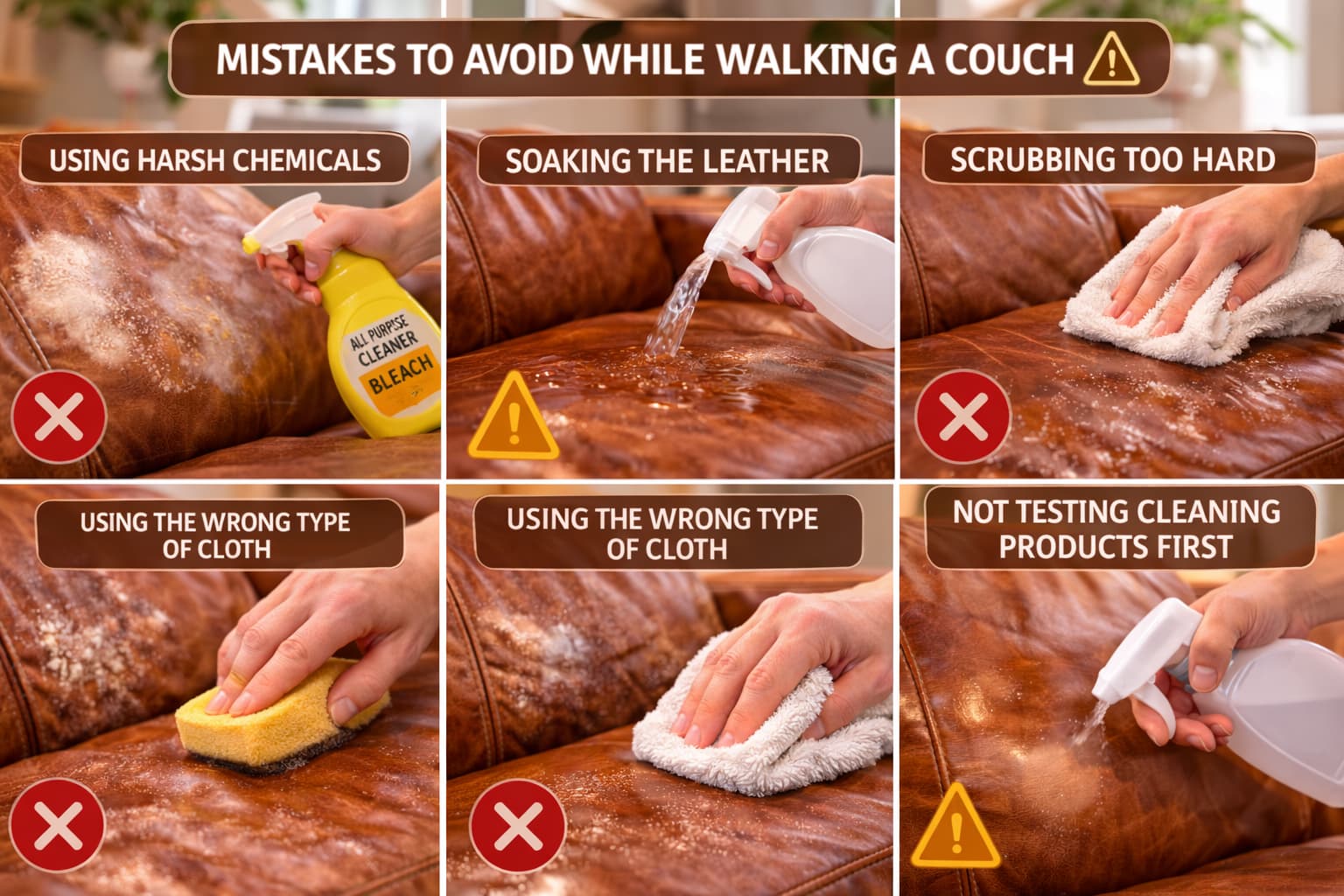
Common Mistakes to Avoid
- Using vinegar, bleach, or ammonia-based cleaners.
- Soaking leather with water or cleaner.
- Skipping a spot test before treating the whole couch.
- Using household oils or olive oil to “condition” leather.
- Placing leather near radiators or strong sunlight.
Avoiding these mistakes will keep your leather couch safe and looking better longer.
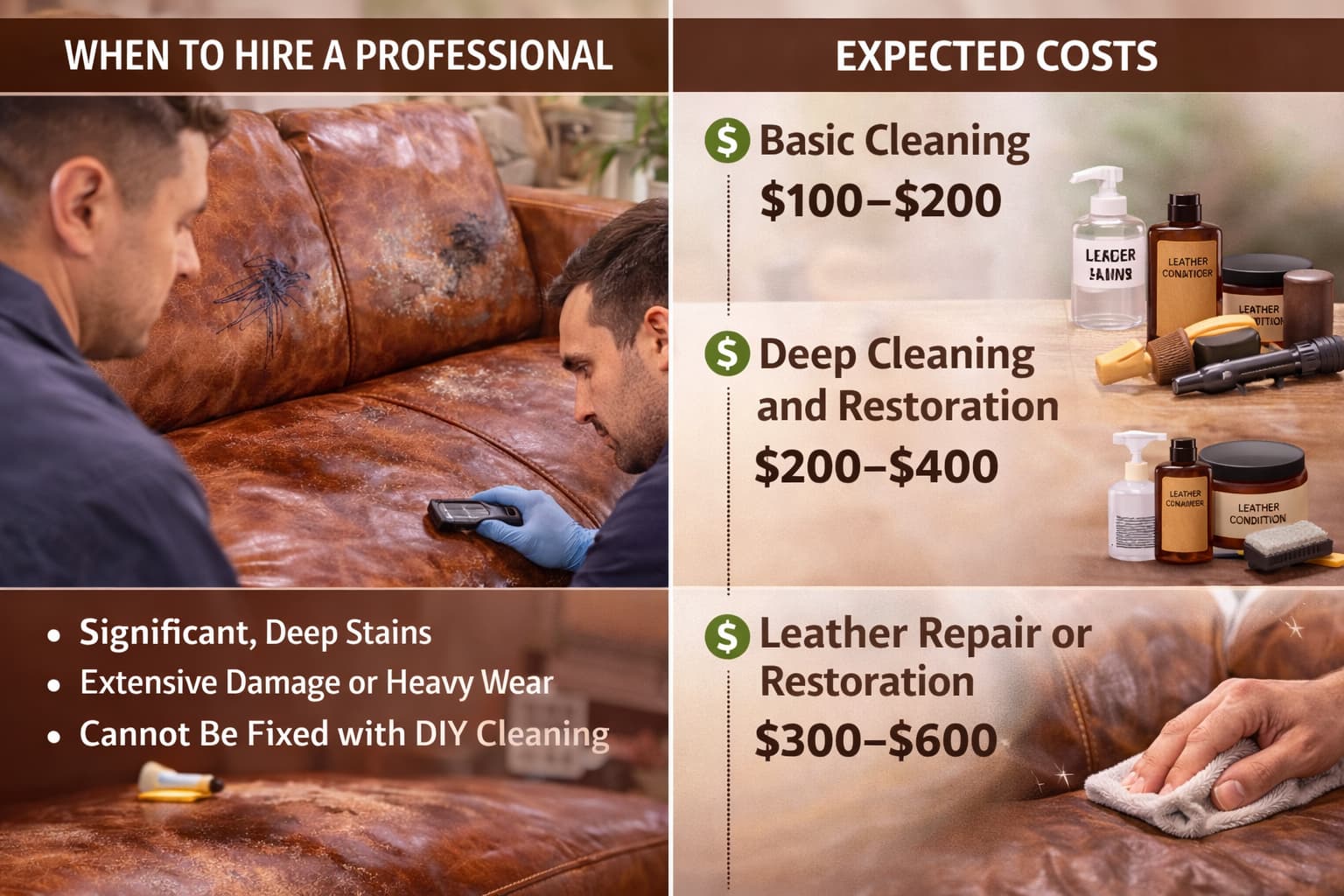
When To Hire A Professional And Expected Costs
Hire a pro if
- Stains are old or widespread.
- Mold covers a large area.
- The finish is peeling or the leather is deeply cracked.
Cost factors
- Small spot cleaning is cheaper than full restoration.
- Expect a wide range: basic deep clean to specialized restoration will vary by region and condition.
Expect $100-300 for spot treatments, $400-800 for full restoration (2026 regional averages); costs vary by condition and location.
A professional can repair and refinish without risking further damage. If unsure, get a consult. The best way to clean a leather couch may sometimes include expert help. Find certified leather specialists via the Professional Leather Cleaners Association (PLCA) directory—members have 25+ years specializing in leather restoration.
Frequently Asked Questions of Best Way to Clean a Leather Couch
How often should I clean a leather couch?
Clean light dirt and dust every 1–3 months and vacuum monthly. Condition leather every 3–6 months, depending on use and climate.
Can I use dish soap to clean leather?
Yes, a very mild dish soap diluted heavily with distilled water can work for many leathers. Always test on a hidden area first.
Will water ruin leather?
Water can damage leather if it soaks in and is left to dry under heat. Use minimal moisture and dry naturally away from heat.
Is it safe to use vinegar on leather?
No, vinegar is acidic and can strip leather oils and finish. Avoid acidic cleaners and stick to mild soap or leather cleaners.
When should I call a professional cleaner?
Call a professional for large stains, mold, deep cracks, or if DIY cleaning fails to restore the leather.
Leather Honey Complete Leather Care Kit
Leather HoneyA complete leather care system including cleaner, conditioner, and applicator cloths. This non‑toxic kit is perfect for restoring and protecting leather furniture, car seats, jackets, shoes, bags, and more. Made in the USA since 1968.
View on AmazonConclusion
Clean carefully, test first, and condition often to protect your investment. The best way to clean a leather couch is gentle, consistent care using the right tools and products. Start with small steps today: dust, spot test, and set a conditioning schedule. If you found this useful, try these steps on a small area, subscribe for more home-care guides, or share a question in the comments. Find more furniture care guides at our Luxury Furniture Reviews hub.

1 thought on “Best Way To Clean A Leather Couch: Safe Easy Steps”