

A peeling faux leather sofa is almost always fixable. Clean the area, trim away the loose flakes, then rebuild the surface with a leather and vinyl repair compound or matching leather paint. This works well for small and moderate peeling. If the damage covers large sections or the cushions are worn out, professional reupholstery is usually the better option.
This How to Fix Peeling Faux Leather Sofa guide walks through the full repair process, what materials you need, and how to stop the peeling from coming back.
Why Does Faux Leather Peel?
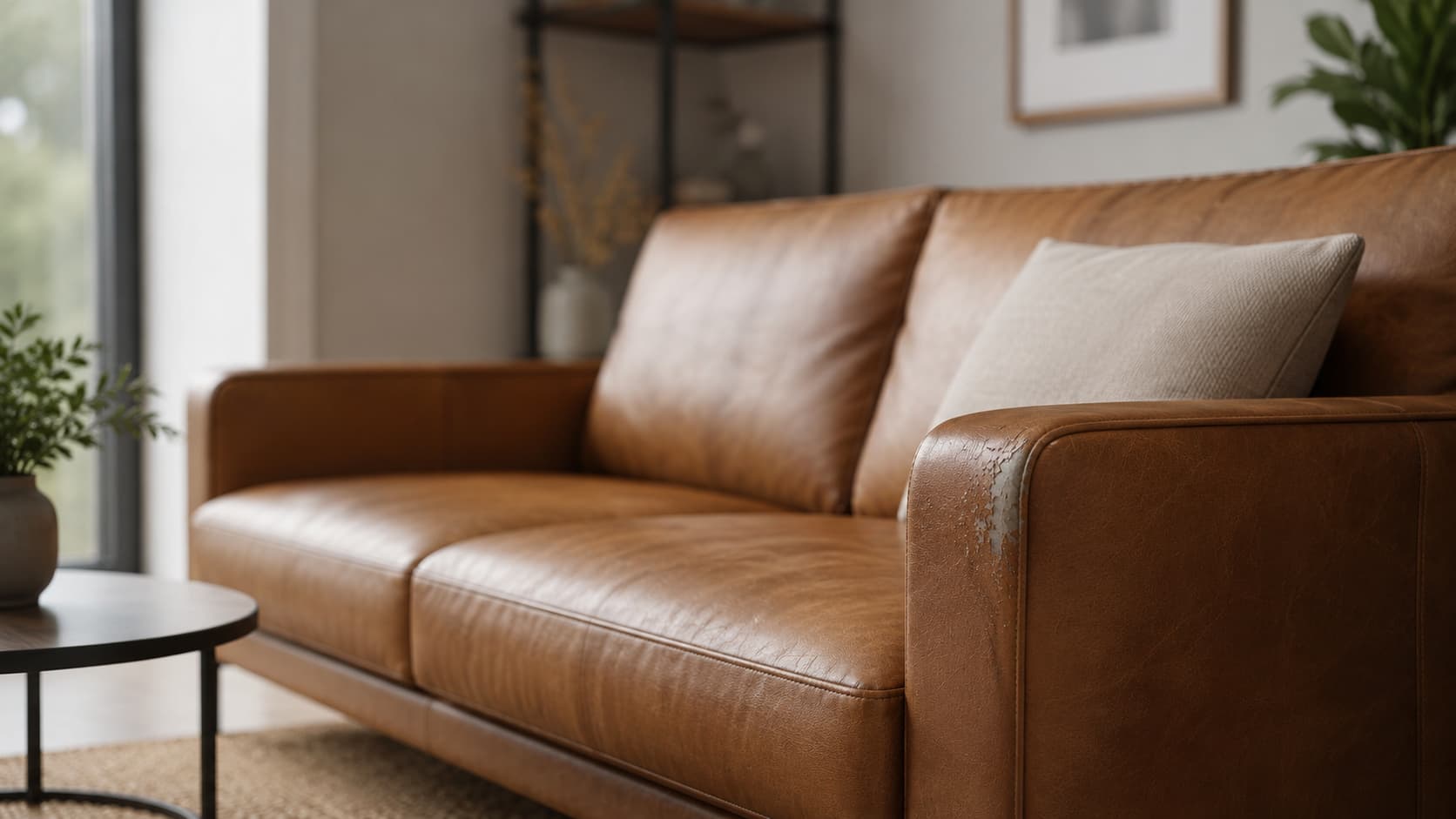
Faux leather, also called PU leather or vinyl, is fabric with a plastic coating on top. That coating is what gives it a leather-like look and feel. Peeling happens when the coating separates from the fabric backing underneath.
A few things speed this up. Heat and moisture from body contact and humidity gradually break down the coating’s bonding layer, which is why armrests and seat edges usually peel first. Direct sunlight makes the coating brittle through UV exposure, leading to cracking and peeling over time. Every time you sit down or shift position, the coating flexes slightly, and thousands of these small flexes create stress points where peeling starts. Harsh cleaning products such as bleach and alcohol-based cleaners can also strip or weaken the coating. Some faux leather is simply made with a thinner or lower-grade coating that wears out faster, regardless of how it’s cared for.
Bonded leather is a different material made from scrap leather fibers glued to a fabric backing. It peels for similar reasons but isn’t the same product as faux leather. Not sure which material you’re actually dealing with? Our couch material guide breaks down the differences. If your sofa’s peeled areas reveal a woven or mesh-like fabric underneath, you’re most likely dealing with faux or bonded leather rather than genuine hide, since real leather doesn’t peel this way.
Is Your Sofa a Good Candidate for a DIY Repair?
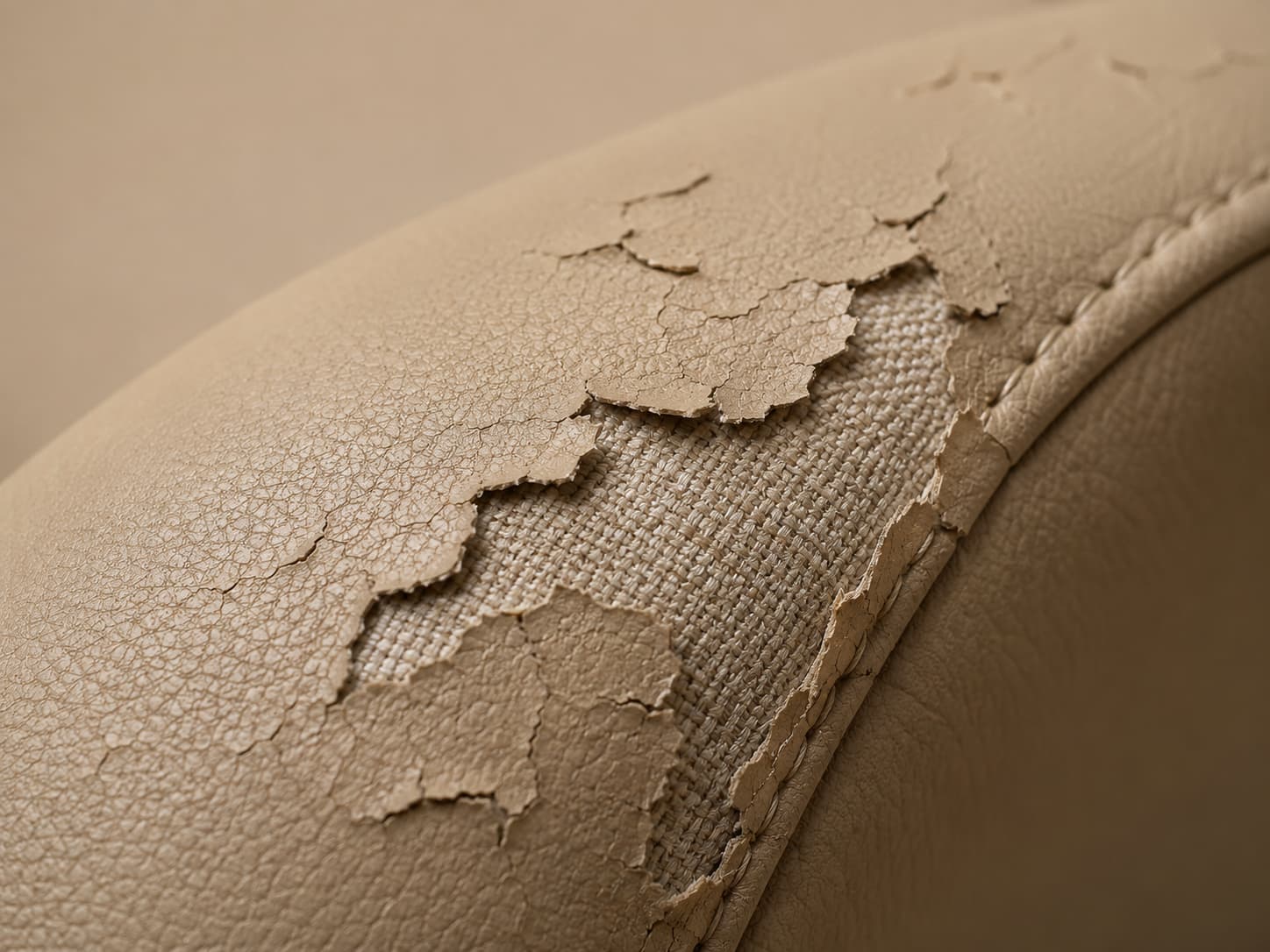
Before you start, take a close look at the damage.
DIY repair works best when:
- Peeling is limited to one or two spots, such as an armrest, seat edge, or headrest
- The fabric backing underneath is still intact
- The cushion foam and frame are in good condition
Reupholstery or replacement makes more sense when:
- Peeling covers most of the visible surface
- Large tears expose padding or springs
- The sofa has structural damage beyond the surface coating
A DIY repair typically takes a few hours to a full day, depending on the size of the damage. Peeling isn’t the only fixable couch problem, either — see our guides on fixing cat scratches on a leather couch or patching a burn hole if those are also on your to-do list.
What You’ll Need
Most of these items come together in a leather and vinyl repair kit, which you can find at hardware stores, auto parts stores, or online.
- Rubbing alcohol or a faux leather cleaner
- Cotton swabs or a lint-free cloth
- Scissors or a small utility knife
- Fine sandpaper (optional — only needed for painted repairs)
- Leather and vinyl repair compound or filler
- A palette knife or the applicator tool included in your kit
- A color-matching guide or leather paint in a matching shade
- Plastic wrap or grain paper (optional — helps add texture)
- Disposable gloves
Repair kits from brands such as Coconix and Permatex include most of these items in one package, along with a color-mixing guide.
Recommended Repair Kit for This Project
For small to moderate peeling, a complete leather and vinyl repair kit is more convenient than purchasing the filler, color compounds, mixing tools, and applicators separately.
The Coconix Mix & Match Leather and Vinyl Repair Kit is a practical option for faux leather sofas because it allows you to mix a shade that closely matches the existing upholstery. Always test the mixed color on a hidden section of the sofa before applying it to the visible damaged area.

Coconix Leather & Vinyl Repair Kit – Mix & Match Any Color
New starting from: 19.95 $
Check Price On AmazonFor a brown faux leather sofa, consider the Coconix Brown & Shades Leather and Vinyl Repair Kit. It is designed for faux leather, PU leather, vinyl, and bonded leather, and includes color-matching repair compounds, backing fabric, a mixing jar, a spatula, and an applicator brush.
Alternative for deep tears and holes: Permatex Vinyl & Leather Repair Kit
Choose a shade kit that matches your sofa, test the mixed color on a hidden area first, and follow the manufacturer’s application and curing instructions.
Helpful Additional Tools
A complete repair kit provides the main compound and color-matching materials, but these supporting tools can make surface preparation and application cleaner and easier.
- Amazon Basics Microfiber Cleaning Cloths — These soft, non-abrasive, lint-free cloths are useful for cleaning the damaged area and removing sanding dust without scratching the surrounding vinyl surface.
- VViViD Stainless Steel Precision Utility Knife — Its narrow retractable blade provides better control when trimming loose faux leather coating and frayed edges. Always cut slowly and away from your hands.
- LotFancy 600-Grit Wet/Dry Sandpaper — This fine sandpaper can help smooth rough edges when using a leather paint repair system. Use very light pressure and avoid sanding intact upholstery.
- HTS Small Stainless-Steel Palette Knife — The small flexible blade is suitable for spreading thin, even layers of repair compound over peeling areas.
- ASAP Powder-Free Nitrile Gloves — These disposable, latex-free and powder-free gloves help reduce direct skin contact with repair compounds, cleaners and adhesives.
You may already have some of these tools at home, and your chosen repair kit may include an applicator or spatula. Check the kit contents before purchasing additional supplies.
How to Fix Peeling Faux Leather Sofa: Step-by-Step
Step 1: Confirm the Material and Assess the Damage
Look at the exposed layer under the peeling. A woven or mesh-like fabric backing means you’re dealing with faux or bonded leather, and this repair method will work. Note the size and location of the damage before you begin.
Step 2: Clean the Area
Wipe the damaged section with rubbing alcohol on a cotton swab or cloth. Test the alcohol on a hidden area first, since some finishes react differently. If alcohol seems too harsh, use warm water with a small amount of mild soap instead. Use a lint-free microfiber cloth so the surface remains free of loose fibers that could become trapped under the repair compound. Let the area dry completely before moving on.
Step 3: Trim the Loose Material
Use scissors or a precision utility knife to carefully cut away peeling flakes and frayed edges. A small precision knife provides better control around irregular damaged areas, but work slowly so you do not cut into the intact upholstery or enlarge the peeled section. Removing loose material now gives the repair compound a stable, even surface to bond with.
Step 4: Sand Rough Edges If Using Paint
If you are using a leather paint system rather than a filler compound, lightly smooth the edges of the peeled area with fine 600-grit sandpaper. Use very light pressure and avoid sanding the intact coating unnecessarily. This helps create a smoother transition between the damaged spot and the surrounding material. Wipe away all sanding dust with a clean, lint-free cloth.
Step 5: Match Your Color
Most repair kits include a color-mixing guide. If you have not selected a kit yet, the Coconix Mix & Match Leather and Vinyl Repair Kit is a practical option for mixing a shade close to your sofa’s original color. Compare a small amount of the mixed compound against the upholstery in natural light, and test it on a hidden area before applying it to the visible damage. Getting the color right before you begin can save you from having to redo the repair later.
Step 6: Apply the Repair Compound
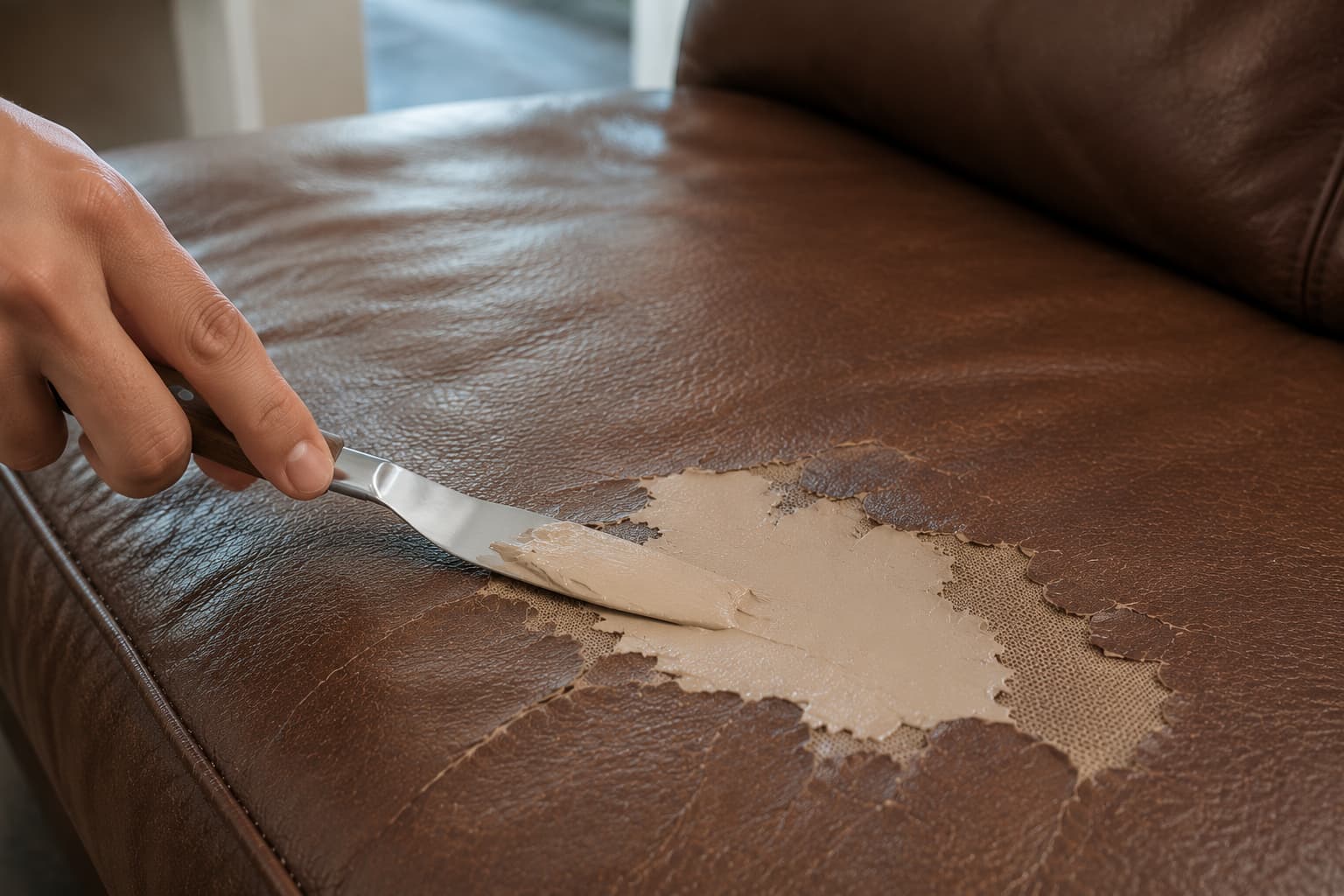
Using the applicator included with your kit or a small stainless-steel palette knife, spread the repair compound from the outer edges of the damage toward the center. Apply several thin, even layers rather than one thick layer, since thick applications may dry unevenly or leave a raised patch. Allow each layer to dry for the time specified by the product manufacturer before applying another one.
Step 7: Build Up and Texture the Surface
Keep adding thin layers until the repaired area is level with the surrounding material. For a more natural, grained finish, press a piece of plastic wrap or grain paper against the surface while the final layer is still slightly tacky, then lift it away.
Step 8: Seal and Finish
Once the repair is fully dry and no longer tacky, gently buff the edges with a cotton pad and a small amount of rubbing alcohol to blend them into the surrounding material. Some repair systems include a topcoat or finish spray — apply this last if your kit includes one.
Step 9: Let It Cure
Give the repair a full day to cure before sitting on it, if possible. Most repairs hold up well under normal daily use once fully cured, though how long a repair lasts depends on the sofa’s overall condition and how much wear the area gets.
Safety Precautions When Using Repair Compounds
Leather and vinyl repair products can contain solvents and adhesives that require some care when handling.
- Work in a well-ventilated room, or open a window if you can.
- Avoid direct skin and eye contact, and wear disposable nitrile gloves while cleaning the damage, mixing colors, and applying the repair compound.
- Keep the product away from heat, sparks, and open flames, since some compounds are flammable.
- Keep the kit out of reach of children and pets.
- Wash your hands thoroughly once you finish the repair.
Always check the product label and safety data sheet for your chosen repair kit, since formulas vary by brand.
When to Call a Professional
Some situations are better handled by an upholsterer instead of a repair kit. Consider professional reupholstery if:
- Peeling covers large sections of the sofa rather than isolated spots
- The underlying padding, springs, or frame are damaged
- You want a full color or fabric change rather than a patch repair
A professional reupholstery estimate typically depends on the sofa’s size and the fabric chosen, so it’s worth getting a quote before deciding between repair and replacement. If cushions have gone flat along with the peeling, it’s worth checking our guide on fixing sagging couch cushions too.
How to Stop It From Peeling Again
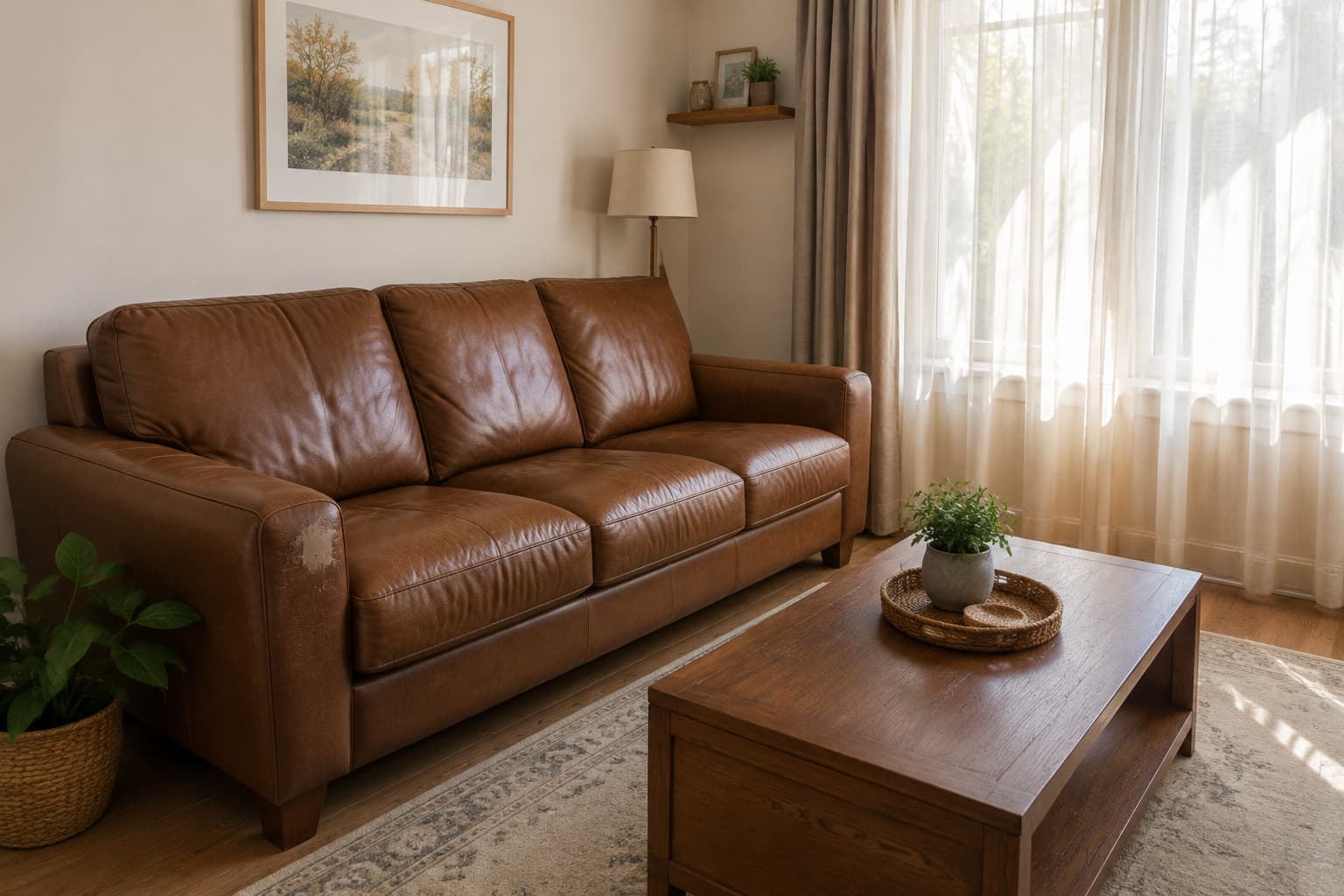
A repaired sofa can peel again if the original causes aren’t addressed.
- Keep it out of direct sunlight. Move the sofa away from windows, or use curtains or blinds to block UV rays.
- Keep it away from heat sources. Radiators, vents, and fireplaces dry out the coating over time.
- Clean it gently. Use a mild soap and water solution or a cleaner made for faux leather. Skip bleach and alcohol-based cleaners for routine cleaning. Our faux leather cleaning guide covers the full routine.
- Dry it after cleaning. Leftover moisture sitting in seams and texture can weaken the coating.
- Rotate cushions occasionally. This spreads out wear instead of concentrating it on the same high-contact spots.
FAQ
Will leather conditioner fix a peeling faux leather sofa?
No. Conditioners are made for genuine leather, and they can’t re-bond a coating that’s already lifting away from the fabric backing. Applying oils or creams to a peeling spot can actually make it worse by softening the edges further.
How long does a DIY repair usually last?
With proper prep, a repair commonly holds up for anywhere from six months to a few years, depending on the sofa’s condition and how much daily use that spot gets. High-contact areas like armrests may need a touch-up sooner than less-used spots.
Can I use a hair dryer or heat gun to speed up the repair?
Stick to the tools in your kit. Some repair systems include a dedicated low-heat tool for setting grain paper, but a household hair dryer or heat gun can overheat the material and scorch or warp the surface instead of helping it cure.
Does this method work on bonded leather too?
Yes. Bonded leather peels for similar reasons and responds to the same clean-trim-fill approach. Color and grain matching can take a bit more adjustment, since bonded leather often has a deeper texture than faux leather.
Will the repaired spot be noticeable?
With careful color matching and texturing, it usually blends in well from normal viewing distance. Up close, or under direct light, a slight difference in sheen or texture can still be visible, especially on larger repairs.
What if the peeling is on or near a seam?
Repair compounds are made for surface coating, not stitched seams. If the damage sits on or affects a seam, a seam repair or professional reupholstery is more reliable than a surface patch.
The Bottom Line
A peeling faux leather sofa doesn’t automatically mean it’s time to shop for a new one. Cleaning the area, trimming the loose coating, and rebuilding the surface with a repair compound fixes small to moderate peeling in an afternoon. Save reupholstery for sofas with widespread damage or structural problems. Either way, keeping the sofa out of direct sun and heat, and cleaning it gently, will help your repair — and the rest of the sofa — last longer.