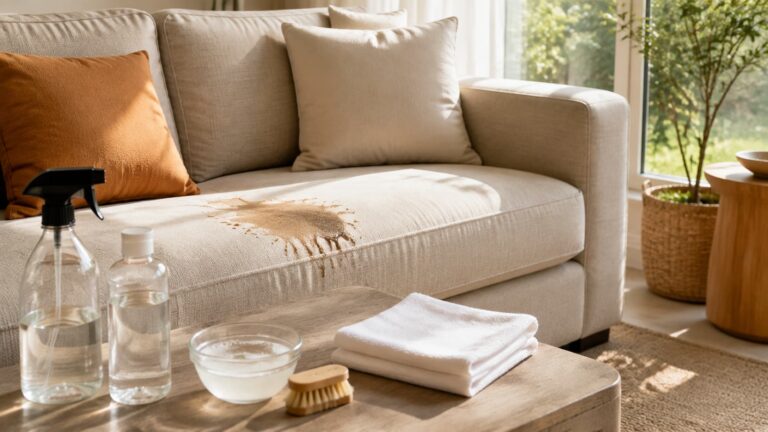
Learning how to clean fabric sofa naturally starts with one habit most guides skip: checking the tag under your cushions before you spray anything. That tag has a code, usually a letter like W, S, WS, or X. It tells you whether water-based ingredients such as vinegar and dish soap are safe, or whether you need a dry approach instead. Once you know your code, cleaning a fabric sofa without harsh chemicals is mostly about patience. Vacuum first. Test in a hidden spot. Use the mildest solution that works. Then dry the fabric fully so it does not mildew. This guide covers supplies, step-by-step cleaning, natural stain removal, odor control, and the mistakes that shorten a sofa’s life.
Here’s the short version of how to clean a couch with vinegar safely: check your fabric’s cleaning code, dilute the vinegar before it touches the couch, and test a hidden spot first.
Check Your Cleaning Code First
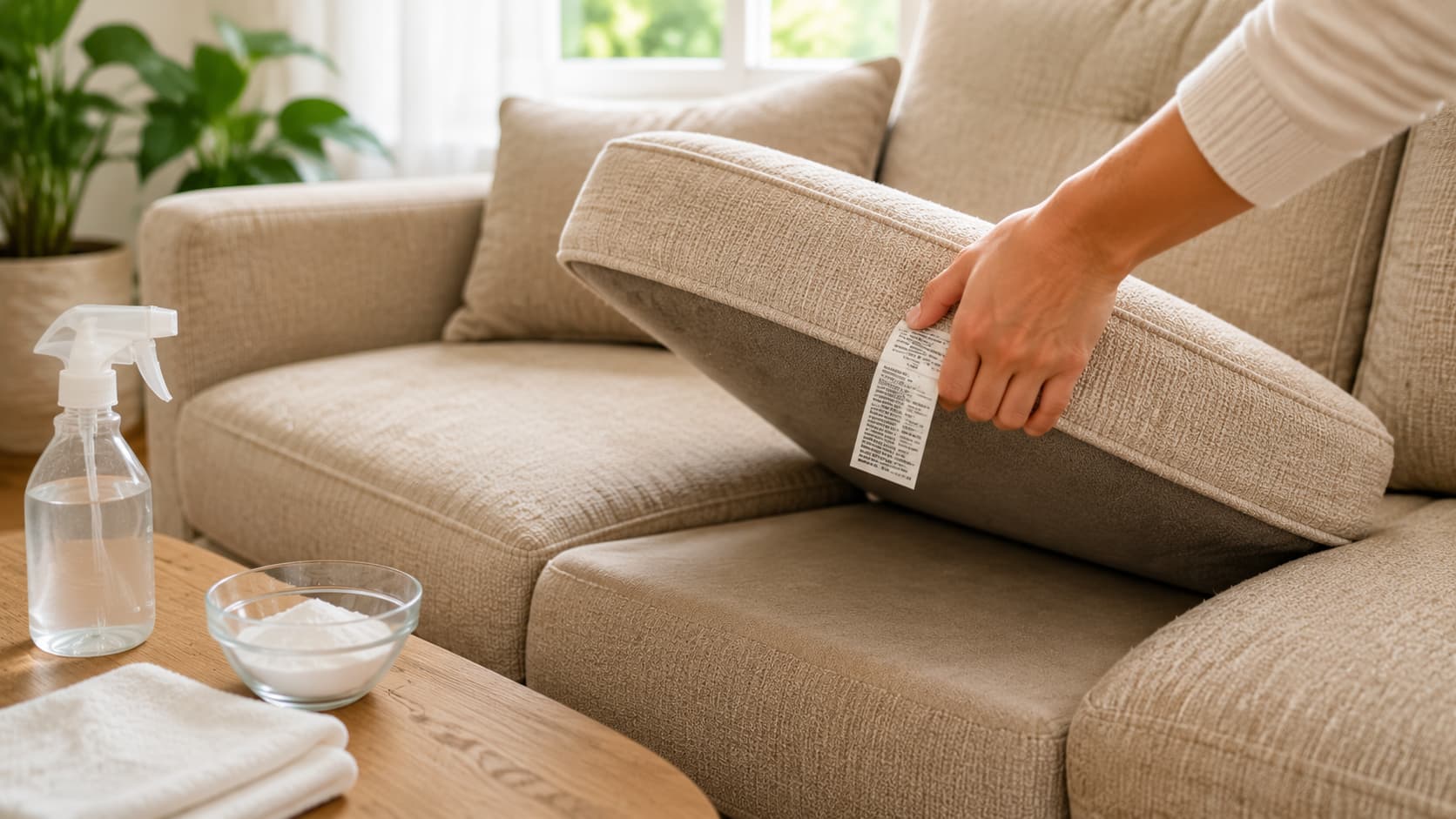
Look under your seat cushions or on the frame’s underside for a small fabric tag. According to the standard codes explained by Sailrite, a W code means water-based cleaners are safe. An S code means the fabric needs a water-free solvent, since water can leave rings or shrink the weave. A WS (or W/S) code allows either method, and an X code means vacuum or light brushing only, with no liquid at all.
Natural fiber sofas made from cotton, linen, or wool are more likely to carry an S or X code than synthetic blends. If your tag is missing or worn away, treat the fabric as sensitive. Test any solution on a hidden patch first, such as the back of a cushion. Wait a few minutes and check for color change before you touch a visible area. If you are not sure what your sofa is made of, our couch material guide can help you identify it from the feel and weave.
| Code | What it means | Vinegar |
|---|---|---|
| W | Water-based cleaners are safe | Safe once diluted |
| WS | Either water-based or solvent cleaners | Safe once diluted |
| S | Water-free solvent only | Skip it — water can leave rings or shrink the weave |
| X | Vacuum or light brushing only | Skip it — no liquid cleaners at all |
Why Vinegar Works and Its Limits
White vinegar is cheap, it’s already in most kitchens, and it skips the harsh fumes and added fragrance found in many spray cleaners. Its mild acidity breaks down soap film, light mineral deposits, and some odor-causing residue on tougher, water-safe fabrics. It won’t replace a deep steam clean or a proper stain remover for every mess, but it’s a solid first move for everyday spots and general freshening.
What You Need for Natural Fabric Sofa Cleaning
Most of these supplies are already in your kitchen or laundry closet:
- White vinegar (distilled, unflavored)
- A mild dish soap or castile soap
- Baking soda
- Distilled or filtered water
- A spray bottle
- Two soft microfiber cloths
- A soft-bristled brush
- A vacuum with an upholstery attachment
Skip tap water if your home has hard water. Minerals in tap water can leave faint marks on light-colored fabric.
If you are starting from scratch, a refillable spray bottle and a few washable microfiber cloths are the two inexpensive tools I would keep specifically for upholstery cleaning.
Soft-Bristled Upholstery Brush: A dedicated soft-bristle brush can help loosen surface dirt, dust, and debris without aggressive scrubbing. This Fabricoat Soft Bristle Upholstery Cleaning Brush is designed for upholstered surfaces, including furniture and fabric seats. Use light pressure and always test the brush on a hidden area first, especially on delicate or loosely woven fabrics.
Skip anything scented with essential oils for now. You will see why in a later section, especially if pets or young kids use the sofa.
Is Vinegar Safe for Your Couch Fabric?
Vinegar is a mild acid. That’s what makes it good at cutting through soap residue, mineral buildup, and some odors. It’s also why it can harm delicate natural fibers if you use it full-strength or on the wrong material.
Vinegar is generally safe, once diluted, on:
- Microfiber and polyester blends
- Cotton and linen blends
- Performance fabrics
Avoid vinegar on:
- Leather — it dries out and weakens the finish. See our leather furniture care guide
- Suede
- Silk and wool
- Fabrics labeled S or X
When in doubt, test a hidden patch first, such as the back of a cushion or the underside of an arm.
How to Clean Fabric Sofa Naturally: Step-by-Step
- Vacuum everything first. Use the upholstery attachment on the cushions, seams, and the base of the sofa. This removes crumbs, hair, and grit that would otherwise turn into mud once they get wet. If your cushions have removable covers, take them off first and wash them separately, exactly as the label on the cover says — then vacuum the cushion underneath as well.
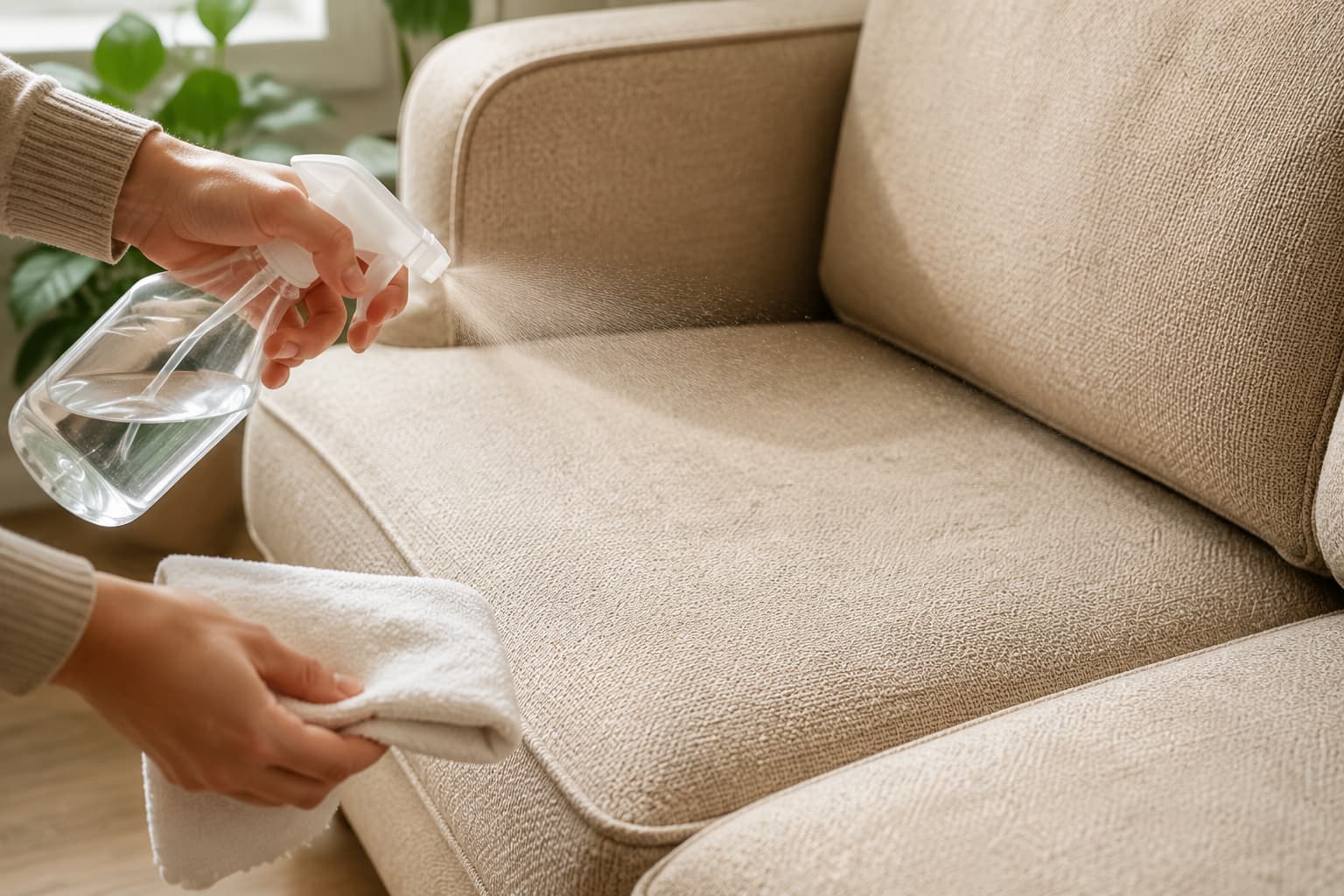
- Mix a mild solution for W or WS codes. Mix one part white vinegar with two parts distilled water in a spray bottle, and add a few drops of mild dish soap. Shake gently.
- Spot test first. Spray a small hidden area, wait 5–10 minutes, and check for discoloration, bleeding, or texture change before treating the visible fabric.
- Mist, don’t soak. Lightly spray a small section, then work the solution in with a soft brush or microfiber cloth in gentle circles. Over-wetting is the single most common cause of watermarks and mildew on fabric sofas. Blot from the outside of the stain toward the center, and switch to a clean part of the cloth often.
- Rinse with a barely damp cloth. Wipe the section with a cloth dampened in plain water to lift leftover soap film, which otherwise attracts dirt faster. Skipping this step can leave a faint smell or a stiff patch behind.
- Dry completely before use. Blot with a dry towel, then open a window or point a fan at the sofa. Avoid direct sun, which can fade fabric. Fabric that stays wet for hours can develop a musty smell or, in rare cases, mildew. A hair dryer on the cool setting, held several inches away, can speed up drying on smaller spots — never use heat. Don’t worry if the area smells faintly of vinegar while it is still damp — that smell fades as the fabric dries.
For S-coded fabric, skip water altogether and use only a dry-solvent upholstery cleaner approved for that fabric. Test it first in an inconspicuous area, and consider professional cleaning if the manufacturer’s instructions are unclear.
Natural Stain Removal for Common Spills
Coffee and Tea
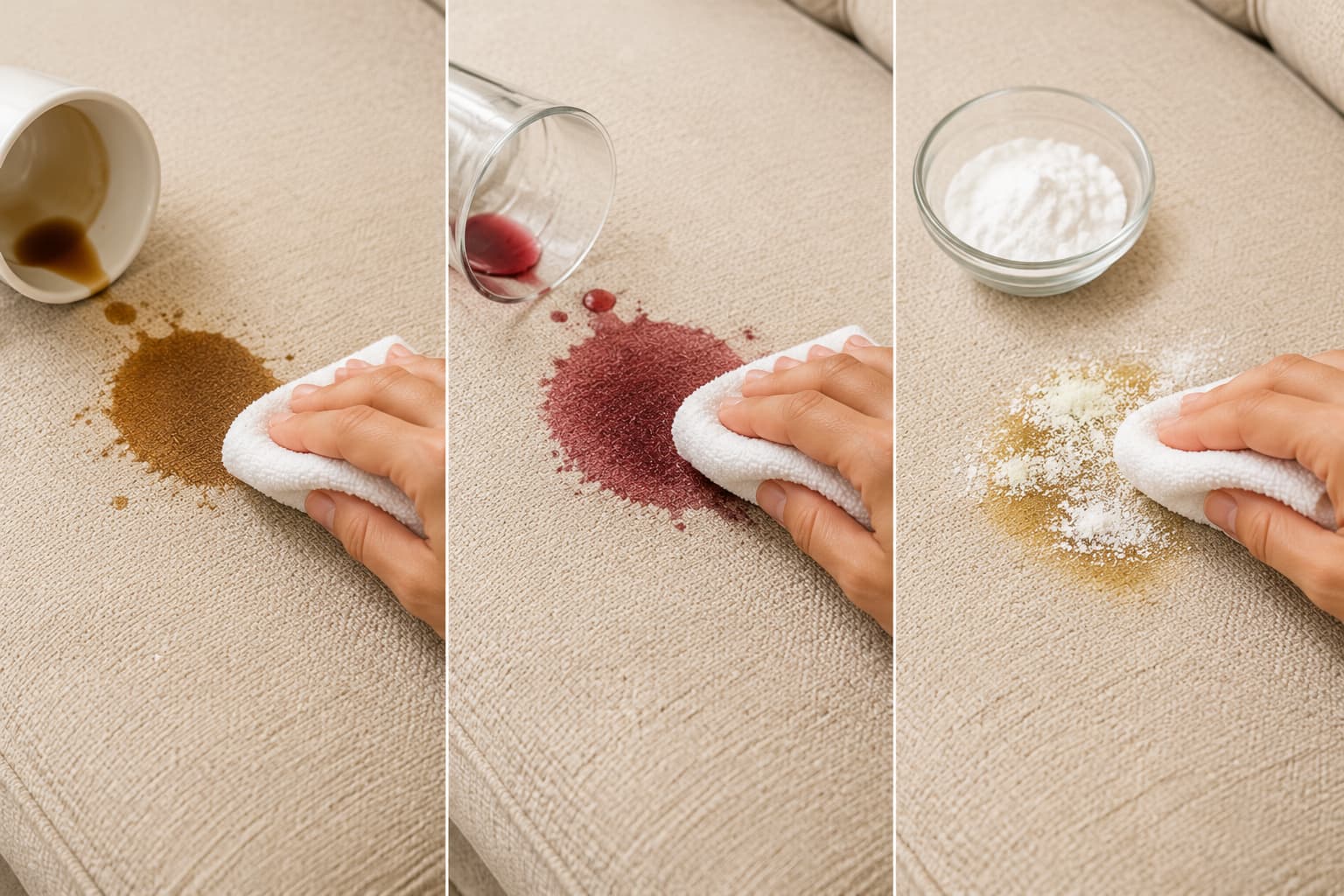
Blot up the excess liquid immediately with a dry cloth, working from the outside of the stain in. Apply your vinegar-and-soap solution with a light mist, dab, and rinse with a barely damp cloth. Repeat if a faint mark remains.
Red Wine and Juice
Blot, never rub. Rubbing pushes the stain deeper into the fibers. Once you have lifted as much liquid as possible, treat the spot the same way as a coffee stain and let it air dry. Fresh spills respond much better than ones left to set overnight.
Grease and Oil
Wipe away any surface oil first, then sprinkle plain baking soda over the spot. Let it sit for at least 15 minutes so it can absorb the oil, then vacuum it away before spot cleaning any remaining mark. For a greasy spot, a drop or two of mild dish soap in the bottle can help break it down — just rinse extra well afterward, since soap left in the fabric attracts dirt.
Pet Accidents
Blot up as much as you can, then treat the area with your vinegar solution to help cut the odor. Rinse well with a barely damp cloth afterward.
If vinegar does not remove a pet accident completely, an upholstery-compatible enzymatic cleaner can target the biological residue responsible for lingering odor; always follow its fabric restrictions and spot-test first. Vinegar helps with light odor, but older or larger accidents usually need the enzyme cleaner for full odor removal.
Water Rings
Lightly mist the ring with your vinegar solution, blot with a dry cloth, then feather the edges with a barely damp cloth so the boundary doesn’t show.
Removing Odors Naturally
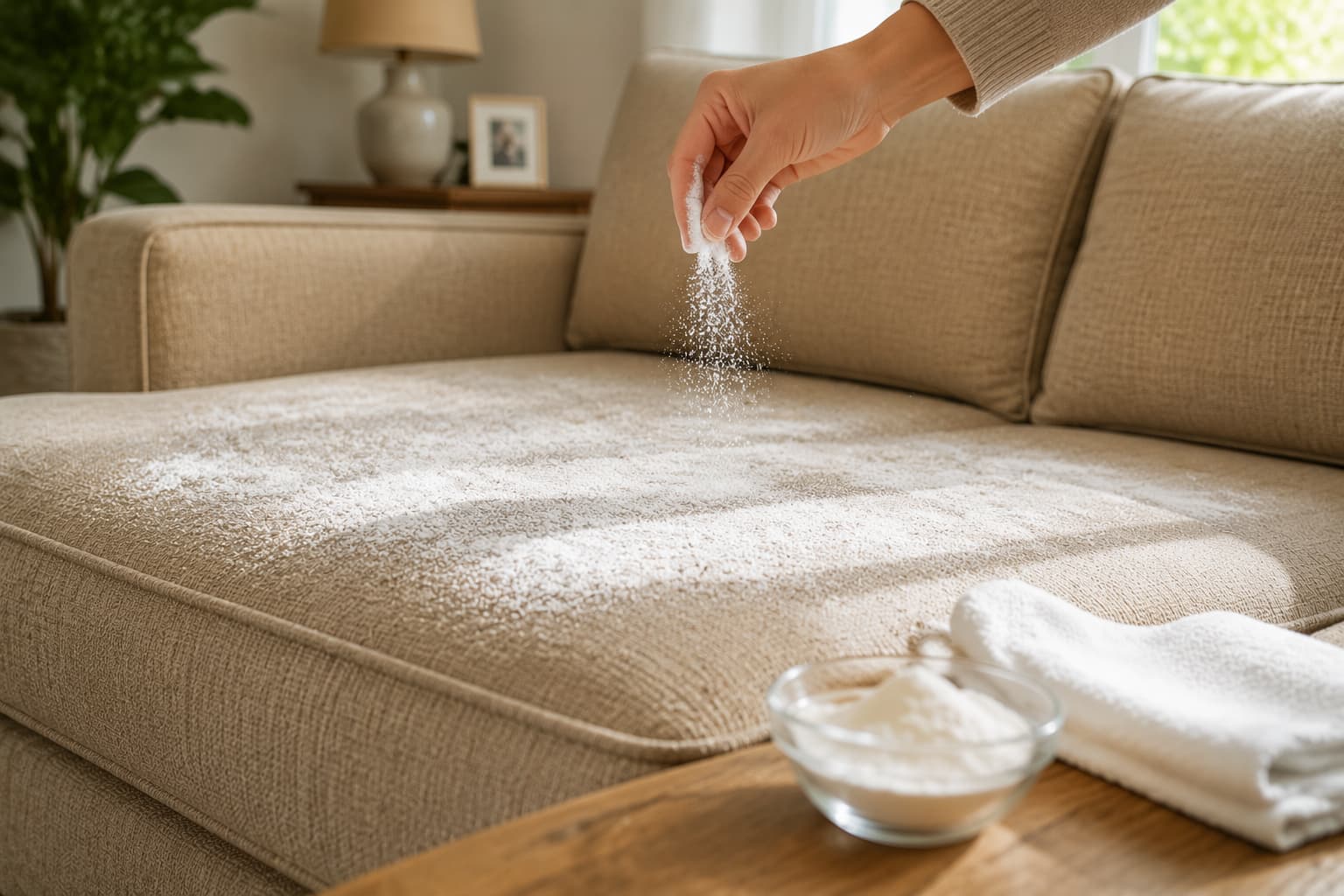
Vinegar can neutralize some odors on its own, but it won’t fix every smell. For a stronger deodorizing pass, use vinegar and baking soda as two separate steps, not mixed together. Start with a light vinegar mist over the whole cushion and let it dry fully. Once it’s dry, sprinkle baking soda generously and evenly across the fabric. Let it sit for several hours, or overnight for stronger odors, then vacuum thoroughly with the upholstery attachment. This works because baking soda absorbs airborne odor compounds rather than just masking them. If odors return quickly after cleaning, that is often a sign the cushions need a deeper clean; our deep-cleaning guide covers the full process for every fabric type.
Is It Safe to Combine Vinegar and Baking Soda?
Many DIY guides suggest mixing vinegar and baking soda into one all-purpose fizzy cleaner. In practice, the two neutralize each other almost immediately. The reaction leaves behind mostly water, carbon dioxide, and a small amount of salt, none of which do much lifting on their own. It works better, and is safer for delicate upholstery, to use them separately instead. Use a vinegar solution for stains and light odor control. Use dry baking soda on its own for absorbing oil and smells before vacuuming. Save the combination for tasks like unclogging a drain, not your sofa.
For the full vinegar method, see Why Vinegar Works and Its Limitsabove.
Keep Pets and Kids Safe: Skip the Essential Oils
It is tempting to add a few drops of lavender or tea tree oil to a DIY spray for scent. This is one place, though, where “natural” does not mean risk-free. The ASPCA warns that essential oils in concentrated form can be dangerous for pets, especially cats, who lack the liver enzyme needed to process many of these compounds. Oils that land on fur or fabric a pet lies on can be absorbed through the skin or ingested during grooming. If you want a natural scent, skip the oils entirely. Rely on the vinegar smell fading as the fabric dries, or simply let the sofa air out near an open window.
A Few Safety Notes
Vinegar is a food-safe, low-toxicity cleaner, which is part of why so many people reach for it first. Even so, work in a room with some airflow, since the smell is strong until it dries. Keep vinegar solutions away from stone, unsealed wood, and any metal hardware on the couch frame, since the acid can dull or corrode those surfaces over time. Never mix vinegar with bleach or ammonia-based products. That combination releases fumes that are genuinely dangerous to breathe.
Optional Tools That Make Sofa Cleaning Easier
You do not need any of these products for basic routine sofa cleaning. The vinegar, mild soap, baking soda, microfiber cloths, spray bottle, and vacuum listed above are enough for most everyday cleaning.
However, the following tools can make the job easier when you are dealing with pet stains, stubborn spots, deeper dirt, or slow drying.
| Optional Tool | Best For | Why It Can Help |
|---|---|---|
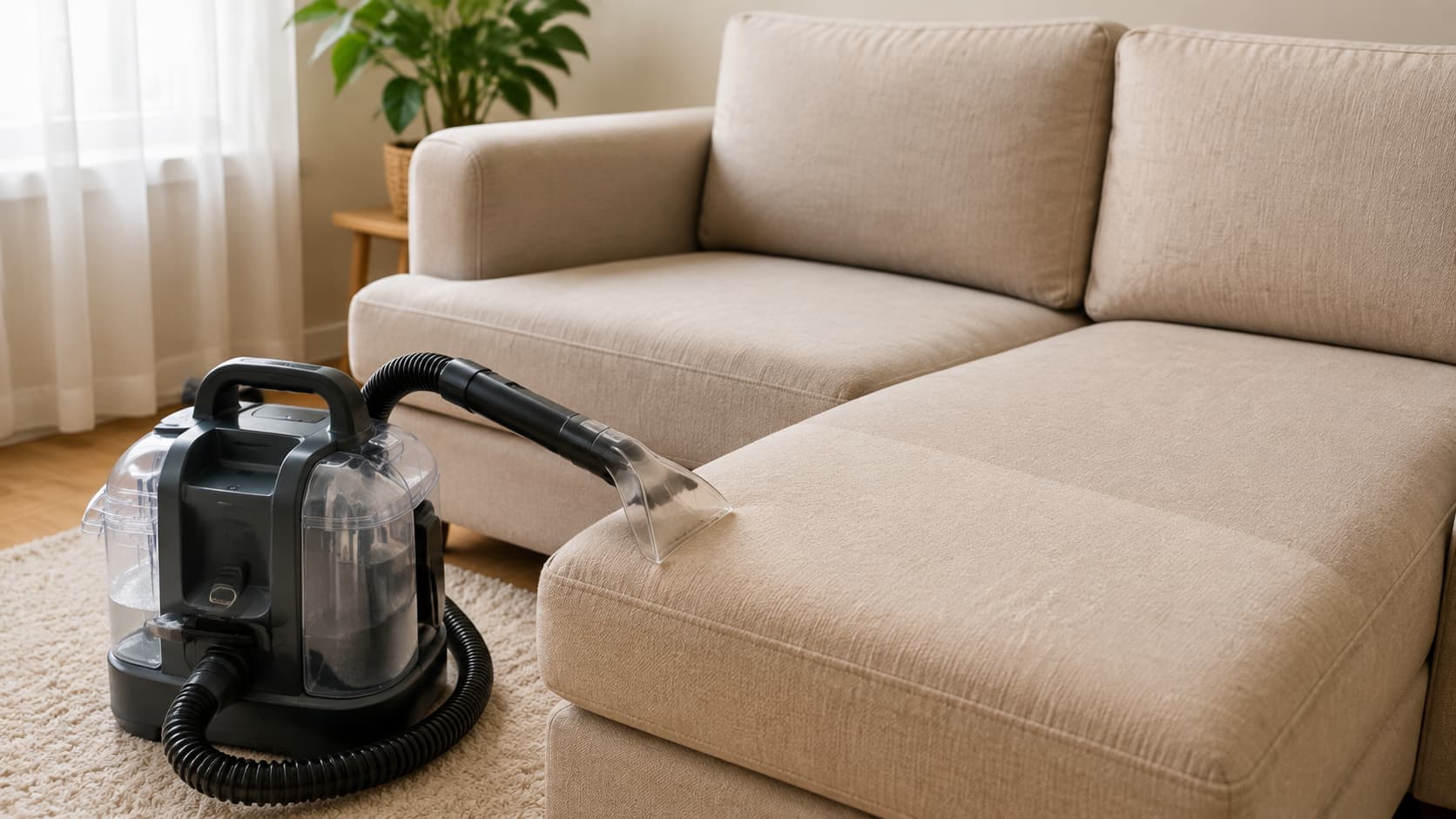
| BISSELL Little Green Portable Carpet & Upholstery Cleaner | Deeper cleaning on W- or WS-coded sofas | A portable extraction cleaner can lift dirt and moisture from upholstery when basic hand cleaning is not enough. Always check your sofa’s cleaning code before using a water-based machine. Check BISSELL Little Green at Walmart |
| Nature’s Miracle Stain & Odor Remover | Pet accidents and lingering pet odors | An enzyme-based cleaner can help break down organic residue that vinegar may not fully remove. Spot-test first and check the product label for fabric restrictions. Check Nature’s Miracle at Target |
| Small Air Circulation Fan | Faster, safer drying after cleaning | Moving air across the sofa helps moisture evaporate more evenly and reduces the chance of dampness lingering inside cushions. Avoid concentrated heat from a hair dryer. Check Vornado Pivot Personal Air Circulator at Target |
| BISSELL Free & Clear Portable Cleaning Formula | Deeper machine cleaning without added perfume or dyes | If you use a compatible portable upholstery machine and prefer a fragrance-free formula, a free-and-clear cleaning solution can be a useful alternative to heavily scented products. Check BISSELL Free & Clear Formula at Target |
Mistakes That Damage Fabric Sofas
- Skipping the cleaning code. Water on an S-coded fabric can cause permanent rings or shrinkage.
- Over-wetting the fabric. Excess moisture soaks into the cushion foam and can lead to mildew that is hard to remove.
- Scrubbing hard at a stain. Vigorous rubbing spreads the stain and can fray or pill the fibers.
- Skipping the spot test. Even mild, natural solutions can bleed dye on some fabrics.
- Using a hair dryer on heat to speed drying. Concentrated heat can shrink or discolor fabric unevenly. A hair dryer on the cool setting, held several inches away, is fine on small spots — never use heat.
- Using vinegar on the wrong fabric. Skip it on leather, suede, silk, antique upholstery, pieces with a stiff protective coating, or fabric with a dye that isn’t colorfast. S- and X-coded fabrics need a dry approach instead.
- Using vinegar on velvet without checking first. Many velvets need a different approach than a standard vinegar spray — check our velvet sofa cleaning guide first.
When to Call a Professional
Some jobs are better left to a certified technician. This is especially true for natural fiber fabrics like silk and wool, unusual weaves, or an X-coded sofa that cannot be cleaned with any liquid at home. The IICRC, the trade organization that certifies upholstery cleaning technicians, recommends professional cleaning for natural fiber fabrics that are prone to color loss, shrinkage, or texture change if handled roughly. A few other signs also point to calling a pro instead of risking the sofa yourself: a set-in stain that has been there for weeks, a large area of pet staining, or any fabric you simply cannot identify. The same goes for an oil-based stain, or a spot where a DIY attempt has already left a ring or texture change. A certified technician through the IICRC’s professional locator has the training and equipment to treat upholstery that store-bought products and home remedies can’t.
For a W- or WS-coded sofa that needs more than hand spot-cleaning, a portable extraction machine can be a middle ground between DIY blotting and hiring a professional. A widely available example, designed for upholstery as well as carpets, is the BISSELL Little Green Portable Carpet Cleaner.
If fragrance is one reason you prefer gentler cleaning products, BISSELL also sells a Free & Clear portable-machine formula without perfumes or dyes.
Keep Your Fabric Sofa Clean Naturally, Long Term
Vacuum weekly to keep grit from working into the weave. Rotate and flip cushions if they are reversible, and treat spills the moment they happen instead of letting them set. A quick pass with your vinegar solution once a month keeps most sofas looking fresh between deeper cleanings. If your sofa is velvet rather than a flat weave, the nap needs a different touch; see our velvet sofa cleaning guide for brushing and steaming tips. For a broader look at fabric identification, stain codes, and cleaner selection across furniture types, our upholstery cleaning guide and full furniture care library are good next stops.
A fabric sofa cleaned naturally will not look brand new after one pass the way a strong commercial cleaner might promise. But with the right code, the right technique, and a little patience, pantry ingredients handle most everyday spills and odors safely. You get a clean sofa without a harsh chemical smell or any risk to the fabric.
Quick Answers
Does vinegar remove couch odors for good?
It helps with light, everyday smells. Deep-set odors, especially from pets, usually need an enzyme cleaner or a professional deep clean.
Can I use vinegar on a leather couch?
No. Vinegar’s acidity can dry out and damage leather over time. Use a leather-specific cleaner instead.
How often can I spot-clean with vinegar?
Occasional spot cleaning is fine. For fabrics that tolerate it, a light maintenance pass every few weeks is reasonable, but don’t overwet the same area repeatedly.
Now you know how to clean a couch with vinegar — safely, cheaply, and without harsh chemicals. The recipe is simple: a diluted vinegar solution, a hidden spot test, and patience.