

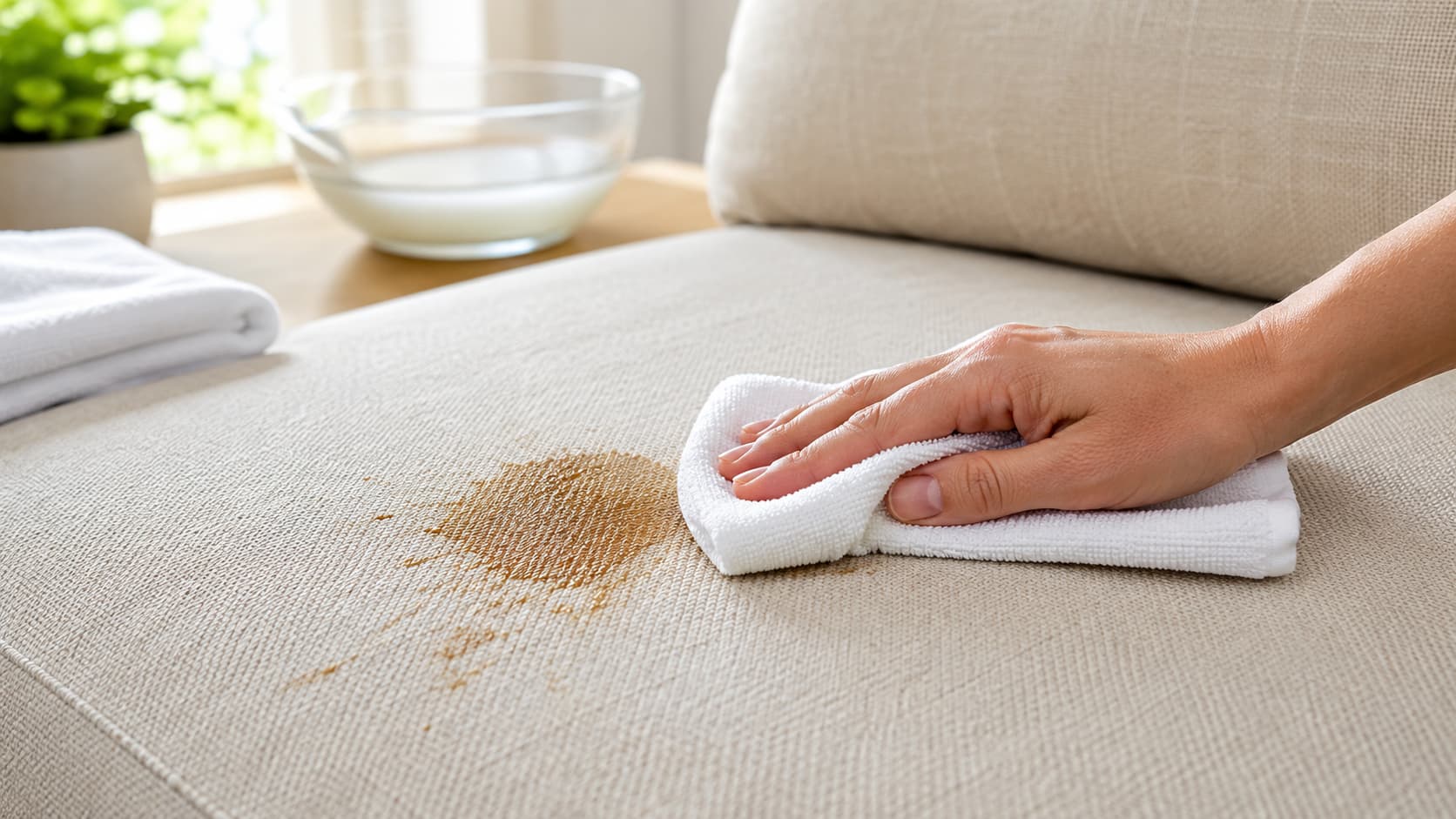
Spilled coffee on your favorite couch? Don’t panic. Check your couch’s cleaning code, blot up the spill with a clean cloth, then treat the stain with a method matched to your fabric and the stain type. Most stains come out completely if you act fast.
The trick is knowing your fabric before you grab a cloth. Water works great on some couches, but it can ruin others. This guide shows you how to remove stains from couch using the right method for each fabric and stain type, helping you remove spills effectively before they become permanent marks.
Check Your Couch’s Cleaning Code First
Every upholstered couch has a cleaning code. You’ll usually find it on a tag under the seat cushions or on the frame near an armrest. This code tells you which cleaners are safe for your fabric.
Upholstery manufacturers use cleaning codes to show which cleaning methods are safe for different fabrics, including water-based, solvent-based, combination, and vacuum-only methods. You can check the detailed upholstery cleaning code definitions before applying any cleaner.
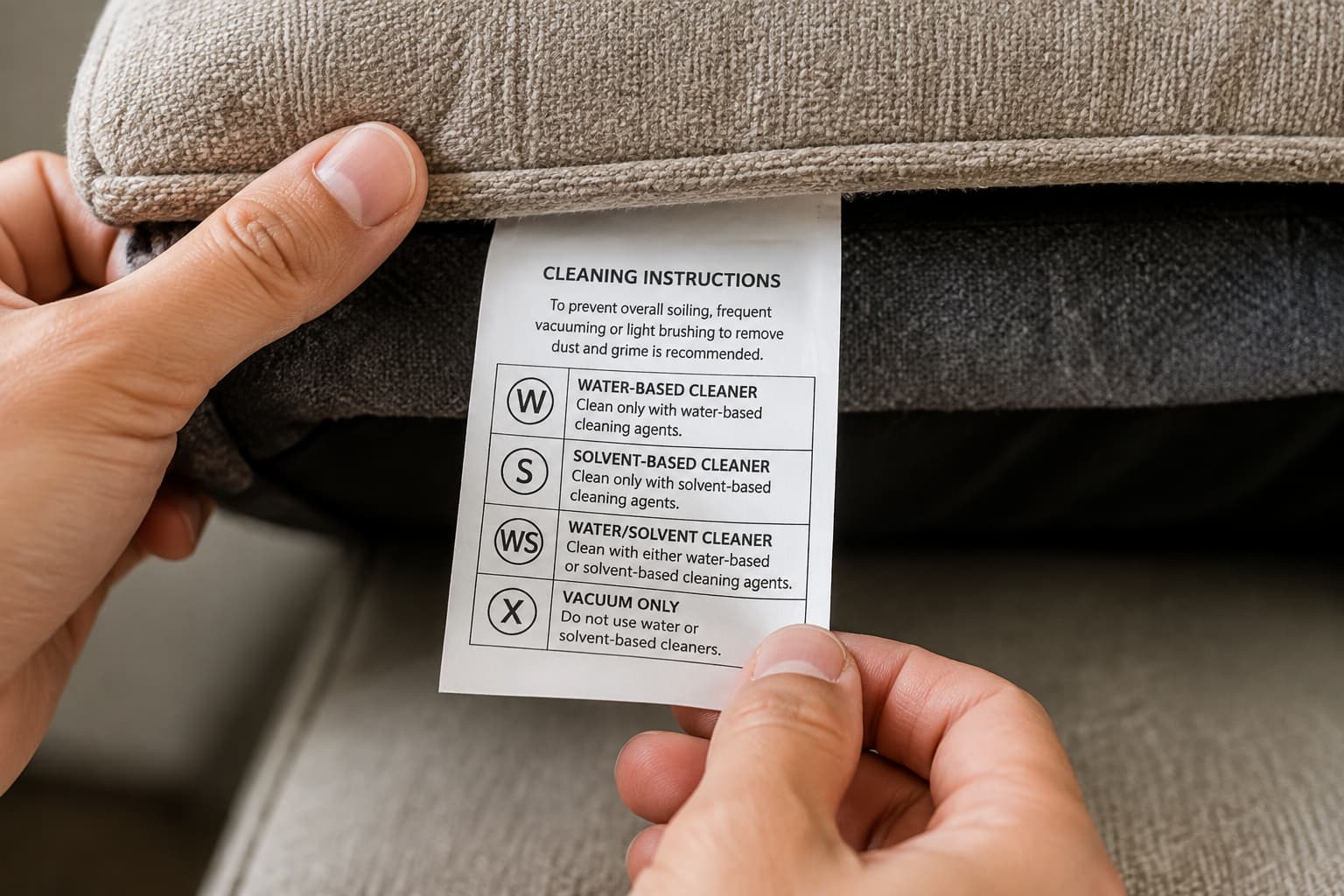
Fabric mills test each fabric and assign one of four codes. The codes come from the Joint Industry Standards Committee, and manufacturers print them on every hang tag and spec sheet. Here’s what each one means.
- W means water-based. You can clean these fabrics with mild soap and water. Most polyester, nylon, and other synthetic blends fall into this group.
- S means solvent-only. Skip the water. These fabrics, often cotton, linen, silk, or rayon, can shrink, ring, or stain permanently if they get wet. Use a water-free cleaning solvent instead.
- WS means either one works. You have more flexibility with water-based or solvent-based cleaners.
- X means vacuum only. No liquid of any kind. If your couch carries this code, call a professional for anything beyond light dust and crumbs.
No tag on your couch? Check our guide to the best couch materials to identify your fabric by look and feel, or read our full walkthrough on how to clean upholstery safely.
The Golden Rules Before You Start
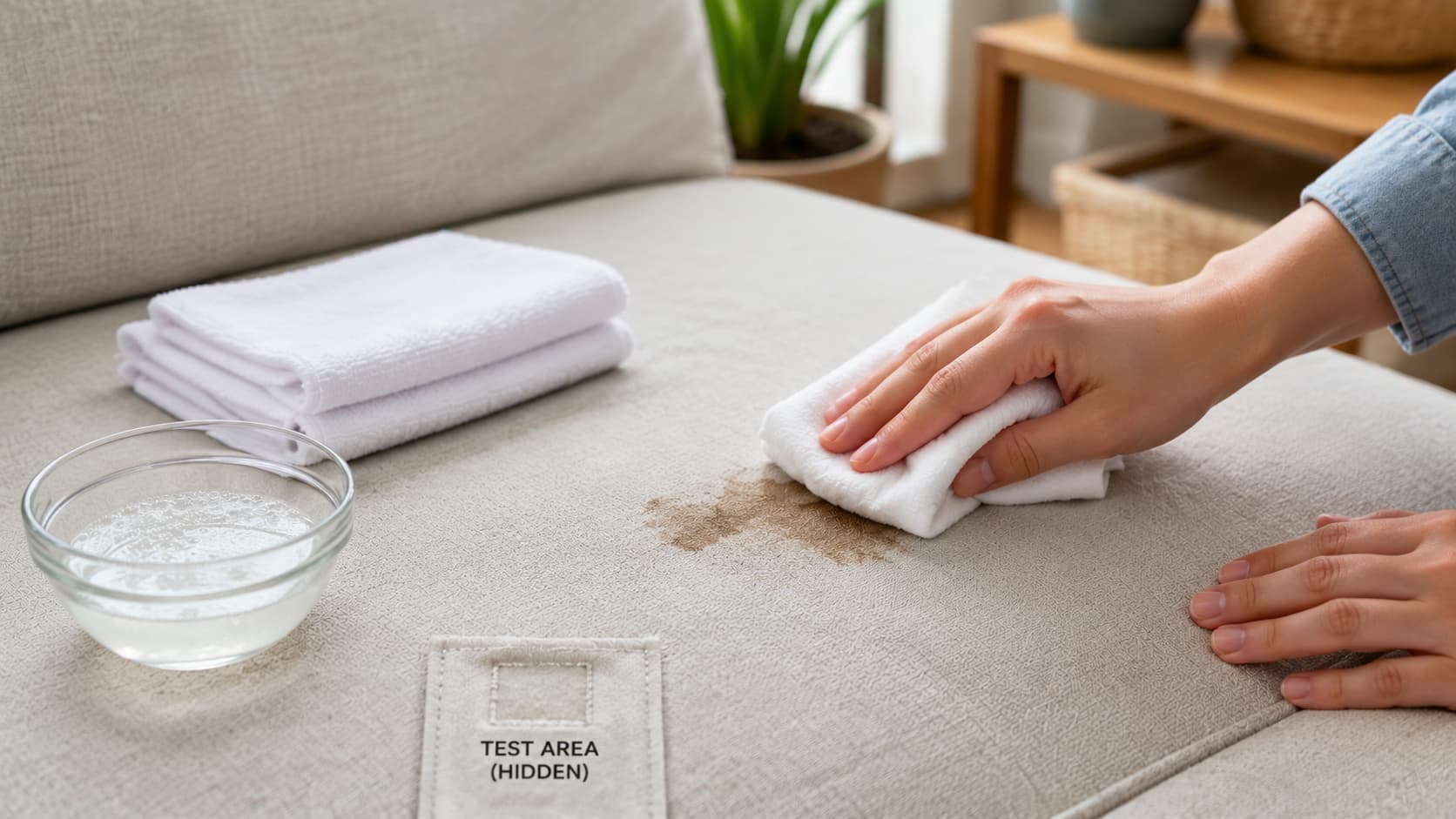
A few habits matter more than any specific product. Follow these every time.
- Blot, don’t rub. Rubbing pushes the stain deeper into the fibers and can fray them. Press straight down with a clean cloth, then lift straight up.
- Work from the outside in. Starting at the edge of a stain and working toward the center keeps it from spreading wider.
- Use cold water first. Hot water can set many stains, especially protein-based ones like blood. Start cool.
- Test in a hidden spot. Dab your cleaning solution on a small, out-of-sight area first, like the back of a cushion. Wait a few minutes and check for color change before treating the visible stain.
- Skip the heat. Don’t use a hair dryer or iron to speed up drying. Heat can lock a stain in permanently.
- Use only white cloths. Colored towels can transfer dye onto lighter fabric. Stick to plain white cotton or microfiber.
What You’ll Need
Most fresh stains only need a few basic supplies you likely already own.
- Clean white cloths or paper towels
- A soft-bristled brush
- Mild dish soap
- White vinegar
- Baking soda
- Rubbing alcohol
- Hydrogen peroxide (for light-colored, W-coded fabric only)
- A small bowl for mixing solutions
- A handheld vacuum with an upholstery attachment
For tougher pet stains, add an enzyme-based cleaner made for upholstery. For routine touch-ups, a portable spot cleaner works well on large areas without soaking the cushion foam.
How to Remove Stains from Couch: A Complete Step-by-Step Guide
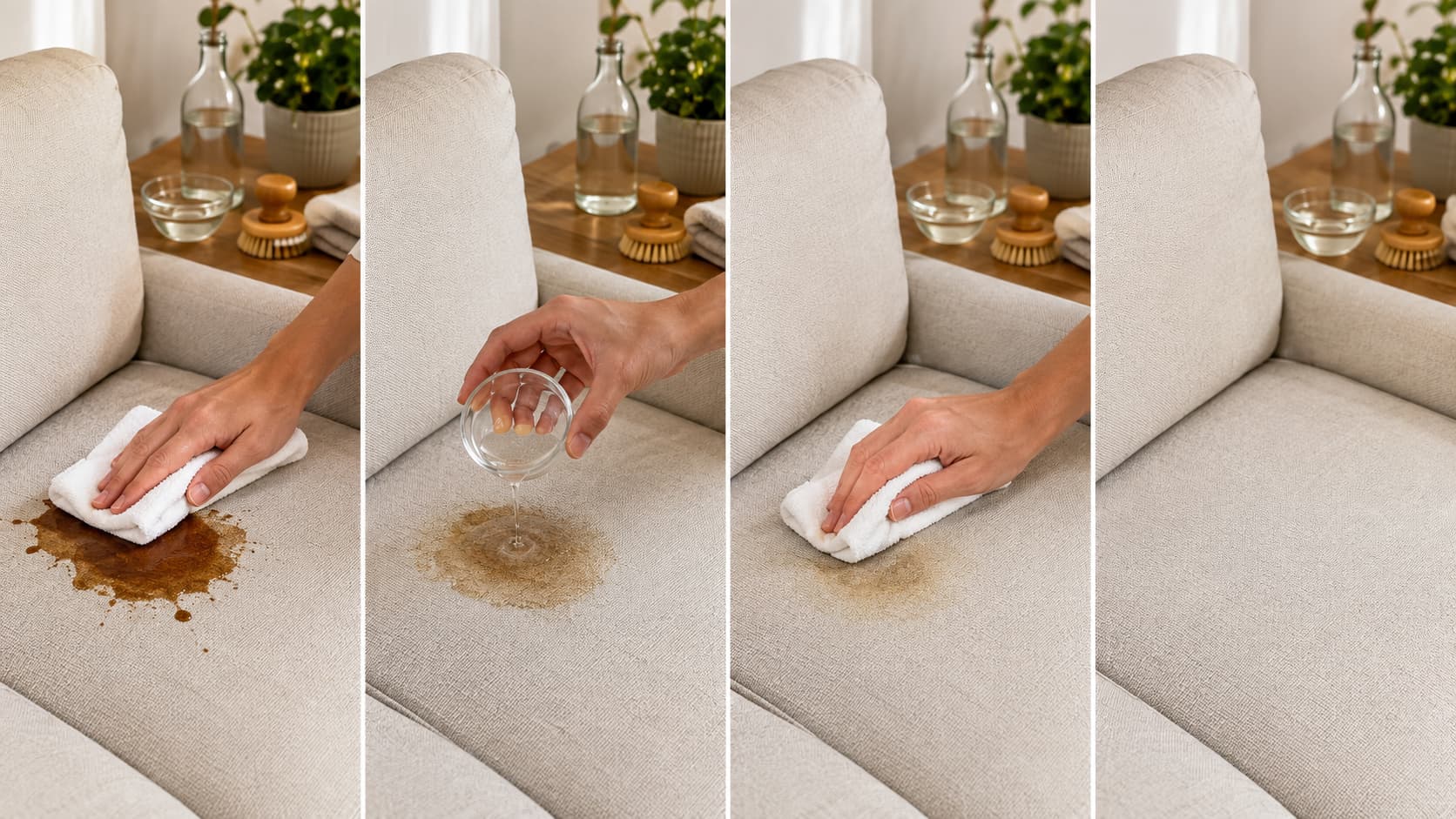
This method handles most everyday spills on water-safe fabric. Adjust for solvent-only fabric using the notes further down.
- Act fast. Blot up as much liquid as you can right away. The longer a spill sits, the deeper it soaks into the cushion fibers and foam.
- Scrape off solids. For food or other semi-solid messes, use a dull knife or spoon to lift the material off the surface. Avoid pressing it further into the fabric.
- Mix your cleaner. Combine one tablespoon of mild dish soap and one tablespoon of white vinegar with two cups of warm water.
- Test it first. Apply a small amount to a hidden area and check for any color change.
- Apply and blot. Dip a clean white cloth into the solution and blot the stain, working from the outer edge inward. Turn the cloth often so you’re not reapplying the stain you just lifted.
- Rinse. Dampen a fresh cloth with plain water and blot the area to remove leftover soap.
- Dry it. Blot with a dry towel, then let the cushion air dry completely. A fan pointed at the spot speeds this up without adding heat.
- Vacuum. Once dry, vacuum the area with an upholstery attachment to lift any remaining residue and restore the fabric’s texture.
For solvent-only (S-coded) fabric, skip water entirely. Apply a small amount of dry-cleaning solvent to a white cloth, dab the stain gently, and let it air dry. Never use steam or a wet cloth on an S-coded fabric.
How to Remove Common Stains by Type
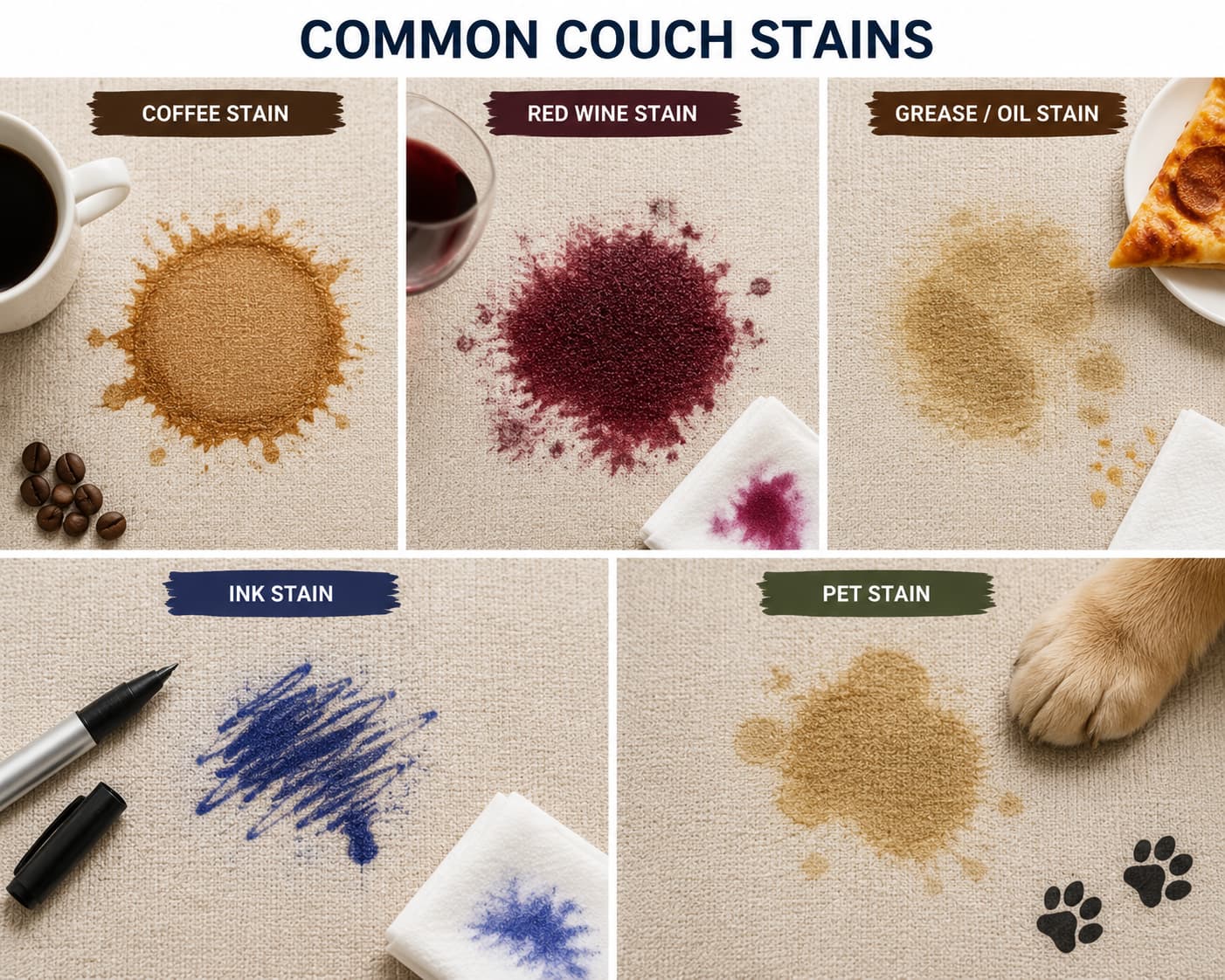
Read the upholstery old stain guide: How to Get Old Stains Out of Upholstery (Even Set-In Ones)
Different stains need different approaches. Here’s what works for the messes that show up most often on couches.
Red wine:
Blot up the spill immediately with a dry cloth. Mix three parts hydrogen peroxide with one part dish soap (light fabric, W-code only), apply, and let it sit for a few minutes before blotting clean. On darker or S-coded fabric, use plain cold water and a vinegar solution instead, and avoid peroxide, which can lighten color.
Blood:
Cold water is essential here because heat can make protein-based stains like blood harder to remove. According to the American Cleaning Institute stain removal guide, careful stain treatment helps prevent marks from becoming more difficult to remove. Blot with cold water, then dab with a little hydrogen peroxide on light, W-coded fabric if the stain remains. Rinse and blot dry.
Coffee and tea:
Blot up excess liquid, then sponge with cool water. Follow with the dish soap and vinegar solution if a shadow remains, working from the outside in.
Grease and oil:
Sprinkle baking soda directly on the stain and let it sit for at least 15 minutes to absorb the oil. Vacuum away the powder, then treat any remaining mark with dish soap and warm water.
Ink and marker:
Dab, don’t rub, with a cotton swab lightly dampened in rubbing alcohol. Work from the outer edge in, switching to a clean part of the swab often so you’re not spreading the ink.
Pet urine and vomit:
Blot up as much as possible, then apply an enzyme-based cleaner made for pet stains. These cleaners use enzymes that break down the uric acid and proteins that plain soap leaves behind, which is also what keeps the odor from returning. Let the cleaner sit for the time listed on the label, usually at least 15 minutes, before blotting dry. Skip ammonia-based cleaners here, since the smell can actually draw pets back to the same spot.
Makeup and chocolate:
Scrape off any excess first. Treat with the dish soap and vinegar solution, blotting gently until the color lifts.
Candle wax:
Let the wax harden completely, then gently scrape off the excess with a dull knife. Place a paper towel over any remaining residue and press with a warm iron for a few seconds so the wax transfers onto the towel instead of the fabric.
Read our How to Clean a Couch With Vinegar: A Safe Step-by-Step Guide
Cleaning Stains by Sofa Material

Fabric type changes the safest method, so match your approach to your couch’s material.
Leather and faux leather:
Skip water-heavy methods. Wipe with a barely damp cloth and mild soap, then dry right away. See our full guides on cleaning a leather couch and cleaning a faux leather couch for material-specific steps and what to avoid.
Velvet:
Water can crush the pile and leave visible marks. Blot gently and always brush the nap back into place afterward. Our velvet sofa cleaning guide covers the full process, including how to lift set-in stains without flattening the fabric.
Performance fabric and microfiber:
These are usually W-coded and the most forgiving to clean. Mild soap and water handles most spills without special products.
Natural fibers like cotton and linen:
These are often S-coded and prone to water rings. When in doubt, test a hidden spot before applying anything, and lean toward a solvent-based cleaner.
For an all-fabric deep clean beyond spot treatment, our guide to deep cleaning a couch walks through the full process by material.
Mistakes That Make Stains Worse
A few common habits do more harm than the stain itself.
- Scrubbing hard. This spreads the stain and can wear down the fibers, leaving a rough patch that never quite blends back in.
- Oversaturating the cushion. Too much liquid soaks into the foam underneath, where it can cause mildew, odor, and rings that resurface days later.
- Mixing cleaning products. Combining bleach and ammonia, for example, creates dangerous fumes. Stick to one method at a time.
- Skipping the patch test. A cleaner that works fine on one couch can discolor another. Always test first, even with products you’ve used before.
- Using hot water on protein stains. Heat cooks proteins in blood, egg, and dairy into the fabric, making them far harder to remove.
Read our guide: How to Clean Fabric Sofa Naturally | The Safe DIY
When to Call a Professional
Some situations are worth handing off. Call a professional upholstery cleaner if the stain covers a large area, if it’s been set for weeks, if your couch is X-coded, or if a DIY attempt has already left a ring or faded patch. Professional cleaners have equipment and solvents that go beyond what’s safe to try at home, and they can usually rescue a couch that a home treatment made worse.
How to Prevent Future Stains
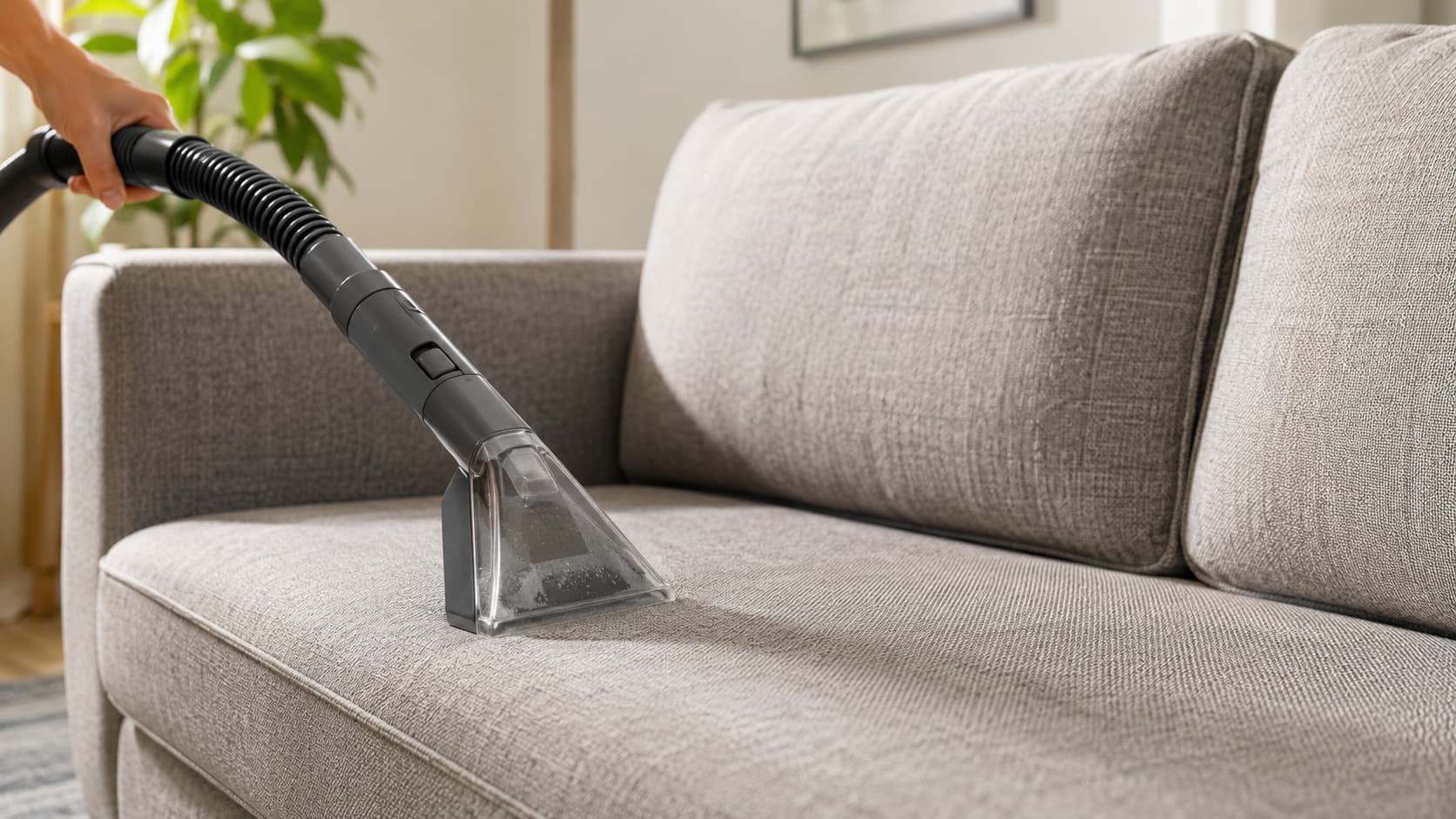
A little upkeep goes a long way toward keeping spills from becoming permanent stains.
Vacuum weekly with an upholstery attachment to keep dirt from grinding into the fibers over time. Rotate and flip reversible cushions regularly so wear spreads evenly. Keep a small cleaning kit nearby, with white cloths, mild soap, and an enzyme cleaner, so you can treat spills the moment they happen. Consider a fabric protector spray on performance fabric to give yourself extra time before a spill soaks in.
Frequently Asked Questions
Does club soda really remove stains?
Club soda’s carbonation can help lift some fresh, light stains, but plain cold water works just as well in most cases. It’s not a substitute for treating the stain type correctly.
Can I use a Magic Eraser on my couch?
Melamine sponges can work on scuffs on sturdier, W-coded fabrics, but they act as a mild abrasive. Test a hidden spot first, since they can dull sheen or damage delicate weaves.
Will baking soda damage my fabric?
Baking soda is safe for nearly all upholstery when used dry and vacuumed up afterward. Leaving a wet baking soda paste on fabric for too long can leave a residue, so always vacuum thoroughly once it’s dry.
How do I get rid of odor after the stain is gone?
Sprinkle baking soda over the entire cushion, let it sit for a few hours or overnight, then vacuum it up. For pet-related odors, an enzyme cleaner treats the source instead of masking it.
Is it safe to steam clean my couch?
Only on W or WS-coded fabric. Steam can permanently damage S-coded and X-coded fabric, along with leather and velvet, so check your cleaning code before using a steam cleaner.