

Here’s the short version of how to clean a couch with vinegar safely: check your fabric’s cleaning code, dilute the vinegar before it touches the couch, and test a hidden spot first. Vinegar works well on many fabric couches, but not every one of them. This guide walks you through checking your fabric, mixing a safe solution, and treating stains and odors without damaging the material.
Before you spray anything, find your couch’s care tag. It’s usually under a cushion or on the frame’s underside. The letter code on that tag tells you whether vinegar is even an option.

Why Clean With Vinegar
White vinegar is cheap, it’s already in most kitchens, and it skips the harsh fumes and added fragrance found in many spray cleaners. Its mild acidity breaks down soap film, light mineral deposits, and some odor-causing residue on tougher, water-safe fabrics. It won’t replace a deep steam clean or a proper stain remover for every mess, but it’s a solid first move for everyday spots and general freshening.
Check Your Couch’s Cleaning Code First

Furniture makers use a simple letter system to show which cleaners are safe for each fabric. Look for one of these codes on your tag.
- W (water-based): Safe for diluted vinegar and other water-based cleaners.
- WS (water or solvent): Usually safe for diluted vinegar, but test first.
- S (solvent only): Skip the vinegar. Water-based cleaners can cause rings, shrinkage, or discoloration.
- X (vacuum only): No liquid cleaners at all, including vinegar. Vacuum or brush only.
If you can’t find a tag, treat the fabric as sensitive. Test in a hidden spot before you clean the whole couch. Our guide to cleaning upholstery breaks down each code with more product recommendations if you want a deeper reference.
What You’ll Need
- White distilled vinegar
- Distilled or filtered water
- A spray bottle
- Two clean microfiber cloths
- A soft-bristle brush
- A vacuum with an upholstery attachment
- Baking soda (optional, for odors)
Skip tap water if your home has hard water. Minerals in tap water can leave faint marks on light-colored fabric.
Is Vinegar Safe for Your Couch Fabric?
Vinegar is a mild acid. That’s what makes it good at cutting through soap residue, mineral buildup, and some odors. It’s also why it can harm delicate natural fibers if you use it full-strength or on the wrong material.
Vinegar is generally safe, once diluted, on:
- Cotton and linen with a W or WS code
- Polyester and other synthetic blends
- Many performance fabrics rated for water-based cleaning
Avoid vinegar on:
- Silk, wool, and most velvet, even if the tag says WS
- Suede and any fabric marked S or X
- Genuine leather, which vinegar can dry out and crack over time. If your sofa is leather, follow our leather furniture care guide instead.
When in doubt, test a hidden patch first, such as the back of a cushion or the underside of an arm. Apply a small amount of your diluted solution, wait ten minutes, then blot and check for color change or texture damage before treating a visible area.
How to Clean a Couch With Vinegar, Step by Step

1. Vacuum the Whole Couch
Remove cushions and vacuum every surface with an upholstery attachment. Work into seams, crevices, and the area under the cushions. This step keeps you from grinding dust and grit deeper into the fabric once it gets wet.
2. Mix Your Vinegar Solution
For most W and WS fabrics, mix one part white vinegar with two to three parts water in a spray bottle. Start with the weaker ratio. You can always add more vinegar later if the fabric handles it well and the stain needs extra strength.
3. Spot Test First
Spray a small amount on a hidden area and let it sit for ten minutes. Blot it dry, then check for fading, water rings, or a change in texture. Move on to the full cleaning only if the spot looks unchanged.
4. Apply and Blot the Stain
Lightly mist the stained area. Don’t soak it. Use a clean microfiber cloth to blot from the outside of the stain toward the center, so you don’t spread it further. Work in small sections, and switch to a clean part of the cloth often.
5. Rinse With Plain Water
Once the stain lifts, dampen a second cloth with plain water and blot the area again. This step removes leftover vinegar and any dissolved residue. Skipping it can leave a faint smell or a slightly stiff patch once the fabric dries.
6. Dry the Area Completely
Open a window or point a fan at the damp spot. Fabric that stays wet for hours can develop a musty smell or, in rare cases, mildew. A hair dryer on the cool setting, held several inches away, can speed up drying on smaller spots.
Removing Odors With Vinegar and Baking Soda
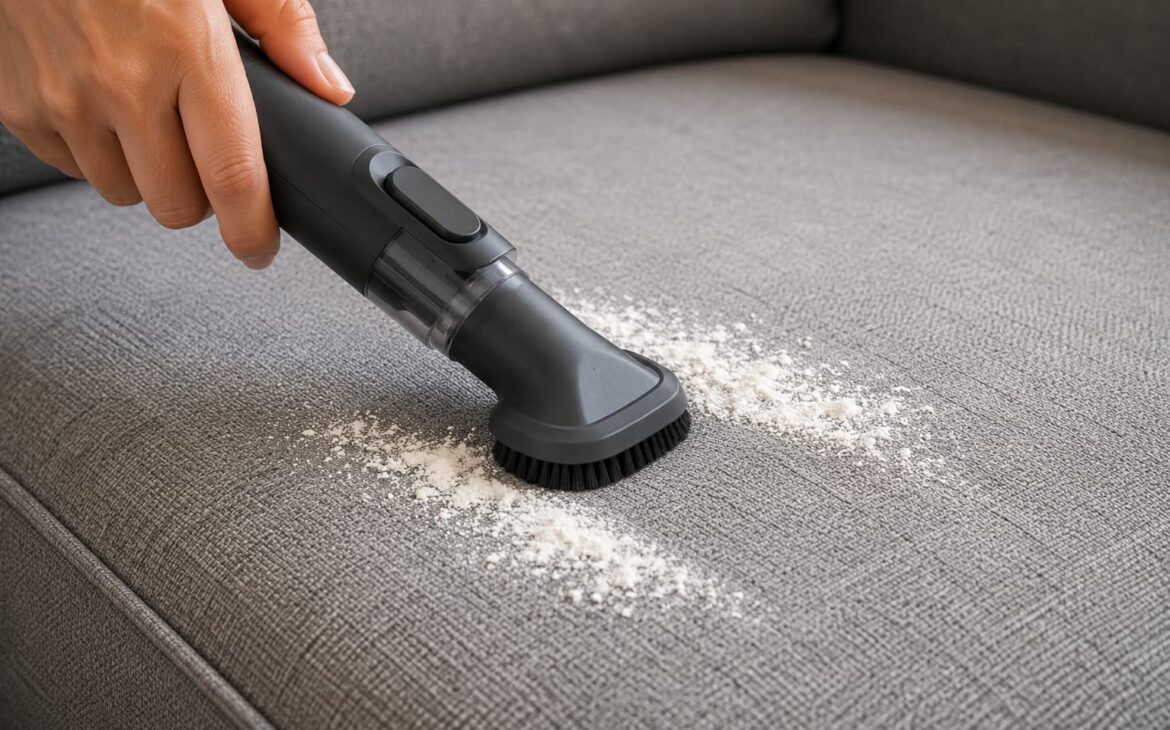
Vinegar can neutralize some odors on its own, but it won’t fix every smell. For a stronger deodorizing pass, use vinegar and baking soda as two separate steps, not mixed together. Combining them in the bottle just creates a fizzy reaction that cancels out both ingredients.
Start with a light vinegar mist over the whole cushion, then let it dry fully. Once it’s dry, sprinkle baking soda over the fabric, leave it for several hours or overnight, and vacuum it up completely. This two-step approach handles everyday odors like pet smell, food, or general mustiness better than either product alone.
Vinegar Tips for Common Stains
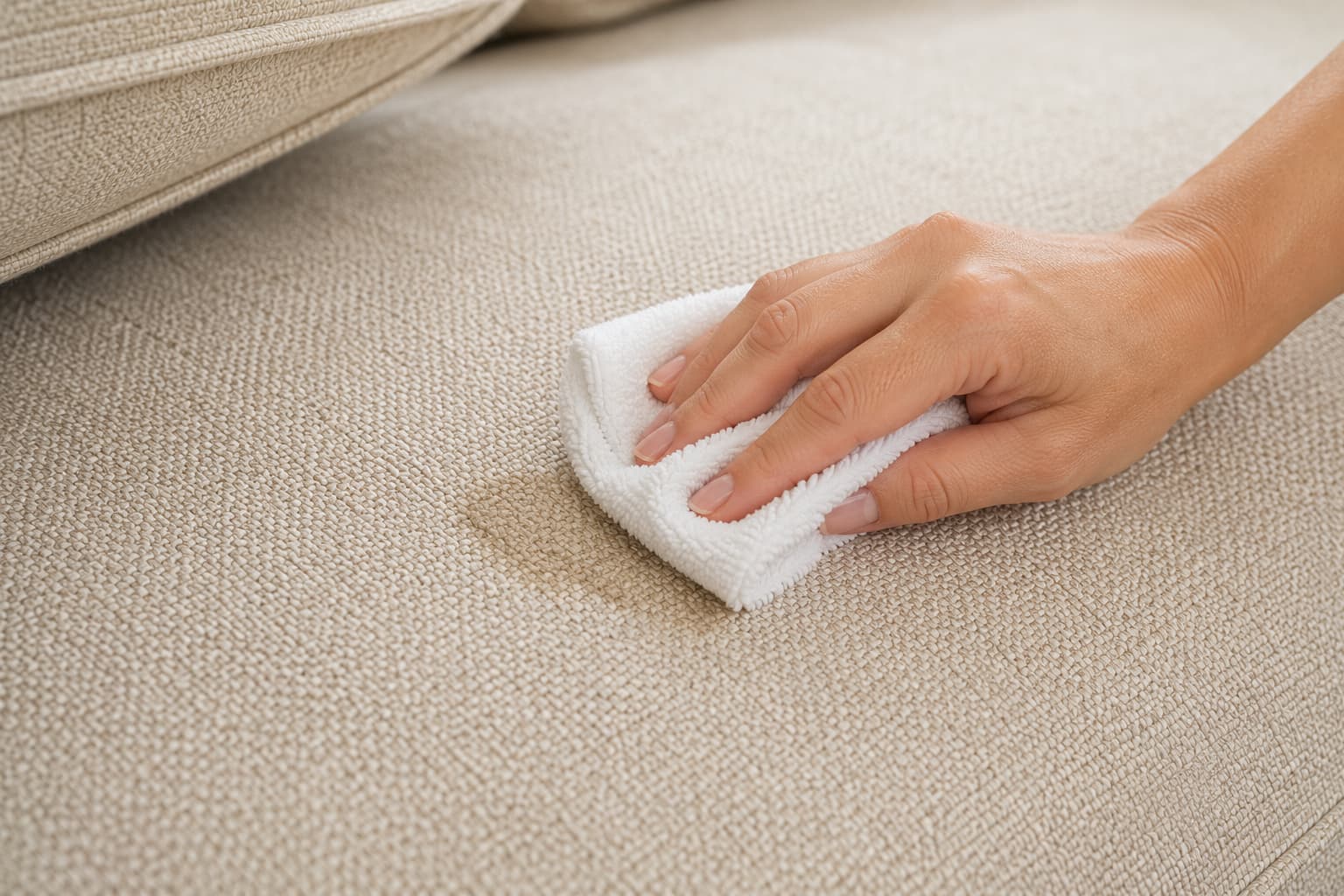
Coffee or tea: Blot up as much liquid as you can first. Then apply the diluted vinegar solution and blot again. Repeat if a faint mark remains.
Pet accidents: Blot the area, treat it with diluted vinegar, and rinse well. Vinegar helps with light odor, but older or larger accidents usually need an enzyme-based pet cleaner for full odor removal.
Water rings: Lightly mist the ring with your vinegar solution, blot with a dry cloth, then feather the edges with a barely damp cloth so the boundary doesn’t show.
Red wine or juice: Blot immediately without rubbing. Apply the vinegar solution from the outside edge of the stain inward, blot again, then rinse. Fresh spills respond much better than ones left to set overnight.
For a full walkthrough that covers extraction methods, drying times, and heavier stains, see our step-by-step deep cleaning guide.
When Not to Use Vinegar on Your Couch
Skip vinegar entirely if your couch is leather, suede, silk, or marked with an S or X code. Also avoid it on antique upholstery, fabric with a stiff protective coating, or any material where the dye isn’t colorfast. If your sofa is velvet, check our velvet sofa cleaning guide first, since many velvets need a different approach than a standard vinegar spray.
If you’re not sure what fabric you own, our couch material guide can help you identify it and match it to the right cleaning method.
When to Call a Professional Cleaner
Some jobs are worth handing off. Call a professional if the stain is old, large, or oil-based, if your fabric is a delicate natural fiber, or if a DIY attempt has already left a ring or texture change. A certified technician through the IICRC’s professional locator has the training and equipment to treat upholstery that store-bought products and home remedies can’t safely fix.
A Few Safety Notes
Vinegar is a food-safe, low-toxicity cleaner, which is part of why so many people reach for it first. Even so, work in a room with some airflow, since the smell is strong until it dries. Keep vinegar solutions away from stone, unsealed wood, and any metal hardware on the couch frame, since the acid can dull or corrode those surfaces over time. Never mix vinegar with bleach or ammonia-based products. That combination releases fumes that are genuinely dangerous to breathe.
Quick Answers
Does vinegar remove couch odors for good?
It helps with light, everyday smells. Deep-set odors, especially from pets, usually need an enzyme cleaner or a professional deep clean.
Can I use vinegar on a leather couch?
No. Vinegar’s acidity can dry out and damage leather over time. Use a leather-specific cleaner instead.
How often can I spot-clean with vinegar?
Occasional spot cleaning is fine. For fabrics that tolerate it, a light maintenance pass every few weeks is reasonable, but don’t overwet the same area repeatedly.
A vinegar solution is one of the simplest ways to freshen a fabric couch between deeper cleanings. Check your code, dilute before you spray, and always test first. That’s the difference between a couch that looks refreshed and one that ends up with a new problem.