

Learning how to clean fabric sofa naturally starts with one habit most guides skip: checking the tag under your cushions before you spray anything. That tag has a code, usually a letter like W, S, WS, or X. It tells you whether water-based ingredients such as vinegar and dish soap are safe, or whether you need a dry approach instead. Once you know your code, cleaning a fabric sofa without harsh chemicals is mostly about patience. Vacuum first. Test in a hidden spot. Use the mildest solution that works. Then dry the fabric fully so it does not mildew. This guide covers supplies, step-by-step cleaning, natural stain removal, odor control, and the mistakes that shorten a sofa’s life.
Check Your Cleaning Code First
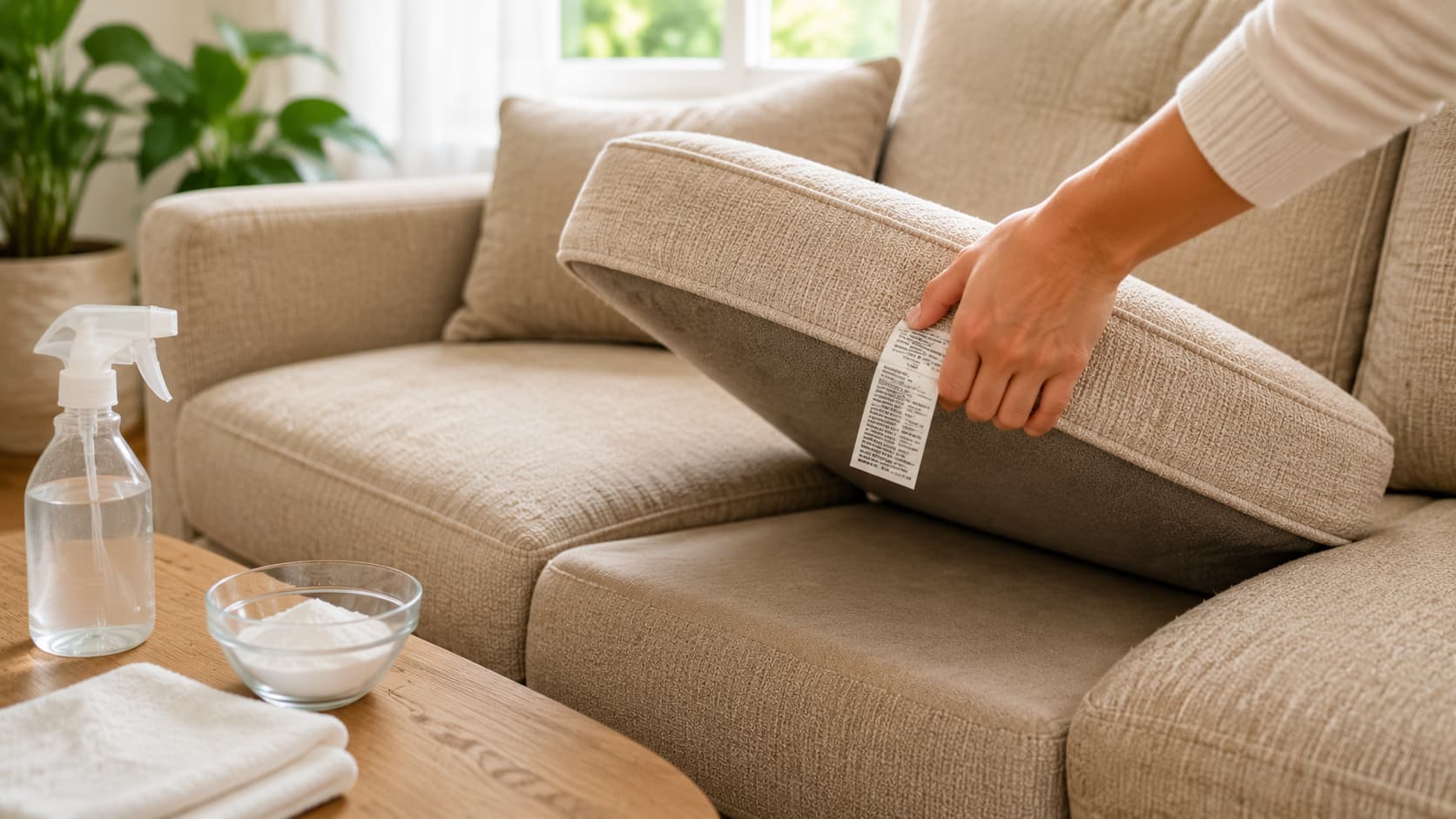
Look under your seat cushions or on the frame’s underside for a small fabric tag. According to the standard codes explained by Sailrite, a W code means water-based cleaners are safe. An S code means the fabric needs a water-free solvent, since water can leave rings or shrink the weave. A WS (or W/S) code allows either method, and an X code means vacuum or light brushing only, with no liquid at all.
Natural fiber sofas made from cotton, linen, or wool are more likely to carry an S or X code than synthetic blends. If your tag is missing or worn away, treat the fabric as sensitive. Test any solution on a hidden patch first, such as the back of a cushion. Wait a few minutes and check for color change before you touch a visible area. If you are not sure what your sofa is made of, our couch material guide can help you identify it from the feel and weave.
What You Need for Natural Fabric Sofa Cleaning
Most of these supplies are already in your kitchen or laundry closet:
- White vinegar (distilled, unflavored)
- A mild dish soap or castile soap
- Baking soda
- Distilled or filtered water
- A spray bottle
- Two soft microfiber cloths
- A soft-bristled brush
- A vacuum with an upholstery attachment
If you are starting from scratch, a refillable spray bottle and a few washable microfiber cloths are the two inexpensive tools I would keep specifically for upholstery cleaning.
Soft-Bristled Upholstery Brush: A dedicated soft-bristle brush can help loosen surface dirt, dust, and debris without aggressive scrubbing. This Fabricoat Soft Bristle Upholstery Cleaning Brush is designed for upholstered surfaces, including furniture and fabric seats. Use light pressure and always test the brush on a hidden area first, especially on delicate or loosely woven fabrics.
Skip anything scented with essential oils for now. You will see why in a later section, especially if pets or young kids use the sofa.
How to Clean Fabric Sofa Naturally: Step-by-Step
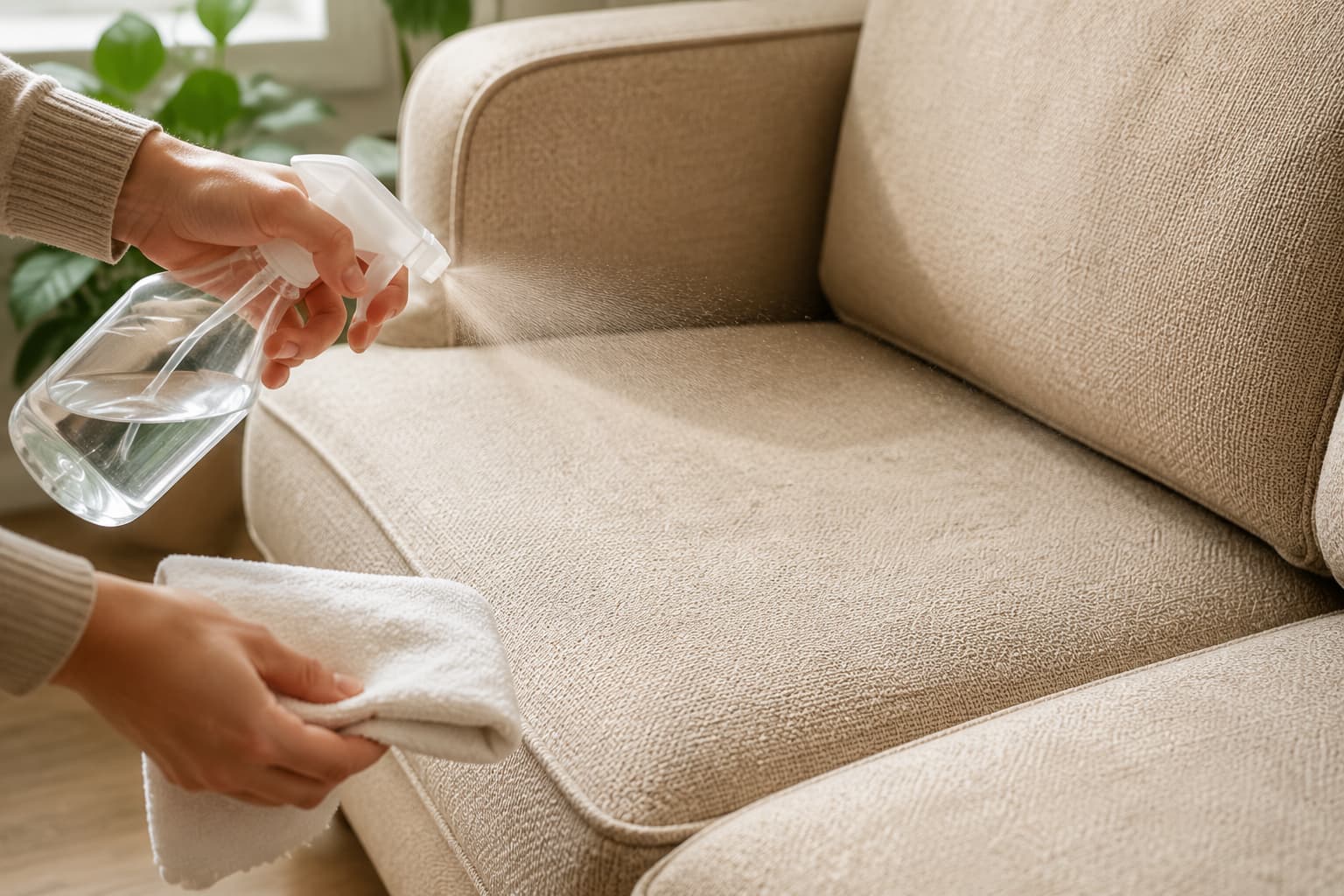
- Vacuum everything first. Use the upholstery attachment on the cushions, seams, and the base of the sofa. This removes crumbs, hair, and grit that would otherwise turn into mud once they get wet.
- Mix a mild solution for W or WS codes. Combine one cup of distilled water, half a cup of white vinegar, and a few drops of mild dish soap in a spray bottle. Shake gently.
- Spot test first. Spray a small hidden area, wait five minutes, and check for discoloration, bleeding, or texture change before treating the visible fabric.
- Mist, don’t soak. Lightly spray a small section, then work the solution in with a soft brush or microfiber cloth in gentle circles. Over-wetting is the single most common cause of watermarks and mildew on fabric sofas.
- Rinse with a barely damp cloth. Wipe the section with a cloth dampened in plain water to lift leftover soap film, which otherwise attracts dirt faster.
- Dry completely before use. Blot with a dry towel, then open a window or point a fan at the sofa. Avoid direct sun or a hair dryer, which can shrink or discolor fabric unevenly.
For S-coded fabric, skip water altogether and use only a dry-solvent upholstery cleaner approved for that fabric. Test it first in an inconspicuous area, and consider professional cleaning if the manufacturer’s instructions are unclear.
Optional Tools That Make Sofa Cleaning Easier
You do not need any of these products for basic routine sofa cleaning. The vinegar, mild soap, baking soda, microfiber cloths, spray bottle, and vacuum listed above are enough for most everyday cleaning.
However, the following tools can make the job easier when you are dealing with pet stains, stubborn spots, deeper dirt, or slow drying.
| Optional Tool | Best For | Why It Can Help |
|---|---|---|
| BISSELL Little Green Portable Carpet & Upholstery Cleaner | Deeper cleaning on W- or WS-coded sofas | A portable extraction cleaner can lift dirt and moisture from upholstery when basic hand cleaning is not enough. Always check your sofa’s cleaning code before using a water-based machine. Check BISSELL Little Green at Walmart |
| Nature’s Miracle Stain & Odor Remover | Pet accidents and lingering pet odors | An enzyme-based cleaner can help break down organic residue that vinegar may not fully remove. Spot-test first and check the product label for fabric restrictions. Check Nature’s Miracle at Target |
| Small Air Circulation Fan | Faster, safer drying after cleaning | Moving air across the sofa helps moisture evaporate more evenly and reduces the chance of dampness lingering inside cushions. Avoid concentrated heat from a hair dryer. Check Vornado Pivot Personal Air Circulator at Target |
| BISSELL Free & Clear Portable Cleaning Formula | Deeper machine cleaning without added perfume or dyes | If you use a compatible portable upholstery machine and prefer a fragrance-free formula, a free-and-clear cleaning solution can be a useful alternative to heavily scented products. Check BISSELL Free & Clear Formula at Target |
Natural Stain Removal for Common Spills
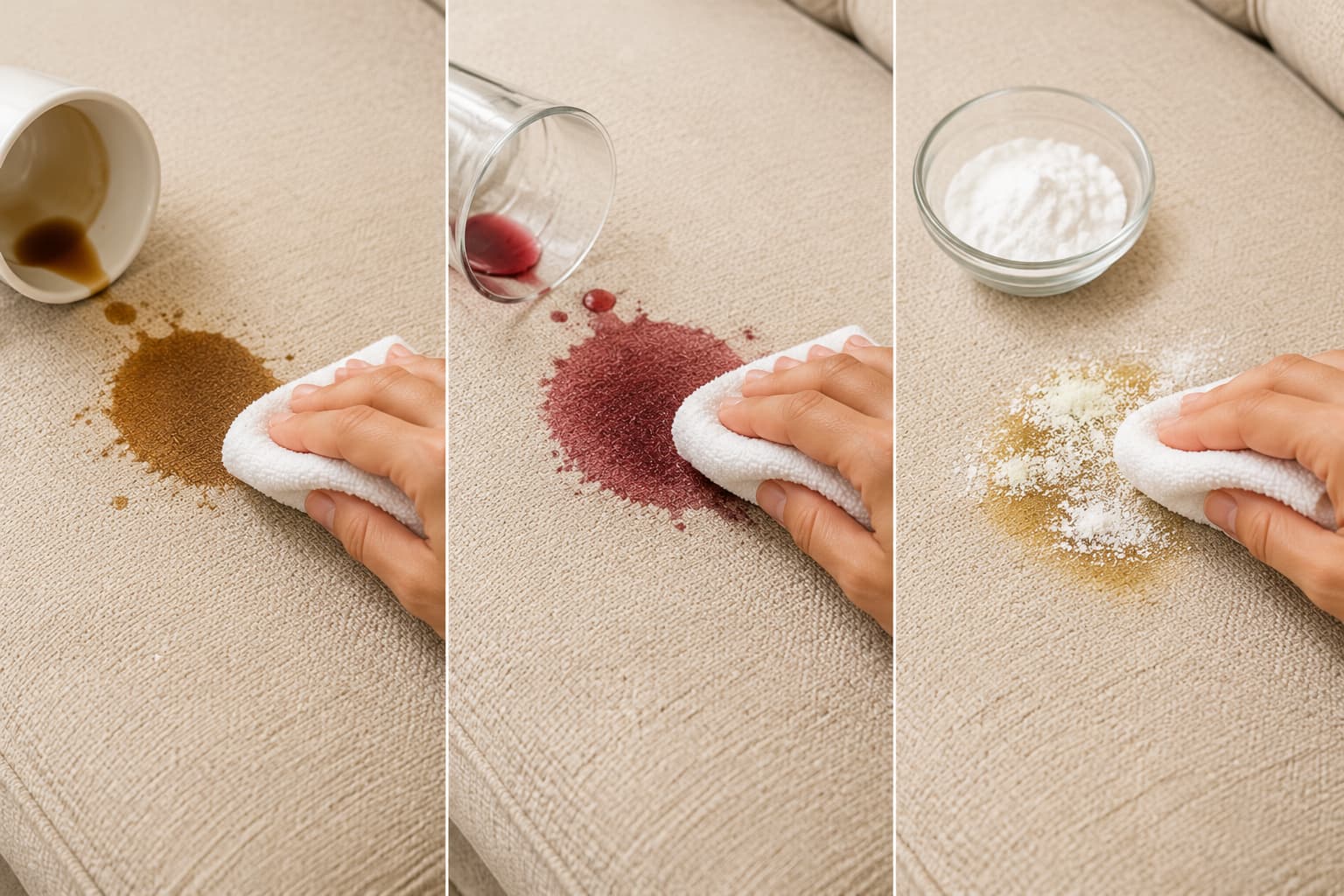
Coffee and Tea
Blot up the excess liquid immediately with a dry cloth, working from the outside of the stain in. Apply your vinegar-and-soap solution with a light mist, dab, and rinse with a barely damp cloth.
Red Wine and Juice
Blot, never rub. Rubbing pushes the stain deeper into the fibers. Once you have lifted as much liquid as possible, treat the spot the same way as a coffee stain and let it air dry.
Grease and Oil
Wipe away any surface oil first, then sprinkle plain baking soda over the spot. Let it sit for at least 15 minutes so it can absorb the oil, then vacuum it away before spot cleaning any remaining mark.
Pet Accidents
Blot up as much as you can, then treat the area with your vinegar solution to help cut the odor. For deeper set-in stains or urine, an enzyme-based cleaner works better than vinegar alone, since enzymes break down the compounds that cause lingering smell.
If vinegar does not remove a pet accident completely, an upholstery-compatible enzymatic cleaner can target the biological residue responsible for lingering odor; always follow its fabric restrictions and spot-test first
Is It Safe to Combine Vinegar and Baking Soda?
Many DIY guides suggest mixing vinegar and baking soda into one all-purpose fizzy cleaner. In practice, the two neutralize each other almost immediately. The reaction leaves behind mostly water, carbon dioxide, and a small amount of salt, none of which do much lifting on their own. It works better, and is safer for delicate upholstery, to use them separately instead. Use a vinegar solution for stains and light odor control. Use dry baking soda on its own for absorbing oil and smells before vacuuming. Save the combination for tasks like unclogging a drain, not your sofa.
Read our vinegar couch cleaning guide: How to Clean a Couch With Vinegar: A Safe Step-by-Step Guide
Removing Odors Naturally
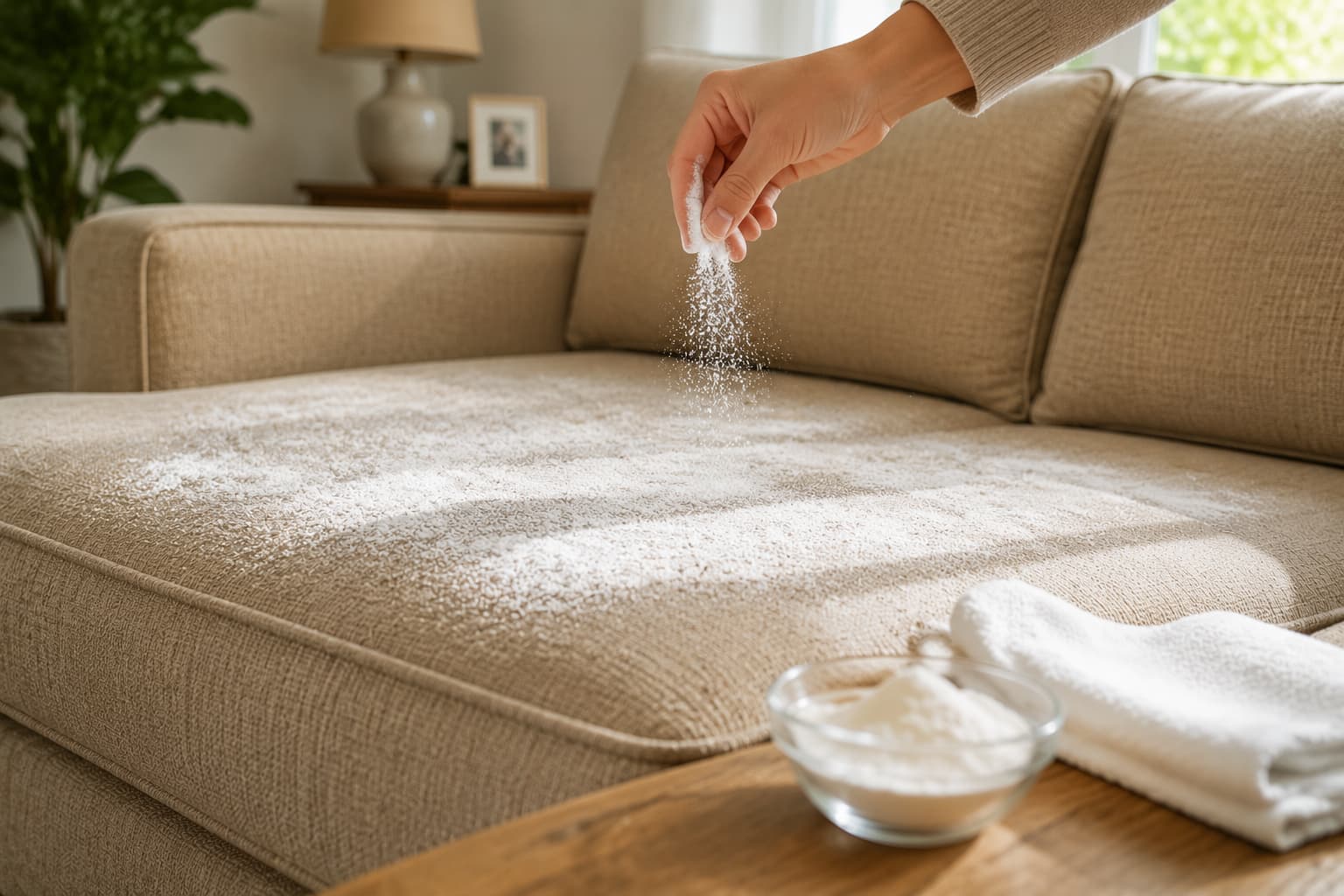
For general staleness or pet smell that lingers after cleaning, sprinkle baking soda generously and evenly across the fabric. Let it sit for several hours, or overnight for stronger odors, then vacuum thoroughly with the upholstery attachment. This works because baking soda absorbs airborne odor compounds rather than just masking them. If odors return quickly after cleaning, that is often a sign the cushions need a deeper clean; our deep-cleaning guide covers the full process for every fabric type.
Keep Pets and Kids Safe: Skip the Essential Oils
It is tempting to add a few drops of lavender or tea tree oil to a DIY spray for scent. This is one place, though, where “natural” does not mean risk-free. The ASPCA warns that essential oils in concentrated form can be dangerous for pets, especially cats, who lack the liver enzyme needed to process many of these compounds. Oils that land on fur or fabric a pet lies on can be absorbed through the skin or ingested during grooming. If you want a natural scent, skip the oils entirely. Rely on the vinegar smell fading as the fabric dries, or simply let the sofa air out near an open window.
Mistakes That Damage Fabric Sofas
- Skipping the cleaning code. Water on an S-coded fabric can cause permanent rings or shrinkage.
- Over-wetting the fabric. Excess moisture soaks into the cushion foam and can lead to mildew that is hard to remove.
- Scrubbing hard at a stain. Vigorous rubbing spreads the stain and can fray or pill the fibers.
- Skipping the spot test. Even mild, natural solutions can bleed dye on some fabrics.
- Using a hair dryer to speed drying. Concentrated heat can shrink or discolor fabric unevenly.
When to Call a Professional
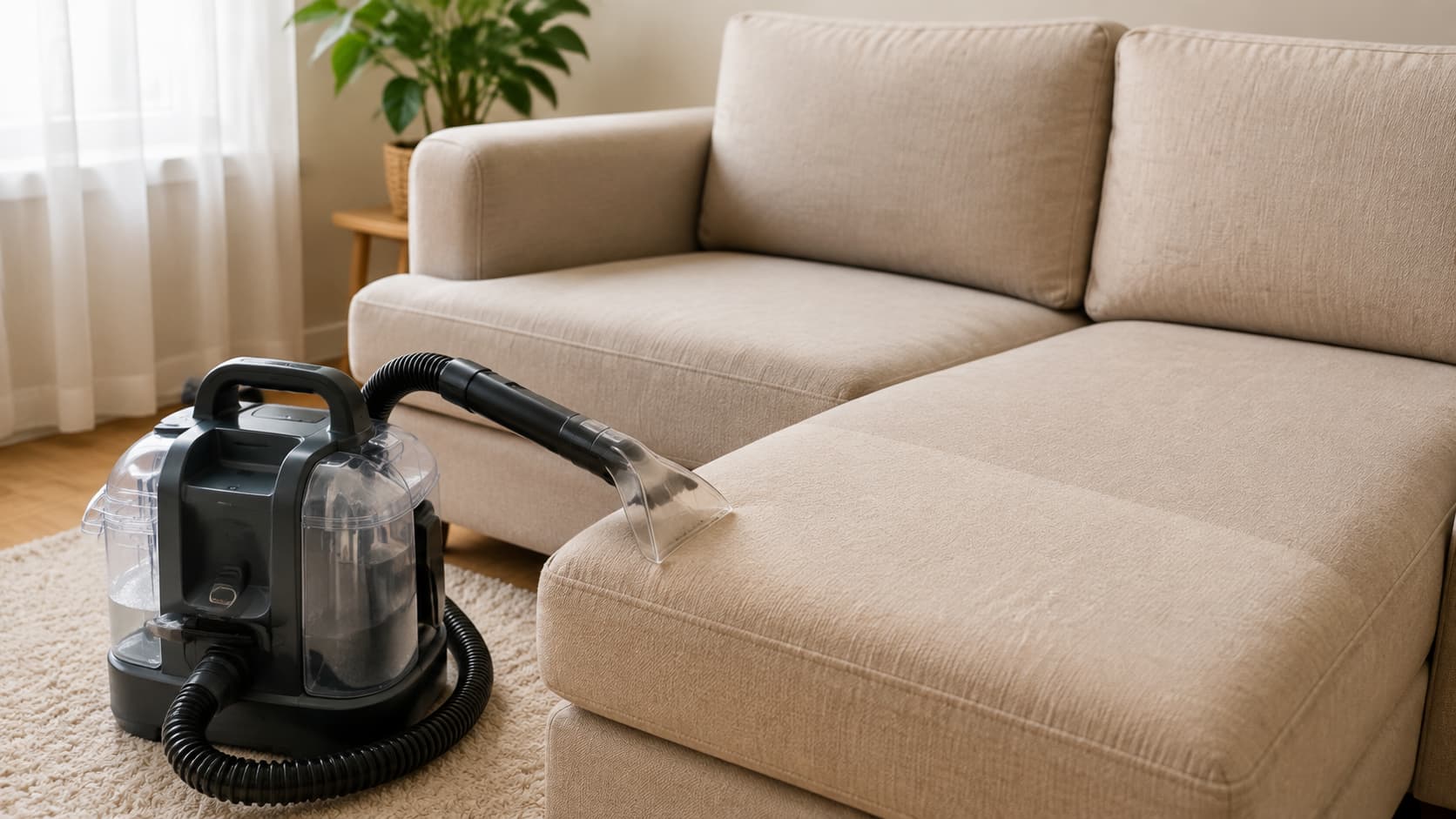
Some jobs are better left to a certified technician. This is especially true for natural fiber fabrics like silk and wool, unusual weaves, or an X-coded sofa that cannot be cleaned with any liquid at home. The IICRC, the trade organization that certifies upholstery cleaning technicians, recommends professional cleaning for natural fiber fabrics that are prone to color loss, shrinkage, or texture change if handled roughly. A few other signs also point to calling a pro instead of risking the sofa yourself: a set-in stain that has been there for weeks, a large area of pet staining, or any fabric you simply cannot identify.
For a W- or WS-coded sofa that needs more than hand spot-cleaning, a portable extraction machine can be a middle ground between DIY blotting and hiring a professional.” Follow with: “One widely available example is the BISSELL Little Green Portable Carpet Cleaner, which is designed for upholstery as well as carpets.
If fragrance is one reason you prefer gentler cleaning products, BISSELL also sells a Free & Clear portable-machine formula without perfumes or dyes.
Keep Your Fabric Sofa Clean Naturally, Long Term
Vacuum weekly to keep grit from working into the weave. Rotate and flip cushions if they are reversible, and treat spills the moment they happen instead of letting them set. A quick pass with your vinegar solution once a month keeps most sofas looking fresh between deeper cleanings. If your sofa is velvet rather than a flat weave, the nap needs a different touch; see our velvet sofa cleaning guide for brushing and steaming tips. For a broader look at fabric identification, stain codes, and cleaner selection across furniture types, our upholstery cleaning guide and full furniture care library are good next stops.
A fabric sofa cleaned naturally will not look brand new after one pass the way a strong commercial cleaner might promise. But with the right code, the right technique, and a little patience, pantry ingredients handle most everyday spills and odors safely. You get a clean sofa without a harsh chemical smell or any risk to the fabric.