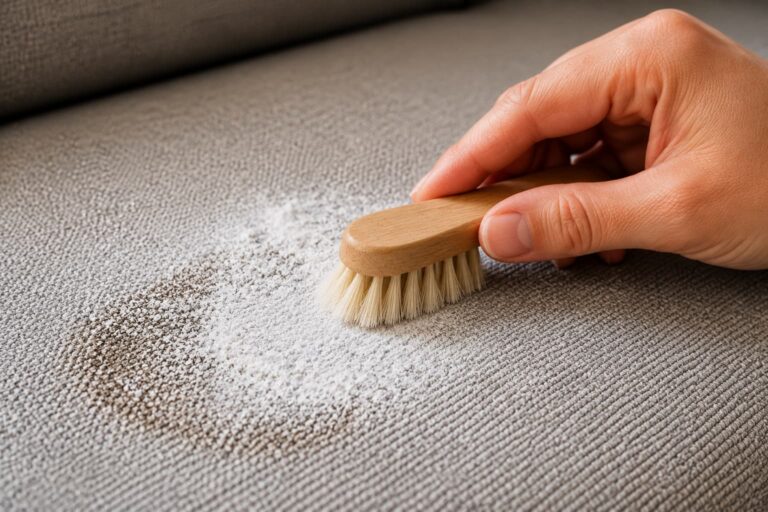
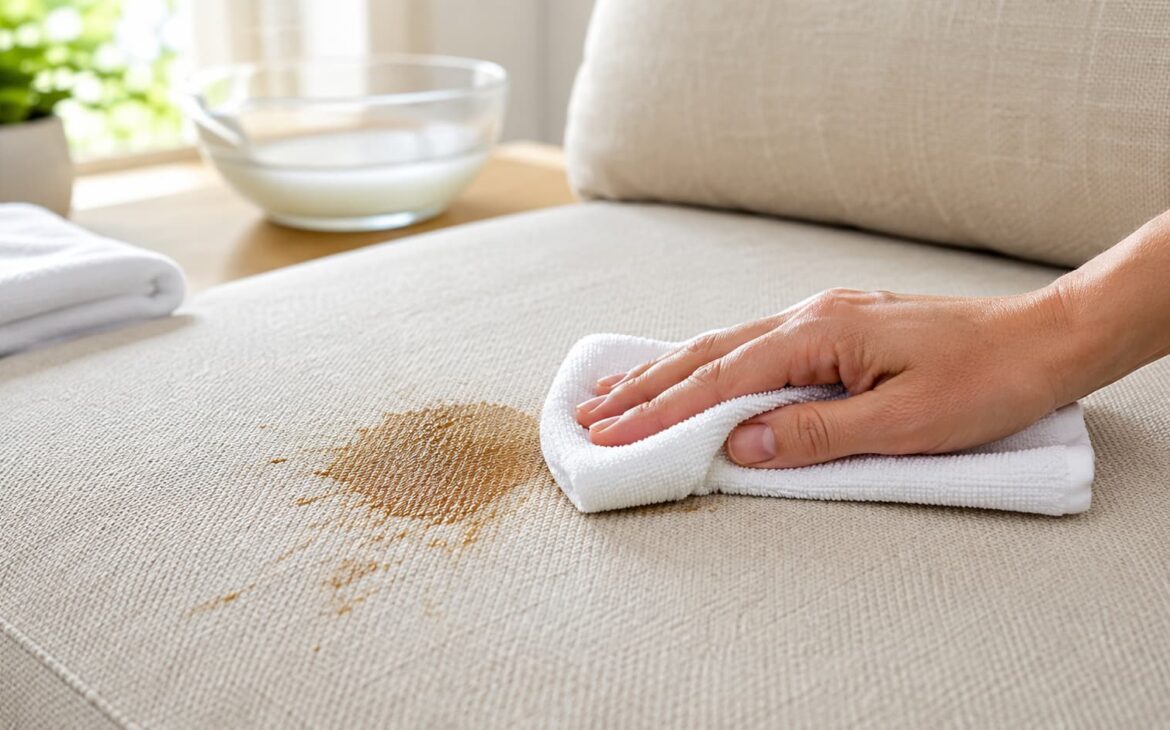
Spilled coffee on your favorite couch? Don’t panic. Check your couch’s cleaning code, blot up the spill with a clean cloth, then treat the stain with a method matched to your fabric and the stain type. Most stains come out completely if you act fast.
The trick is knowing your fabric before you grab a cloth. Water works great on some couches, but it can ruin others. This guide shows you how to remove stains from couch using the right method for each fabric and stain type, helping you remove spills effectively before they become permanent marks. Our methodology explains how we research and verify guides like this.
Check Your Couch’s Cleaning Code First
Every upholstered couch has a cleaning code. You’ll usually find it on a tag under the seat cushions or on the frame near an armrest. This code tells you which cleaners are safe for your fabric.
Upholstery manufacturers use cleaning codes to show which cleaning methods are safe for different fabrics, including water-based, solvent-based, combination, and vacuum-only methods. You can check the detailed upholstery cleaning code definitions before applying any cleaner.
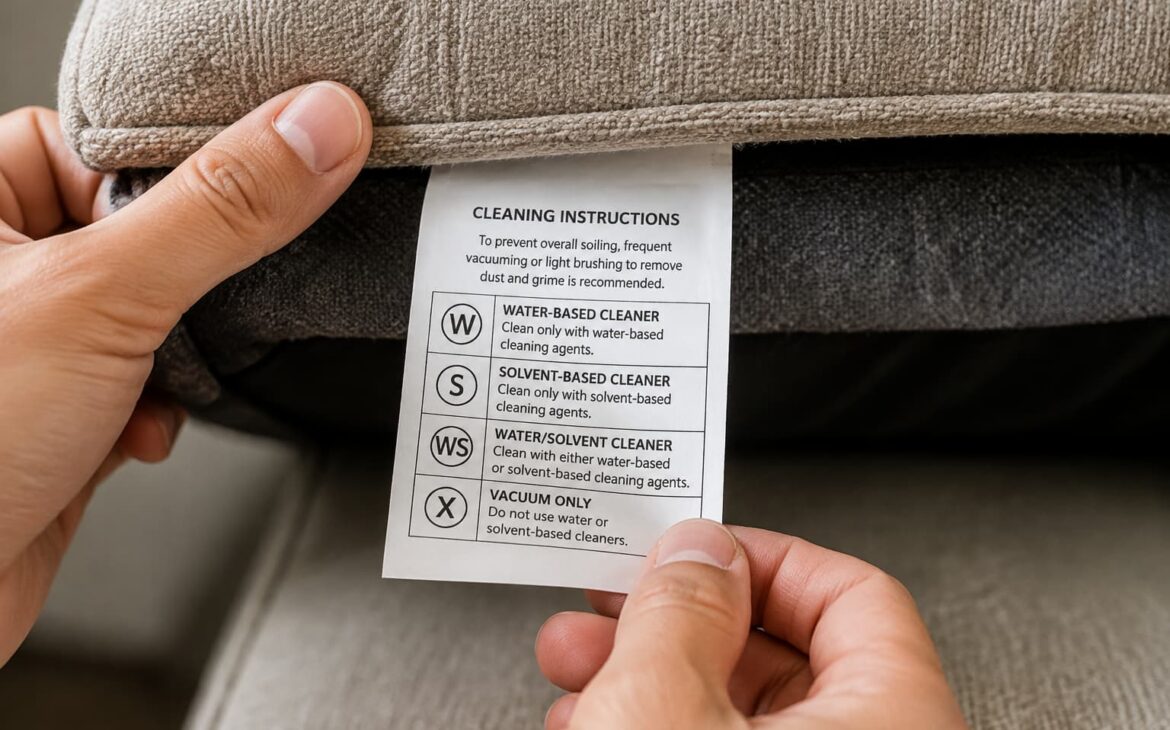
Fabric mills test each fabric and assign one of four codes. The codes come from the Joint Industry Fabric Standards Committee, and most manufacturers print them on the care tag — though labelling is voluntary, so some couches carry no code at all. Here’s what each one means.
- W means water-based. You can clean these fabrics with mild soap and water. Most polyester, nylon, and other synthetic blends fall into this group.
- S means solvent-only. Skip the water. These fabrics — often silk, rayon or velvet — can shrink, ring, or stain permanently if they get wet. Use a water-free cleaning solvent instead. Note the code reflects the fabric’s backing and finish, not just its fibre: cotton and linen are commonly W-coded, so always read the tag rather than guessing from the material.
- WS means either one works. You have more flexibility with water-based or solvent-based cleaners.
- X means vacuum only. No liquid of any kind. If your couch carries this code, call a professional for anything beyond light dust and crumbs.
No tag on your couch? Treat the fabric as S (solvent-only) until a hidden-spot test proves water is safe — that is the cautious default. Check our guide to the best couch materials to identify your fabric by look and feel, or read our full walkthrough on how to clean upholstery safely. A few fabrics carry rarer codes (F, P, DC) — treat those as S too unless the tag says otherwise.
The Golden Rules Before You Start
A few habits matter more than any specific product. Follow these every time.
- Blot, don’t rub. Rubbing pushes the stain deeper into the fibers and can fray them. Press straight down with a clean cloth, then lift straight up.
- Work from the outside in. Starting at the edge of a stain and working toward the center keeps it from spreading wider.
- Use cold water first. Hot water can set many stains, especially protein-based ones like blood. Start cool.
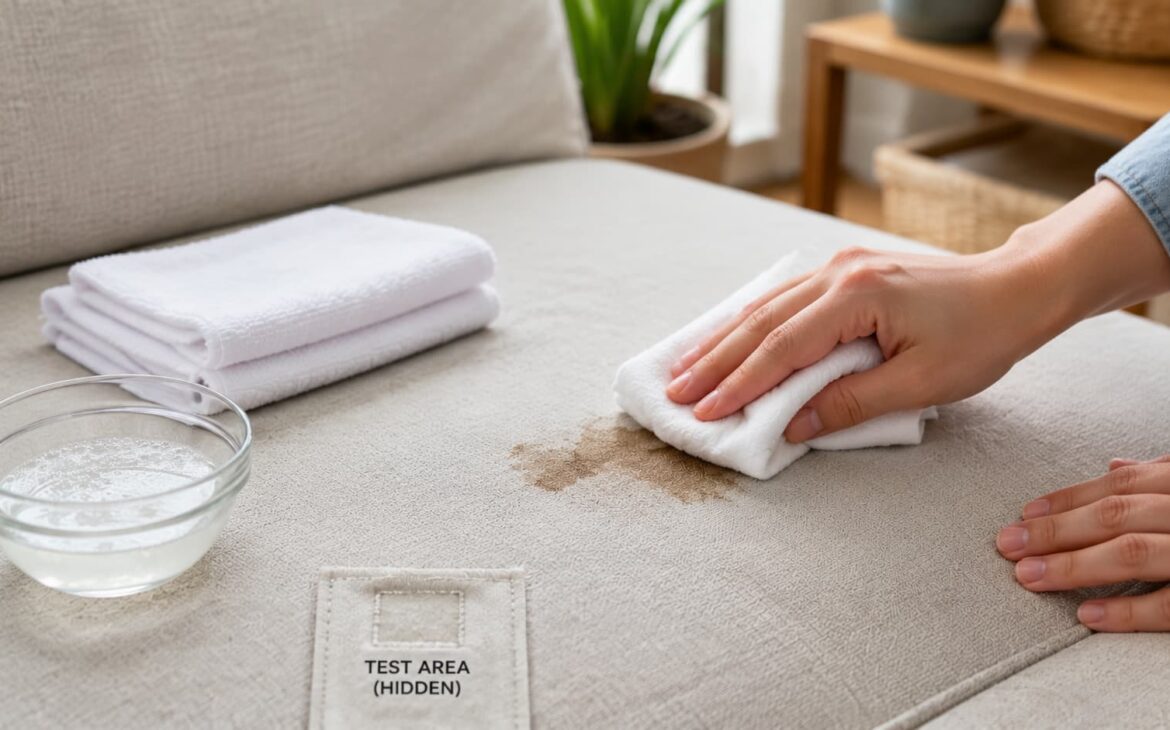
- Test in a hidden spot. Dab your cleaning solution on a small, out-of-sight area first, like the back of a cushion. Wait a few minutes and check for color change before treating the visible stain.
- Skip the heat. Don’t use a hair dryer or iron to speed up drying. Heat can lock a stain in permanently.
- Use only white cloths. Colored towels can transfer dye onto lighter fabric. Stick to plain white cotton or microfiber.
What You’ll Need
Most fresh stains only need a few basic supplies you likely already own.
- Clean white cloths or paper towels
- A soft-bristled brush
- Mild dish soap (clear or white — coloured soap can tint light fabric)
- White vinegar
- Baking soda
- Rubbing alcohol
- Hydrogen peroxide (for light-colored, W-coded fabric only)
- A small bowl for mixing solutions
- A handheld vacuum with an upholstery attachment
For tougher pet stains, add an enzyme-based cleaner made for upholstery. For routine touch-ups, a portable spot cleaner works well on large areas without soaking the cushion foam.
The Step-by-Step Stain Removal Method
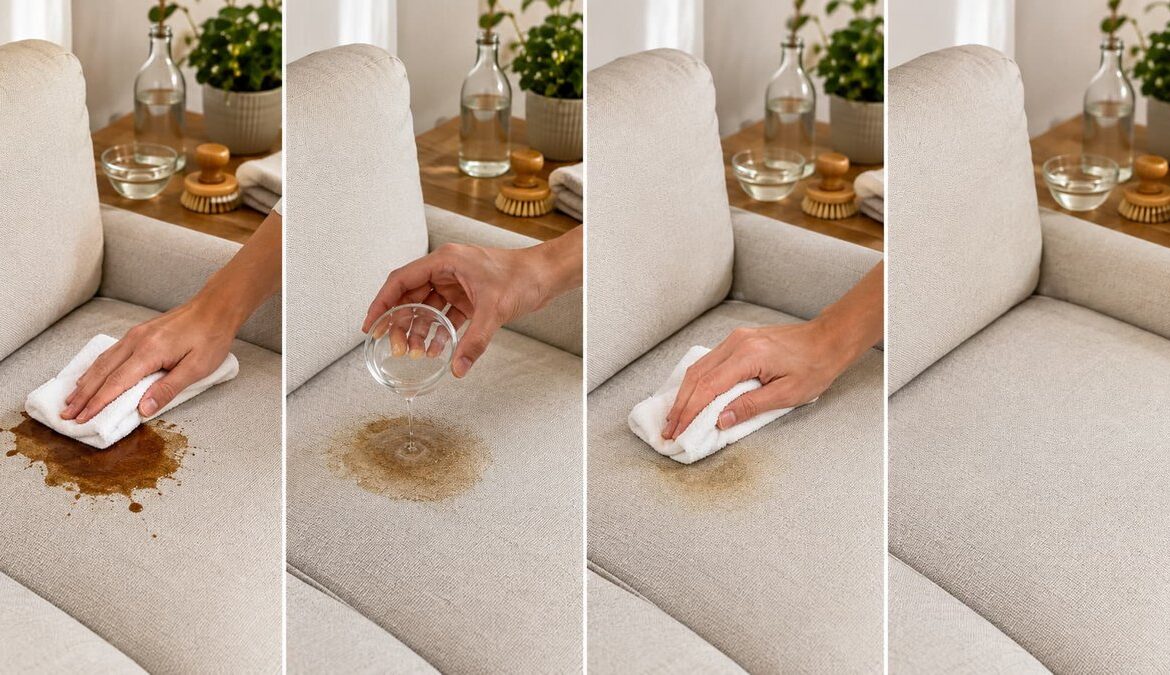
This method handles most everyday spills on water-safe fabric. Adjust for solvent-only fabric using the dry-cleaning solvent guidance in the next section. Follow it to get a stain out of a couch quickly, before it sets. Most fresh stains take about 30 minutes from blot to dry pass — longer if the stain needs a second round.
- Act fast. Blot up as much liquid as you can right away. The longer a spill sits, the deeper it soaks into the cushion fibers and foam.
- Scrape off solids. For food or other semi-solid messes, use a dull knife or spoon to lift the material off the surface. Avoid pressing it further into the fabric.
- Mix your cleaner. Combine 1 teaspoon of mild dish soap and 1 tablespoon of white vinegar with two cups of warm water — use cool water for protein stains like blood, dairy or egg, since warmth can set them. Use distilled water on light fabric: tap-water minerals can leave marks. A teaspoon of soap is enough; more leaves a sticky residue that attracts dirt and makes the fabric look dingy faster.
- Test it first. Apply a small amount to a hidden area and check for any color change.
- Apply and blot. Dip a clean white cloth into the solution and blot the stain, working from the outer edge inward. Turn the cloth often so you’re not reapplying the stain you just lifted.
- Rinse. Dampen a fresh cloth with plain water and blot the area to remove leftover soap.
- Dry it. Blot with a dry towel, then let the cushion air dry completely. A fan pointed at the spot speeds this up without adding heat. Allow enough time: most spot-treated areas dry in 2–8 hours, and a heavily wetted cushion can take up to 24 hours. Don’t sit on the spot or put the cushion back until it feels dry all the way through — sitting on damp upholstery traps moisture and can cause mildew or dye transfer.
- Vacuum. Once dry, vacuum the area with an upholstery attachment to lift any remaining residue and restore the fabric’s texture.
For solvent-only (S-coded) fabric, skip water entirely. Apply a small amount of dry-cleaning solvent to a white cloth, dab the stain gently, and let it air dry. Plain vodka works as a household solvent in a pinch — dab it on the same way. Never use steam or a wet cloth on an S-coded fabric.
If the stain is lighter but still there after the first pass, repeat the treatment — a second round often clears what the first one loosened. If two rounds don’t shift it, stop and call a professional; more scrubbing risks damaging the fabric.
How to Remove Common Stains by Type
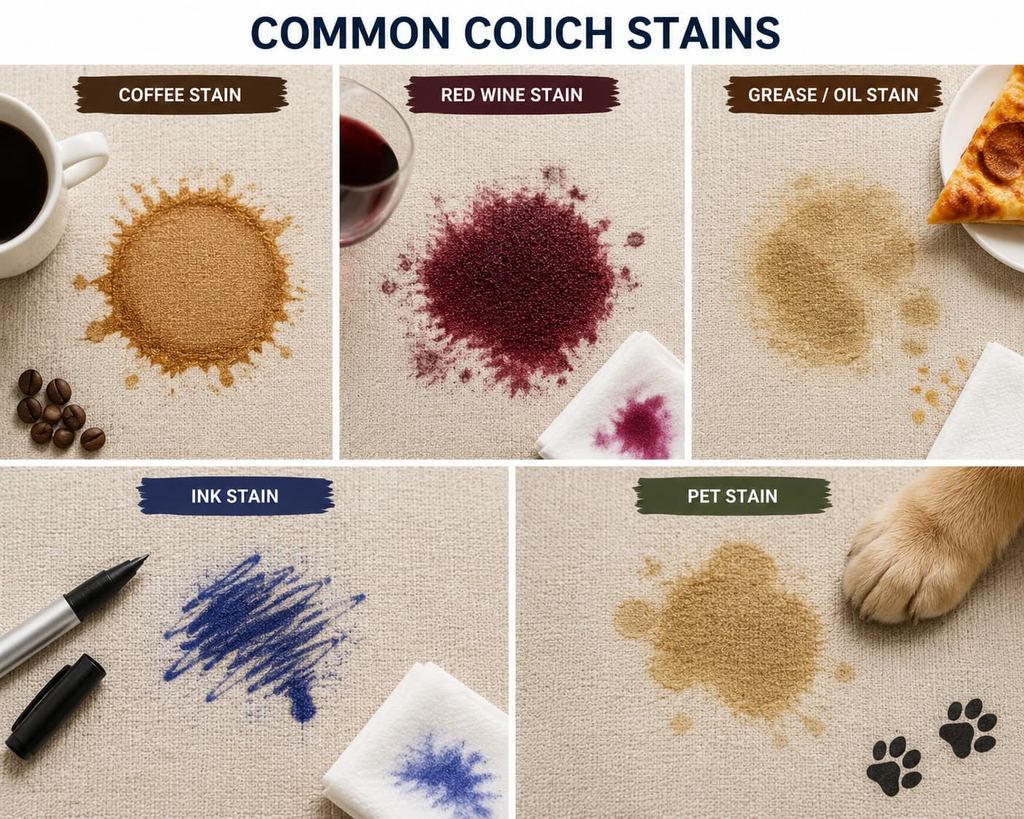
Different stains need different approaches. Here’s what works for the messes that show up most often on couches — and if the stain has already set, our guide to getting old stains out of upholstery covers set-in marks.
| Stain | First move | Cleaner | Never |
|---|---|---|---|
| Red wine | Blot, then salt or baking soda to absorb | 3% peroxide + dish soap (light W-code only) | Hot water; peroxide on dark fabric |
| Blood | Blot with cold water | Cold water, then 3% peroxide (light W-code) | Hot water — sets protein stains |
| Coffee & tea | Blot, sponge with cool water | Dish soap + vinegar solution | Letting it dry before treating |
| Grease & oil | Baking soda 15 min, vacuum | Dish soap + warm water | Hot water on the dry powder |
| Ink & marker | Dab with rubbing alcohol on a swab | Rubbing alcohol | Rub — it spreads the ink |
| Pet urine | Blot, enzyme cleaner 15 min | Enzyme cleaner | Ammonia; steam before enzyme treatment |
| Makeup & chocolate | Scrape off excess | Dish soap + vinegar solution | Hot water on chocolate |
| Candle wax | Let harden (or ice), scrape | Warm iron + paper towel | High heat; steam |
Red wine:
Blot up the spill immediately with a dry cloth, then cover the stain with salt or baking soda and leave it a few minutes to draw the wine out of the fibres — vacuum or brush it away before treating. Mix three parts 3% hydrogen peroxide with one part dish soap (light fabric, W-code only), apply, and let it sit for a few minutes before blotting clean. On darker or S-coded fabric, use plain cold water and a vinegar solution instead, and avoid peroxide, which can lighten color. If you’d rather not mix your own solution, Wine Away is a spray made for red wine on fabric — use it after blotting, and follow the directions on the bottle.
Blood:
Cold water is essential here because heat can make protein-based stains like blood harder to remove. According to the American Cleaning Institute stain removal guide, careful stain treatment helps prevent marks from becoming more difficult to remove. Blot with cold water, then dab with a little hydrogen peroxide on light, W-coded fabric if the stain remains. Rinse and blot dry.
Coffee and tea:
Blot up excess liquid, then sponge with cool water. Follow with the dish soap and vinegar solution if a shadow remains, working from the outside in.
Grease and oil:
Sprinkle baking soda directly on the stain and let it sit for at least 15 minutes to absorb the oil. Vacuum away the powder, then treat any remaining mark with dish soap and warm water.
Ink and marker:
Dab, don’t rub, with a cotton swab lightly dampened in rubbing alcohol. Work from the outer edge in, switching to a clean part of the swab often so you’re not spreading the ink.
Pet urine and vomit:
Blot up as much as possible, then apply an enzyme-based cleaner made for pet stains. These cleaners use enzymes that break down the uric acid and proteins that plain soap leaves behind, which is also what keeps the odor from returning. Let the cleaner sit for the time listed on the label, usually at least 15 minutes, before blotting dry. Skip ammonia-based cleaners here, since the smell can actually draw pets back to the same spot. The enzyme cleaner to reach for here is Nature’s Miracle Advanced — it breaks down the uric acid instead of masking the smell, which is what keeps pets from returning to the same spot.
Makeup and chocolate:
Scrape off any excess first. Treat with the dish soap and vinegar solution, blotting gently until the color lifts.
Candle wax:
Let the wax harden completely — ice cubes in a bag speed this up — then gently scrape off the excess with a dull knife. Place a paper towel over any remaining residue and press with a warm iron on its lowest heat setting, no steam, for 2–5 seconds at a time, moving the towel to a clean spot each press so the wax transfers onto the towel instead of the fabric. Dab any oily residue left behind with the dish soap solution.
Mud
Let mud dry completely first — wet mud smears. Brush off the dried dirt, vacuum, then blot any remaining mark with the dish soap solution.
Fruit juice and berries
Blot, then sponge with cold water. If colour remains, dab with the dish soap and vinegar solution; on light W-code fabric, a little 3% hydrogen peroxide helps lift berry colour.
Tomato sauce and ketchup
Scrape off the excess, then blot with cold water. Follow with the dish soap solution; for a lingering orange tint on light fabric, dab with 3% hydrogen peroxide.
Chewing gum
Harden it with ice cubes in a bag, then scrape off the brittle gum with a dull knife. Dab any residue with rubbing alcohol.
Grass and crayon
For grass, blot with the dish soap and vinegar solution, or dab with rubbing alcohol on W-code fabric. For crayon, scrape off the excess, then use the wax method — paper towel and warm iron — and finish with the dish soap solution for the colour.
Water stains and rings
Water rings come from minerals left behind as water dries unevenly. Dampen the whole cushion panel lightly with 1 part white vinegar to 2 parts water, let it sit 15–20 minutes, then blot dry — treating the whole panel keeps a new ring from forming.
Cleaning Stains by Sofa Material

Fabric type changes the safest method, so match your approach to your couch’s material.
Leather and faux leather:
Skip water-heavy methods. Wipe with a barely damp cloth and mild soap, then dry right away. See our full guides on cleaning a leather couch and cleaning a faux leather couch for material-specific steps and what to avoid.
Velvet:
Water can crush the pile and leave visible marks. Blot gently and always brush the nap back into place afterward. Our velvet sofa cleaning guide covers the full process, including how to lift set-in stains without flattening the fabric.
Performance fabric and microfiber:
Microfiber and performance fabrics are among the most forgiving to clean, and mild soap and water handles most spills without special products — but check the tag first: many microfibers are S-coded. For those, rubbing alcohol in a spray bottle is the go-to: mist lightly, blot, let it evaporate, then brush once dry to restore the nap. Never soak microfiber.
Natural fibers like cotton and linen:
These are often S-coded and prone to water rings. When in doubt, test a hidden spot before applying anything, and lean toward a solvent-based cleaner.
Removable covers: if the stained cushion has a removable cover, check the cover’s own care tag — it can differ from the couch tag. If the tag allows machine washing (WASH code), zip the cover closed, wash cold on a gentle cycle and air dry; put it back on while slightly damp so it stretches into shape. Never tumble-dry: a shrunk cover won’t go back on.
For an all-fabric deep clean beyond spot treatment, our guide to deep cleaning a couch walks through the full process by material.
Mistakes That Make Stains Worse
A few common habits do more harm than the stain itself.
- Scrubbing hard. This spreads the stain and can wear down the fibers, leaving a rough patch that never quite blends back in.
- Oversaturating the cushion. Too much liquid soaks into the foam underneath, where it can cause mildew, odor, and rings that resurface days later.
- Mixing cleaning products. Combining bleach and ammonia, for example, creates dangerous fumes. Stick to one method at a time.
- Skipping the patch test. A cleaner that works fine on one couch can discolor another. Always test first, even with products you’ve used before.
- Using hot water on protein stains. Heat cooks proteins in blood, egg, and dairy into the fabric, making them far harder to remove.
One more reason stains seem to return: soap residue left in the fabric attracts dirt, so a cleaned spot can look dirty again within days. Always rinse by blotting with a plain damp cloth, and feather the damp edges outward — cleaning only the stain can leave a visibly clean spot.
When to Call a Professional
Some situations are worth handing off. Call a professional upholstery cleaner if the stain covers a large area, if it’s been set for weeks, if your couch is X-coded, or if a DIY attempt has already left a ring or faded patch. Professional cleaners have equipment and solvents that go beyond what’s safe to try at home, and they can usually rescue a couch that a home treatment made worse.
As a rough guide, cleaning sites put a professional clean at roughly $100–$300 per sofa, and up to $500 for suede or delicate fabrics — worth it when the alternative is ruining the fabric.
Before you book a pro, a portable spot cleaner is worth trying on large stains — the BISSELL Little Green 1400B sprays, scrubs and lifts the mess out of the fabric, and you can reach for it again the next time a spill happens.
Some stains won’t come out at home, however careful you are: dye-based stains like hair dye, stains already set by heat, and colour damage where a spill has bleached or dyed the fabric itself. That last one isn’t a stain any more, it’s damage — cleaning won’t fix it, and only re-dyeing or re-covering will.
How to Prevent Future Stains
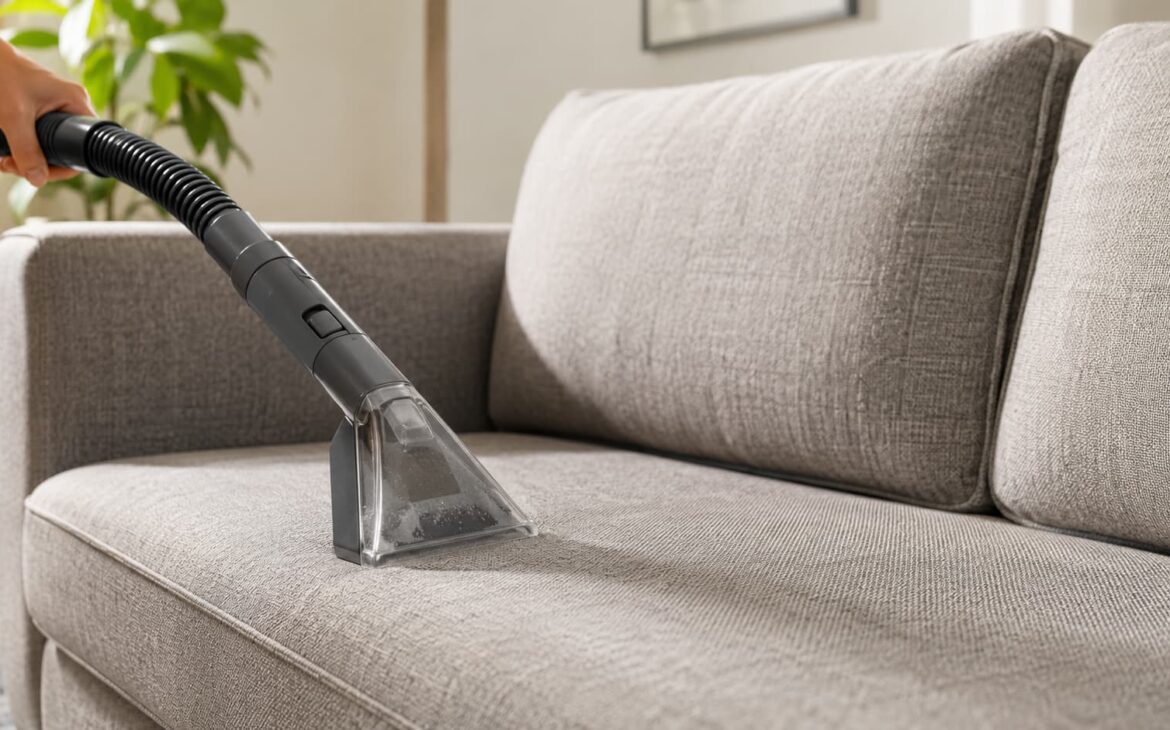
A little upkeep goes a long way toward keeping spills from becoming permanent stains.
Vacuum weekly with an upholstery attachment to keep dirt from grinding into the fibers over time. Rotate and flip reversible cushions regularly so wear spreads evenly. Keep a small cleaning kit nearby, with white cloths, mild soap, and an enzyme cleaner, so you can treat spills the moment they happen. Consider a fabric protector spray on untreated fabric to give yourself extra time before a spill soaks in — performance fabrics already carry built-in stain resistance, so they gain the least from it. Reapply every 6–12 months, and patch-test first.
Wipe armrests and headrests regularly — body oils build up there and attract dirt faster than anywhere else on the couch.
Frequently Asked Questions
Does club soda really remove stains?
Club soda’s carbonation can help lift some fresh, light stains, but plain cold water works just as well in most cases. It’s not a substitute for treating the stain type correctly.
Can I use a Magic Eraser on my couch?
Not recommended on fabric upholstery. A Magic Eraser is a melamine sponge — a fine abrasive, roughly equivalent to 3,000–6,000-grit sandpaper — and it can dull sheen, pill fibres or wear a visible patch into the weave, even on sturdy W-coded fabric. For scuffs, try the stain-type method above first; if you still want to try one, test a hidden spot and stop at the first sign of pilling or colour change.
Will baking soda damage my fabric?
Baking soda is safe for most upholstery when used dry and vacuumed up afterward — use a thin layer, not a heavy pile. Skip it on X-coded fabric, silk, wool, velvet and leather, and test a hidden spot first on anything delicate. Leaving a wet baking soda paste on fabric for too long can leave a residue, so always vacuum thoroughly once it’s dry, and clean the vacuum filter afterwards — the fine powder can clog filters.
How do I get rid of odor after the stain is gone?
Sprinkle baking soda over the entire cushion, let it sit for a few hours or overnight, then vacuum it up. For pet-related odors, an enzyme cleaner treats the source instead of masking it.
Is it safe to steam clean my couch?
Only on W or WS-coded fabric. Steam can permanently damage S-coded and X-coded fabric, along with leather and velvet, so check your cleaning code before using a steam cleaner.
How long does a couch take to dry after stain removal?
Most spot-treated areas dry in 2–8 hours, and a heavily wetted cushion can take up to 24 hours. Keep air moving with a fan or open windows, and don’t sit on the spot or replace the cushion until it feels dry all the way through.
Are there stains that won’t come out of a couch?
Yes — dye-based stains like hair dye, stains already set by heat, and colour damage where a spill has bleached or dyed the fabric itself. That last one isn’t a stain any more, it’s damage: cleaning won’t fix it, and only re-dyeing or re-covering will.
Can I use carpet stain remover on my couch?
Usually not — most carpet cleaners are made for carpet fibres and can leave residue or discolour upholstery. Use a cleaner made for upholstery, check your couch’s cleaning code first, and patch-test in a hidden spot.